



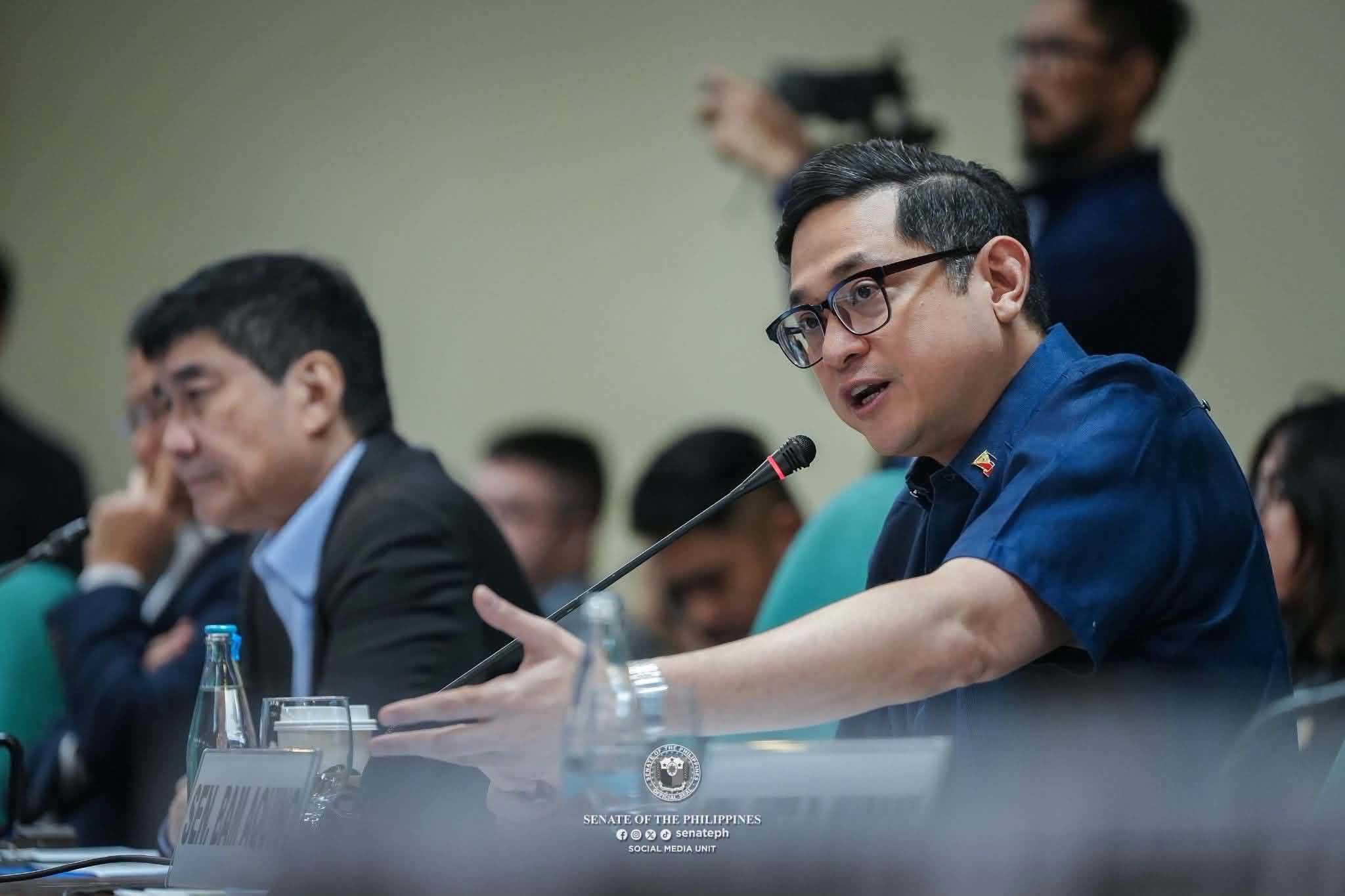
The Senate has opened an inquiry into the proposed 1,600-hectare Pax Silica development in New Clark City, Capas, Tarlac, amid concerns over the possible displacement of Indigenous Peoples (IPs) and farmers.
Sen. Paolo Benigno “Bam” Aquino IV, a Tarlac native, vowed to closely monitor the project and ensure that the government’s push for advanced industrialization does not come at the expense of affected communities.
The multi-billion-peso project forms part of the government’s drive to develop advanced manufacturing and position the Philippines as a regional technology hub.
However, the proposed development has raised concerns among local communities, with more than 1,000 IPs and nearly 300 farmers potentially affected by the project.
The Senate Committee on Public Services, alongside the Committee on Trade, Commerce and Entrepreneurship, is examining the project’s operational, environmental and social impacts in Capas and neighboring areas in Pampanga and Zambales.
Aquino said economic modernization should protect the rights, livelihoods and welfare of vulnerable communities.
“Development, yes. But not at the expense of our people,” Aquino said during the hearing.
“Sa atin pong hangaring mag-modernize… siguraduhin natin na walang maiiwan. At ang totoong progreso sa isang bansa ay nasusukat sa ating pagtrato sa mga pinakamahihirap at pinakanangangailangan,” he added.
Aquino warned that development without proper safeguards could worsen the situation of marginalized communities.
“Sa atin pong hangarin na mag-modernize, na wala pong maiiwan and worse, wala pong maaantala… Sa atin pong kasaysayan, nakita ho natin na kapag walang nagbabantay, posibleng magkaprogreso, mayroon namang marginalized groups ang patuloy na napapahirapan,” he said.
He cited the experience of workers affected by the sudden closure of Boracay as an example of the consequences of inadequate transition planning.
The hearing also raised questions about the extent of consultations conducted before the Pax Silica project was announced.
Tribal leaders and local officials said affected communities were surprised by the announcement.
More than 300 IP families, representing over 1,000 people, live in Sitio Sapang Kawayan, an area within the proposed 1,600-hectare development.
One of the concerns raised was the possible disturbance of sacred ancestral burial grounds.
At least 266 active farmers could also lose access to agricultural land they have cultivated for generations, according to local records.
Aquino sought details on the project’s planned facilities and their requirements for electricity and water, as well as its potential impact on farmers and IP communities.
“Nais ho nating makita kung ano ba talaga ang mga plano at anong tipo ng facilities ang bubuuin sa Pax Silica,” Aquino said.
He also asked whether farmers would actually lose their land and whether IPs would be displaced from their ancestral domain.
“Ano ba talaga ang pangangailangan pagdating sa kuryente? Sa tubig? Meron ba talagang magsasaka na mawawalan ng lupa? Meron ba talagang IP na mapapaalis sa kanilang ancestral domain?” he said.
Aquino pressed the Bases Conversion and Development Authority (BCDA), Department of Trade and Industry (DTI) and National Commission on Indigenous Peoples (NCIP) to provide firm safeguards against forced evictions and arbitrary demolitions.
He also said the agencies would face further scrutiny during the Senate’s budget deliberations.
“I already have the go-signal from my colleagues—ako po ang magha-handle ng budget ng DTI at ng BCDA. So, magkikita-kita ho tayo ulit sa budget hearings,” Aquino said.
“Before we pass any budget, kailangang makita namin ang malinaw at konkretong plano para sa tulong at relokasyon ng ating mga kababayan,” he added.
Aquino assured affected residents that the Senate would continue monitoring the project through succeeding hearings and the budget process.















Comments