



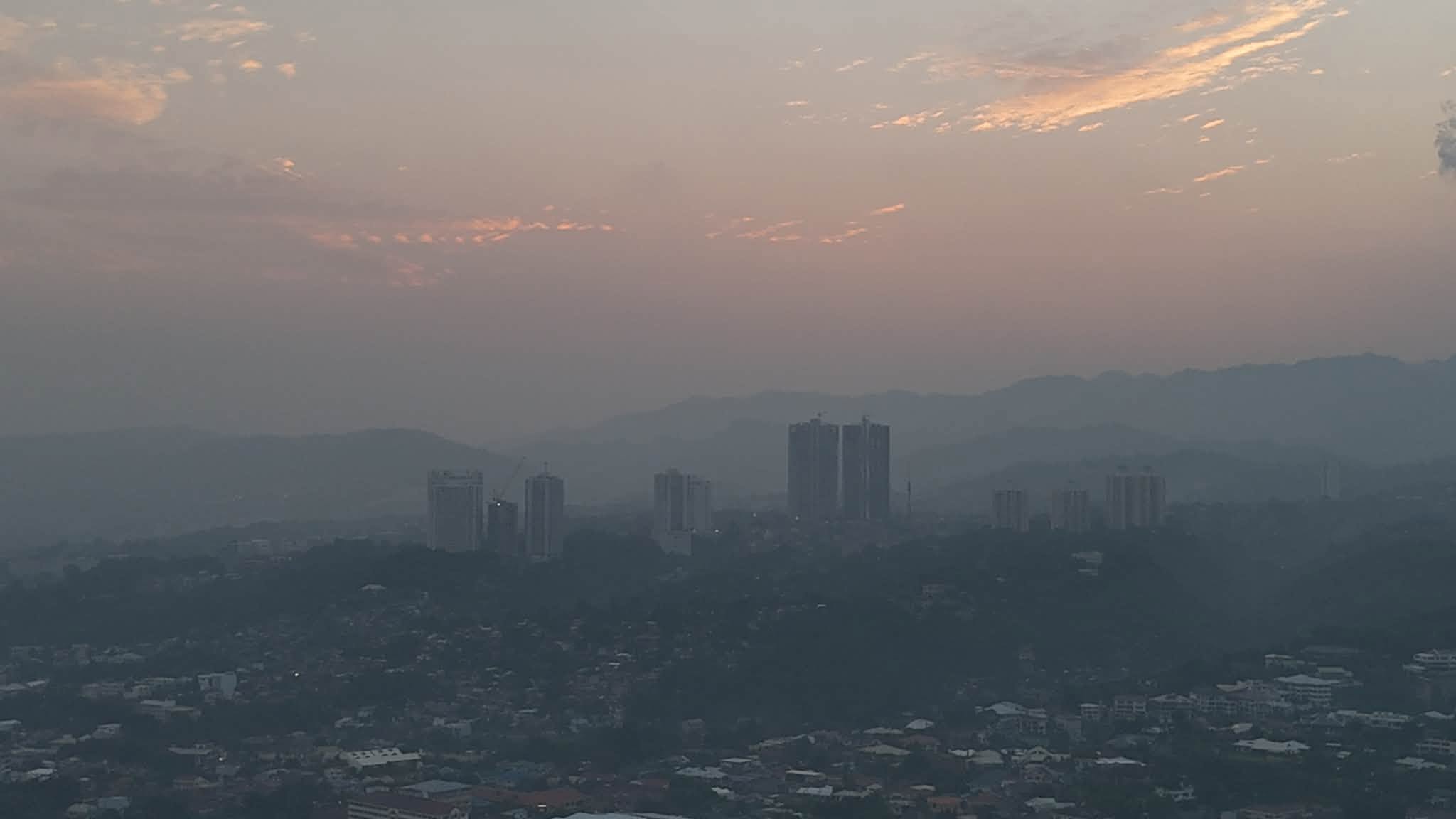
Cebu City students will remain out of face to face classes Saturday as authorities continue to treat the lingering haze as a health risk despite a gradual improvement in Metro Cebu’s air quality.
Acting Mayor Tomas Osmeña issued Executive Order No. 106 extending the suspension of face to face classes in all public and private schools through Sept. 5, covering classes, examinations and school based activities scheduled for Saturday.
The extension came after Metro Cebu’s Air Quality Index (AQI) remained at 184 as of 4 p.m. Friday, a level classified as “Very Unhealthy” by the Environmental Management Bureau Region VII (EMB 7).
Friday’s reading was lower than the 252 recorded Thursday, which marked the highest AQI recorded by EMB 7 during the current haze episode and exceeded levels recorded during the October 2015 haze episode, according to the bureau’s earlier assessment.
The improvement has not been enough for the city to lift its precautionary measures.
The order allows the suspension to be extended further depending on air quality conditions and assessments from government agencies.
The city’s decision followed several days of worsening air quality that began earlier in the week. EMB 7 recorded readings above 200 in Metro Cebu on Sept. 2, with the AQI reaching 203 at 6 a.m., 208 at 11 a.m. and 215 at 3 p.m.
By Thursday, the reading climbed to 252 before easing slightly later in the day.
The haze has been linked to transboundary pollution from forest fires in Indonesia. Prevailing southwest monsoon winds, or habagat, have carried pollutants toward the Visayas and Mindanao.
EMB 7 air quality specialist Arthur Niño Calupig earlier said the wildfire emissions were adding to pollutants from local sources, including vehicle and industrial emissions.
The main concern is fine particulate matter or PM2.5, which can penetrate deep into the respiratory system.
With air quality still classified as very unhealthy, authorities have continued urging residents to limit unnecessary outdoor activities and prolonged exposure.
Children, older adults and people with respiratory conditions are considered particularly vulnerable and are advised to take additional precautions.
Those who need to go outdoors are encouraged to use N95 or KN95 masks, which offer better protection against fine particles.
The Department of Health Central Visayas has likewise advised residents to limit outdoor exposure while the haze persists.
Cebu City’s suspension covers both public and private schools at all levels. Schools have been directed to coordinate with the Department of Education Cebu City Division and the City Public Information Office on implementation and information dissemination.
Alternative learning arrangements may continue in place of face to face classes under existing education policies.
The haze has also prompted other local government units in Cebu to suspend in person classes as air quality conditions remained unhealthy across parts of Metro Cebu.
EMB 7 has not given a definite timeline for when the haze will clear. Officials have said rainfall could help lower concentrations of suspended pollutants, while continued monitoring will determine whether conditions improve enough for normal activities to resume.
For now, the city’s decision keeps students indoors for another day as authorities wait for air quality to move out of the very unhealthy range.
Photo by Jacq Hernandez















Comments