



The Department of Energy (DOE) is working to bring two power barges from Luzon to Cebu and Panay within September as the Visayas grid struggles with a widening gap between available supply and demand.
DOE Visayas Director Renante Sevilla said one barge is being eyed for Cebu and the other for Panay as part of immediate measures to stabilize electricity supply before the power situation worsens.
The planned deployment comes as multiple power plant outages, reduced generating capacity and limited electricity imports from Mindanao continue to tighten the Visayas grid.
National Grid Corp. of the Philippines (NGCP) Assistant Vice President and head of System Operations Visayas Engr. Neil Modena said electricity demand across the Visayas had reached about 2,700 megawatts (MW), with Cebu accounting for roughly half at about 1,350 MW.
Cebu’s own generating facilities can produce only about 900 MW against demand of roughly 1,300 MW, leaving the province dependent on electricity from Mindanao and other areas.
Under normal conditions, the Visayas receives about 250 MW from Luzon and 450 MW from Mindanao. But supply constraints in Mindanao, including outages at its own power plants, have limited the electricity available for the Visayas.
NGCP’s latest advisory for Monday, Sept. 7, showed a red alert from 6 p.m. to 7 p.m., with yellow alerts from 3 p.m. to 6 p.m. and 7 p.m. to 9 p.m.
The grid had 2,530 MW of available capacity against a peak demand of 2,508 MW, while 818.9 MW remained unavailable because of forced outages and derated capacities.
NGCP cited the unavailability of TVI Unit 1 and PEDC Unit 3, along with the reduced 146.2 MW capacity of TVI Unit 2 because of a main steam problem. Limited power imports from Mindanao also contributed to the tight supply.
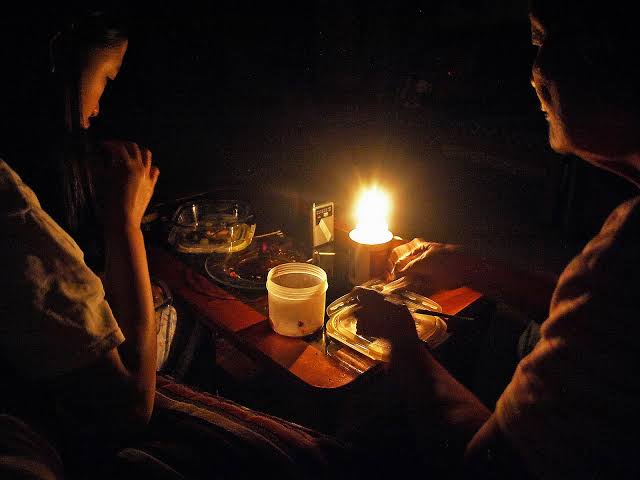
The shortage has already triggered rotational brownouts in Cebu. On Sept. 3, Visayan Electric Co. (VECO) removed about 130 MW of load, resulting in interruptions of around two hours in some areas.
VECO said interruptions normally last about an hour but may extend when NGCP requires a larger load reduction. Critical feeders serving hospitals and other essential facilities are excluded from the rotating interruptions.
Modena said NGCP has been managing the limited supply among distribution utilities to keep the transmission system from becoming overloaded.
Aside from the power barges, the DOE is pursuing additional ancillary services and battery energy storage systems as short term measures. Sevilla said negotiations are underway for a grid connected battery system that could provide about 250 MW of additional capacity.
Around 170 MW of battery storage capacity is also being deployed across Cebu, Negros and Panay, while a 20 MW modular diesel generating set is planned.
The DOE expects the Visayas power situation to improve by October as additional generating capacity and other interventions come online.
The 103 MW Kepco SPC Power Corp. facility in Naga has been fully restored, while TVI Unit 1, with about 169 MW capacity, is expected to return by Sept. 11.
Longer term measures include additional generation in Cebu, including the P7.5 billion, 150 MW Daanbantayan Solar Project, and the redevelopment of the Alegria oil and gas field. The DOE is also pressing NGCP to speed up the connection and energization of battery energy storage systems across the Visayas.
Photo courtesy of Business Mirror















Comments