



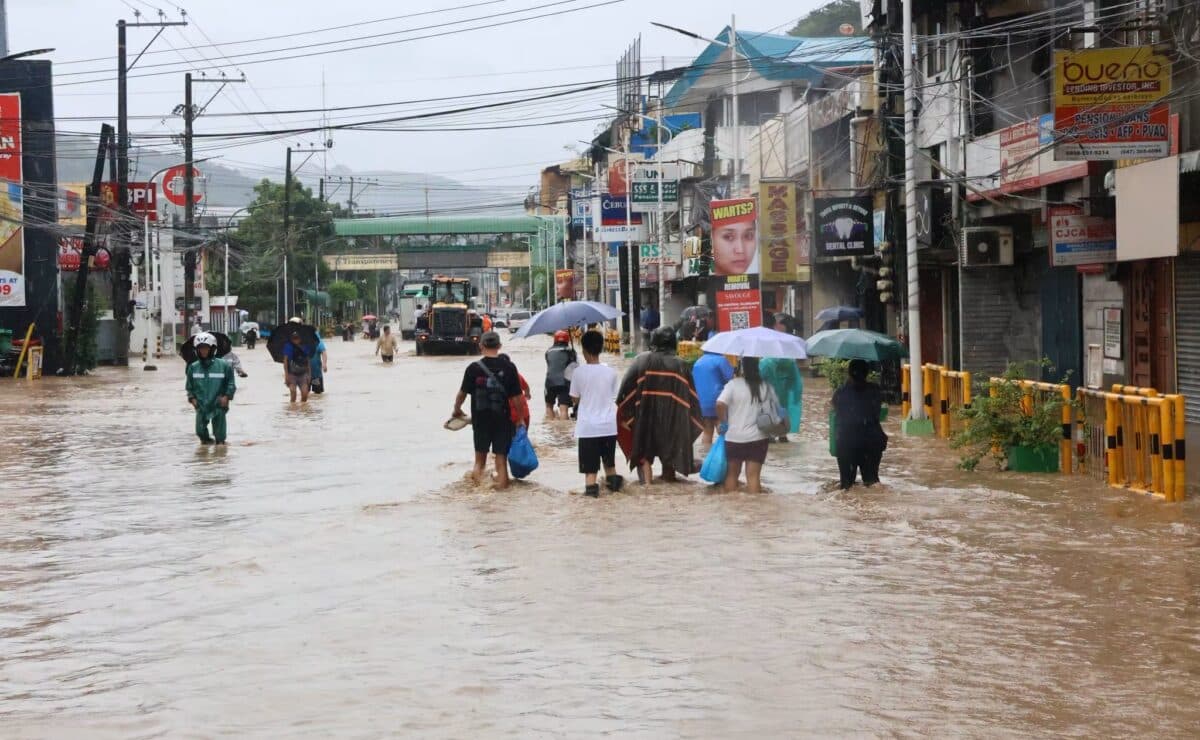
Human activity, environmental degradation and inadequate infrastructure are compounding the Philippines’ vulnerability to severe flooding as climate change intensifies extreme weather events, a climate policy expert said Monday.
Tony La Viña, associate director for Climate Policy and International Relations at the Manila Observatory and chief of the Klima Center, said climate change has made naturally occurring weather systems such as the southwest monsoon, or habagat, more intense.
“Ang climate change, isang world phenomenon, hindi lang sa Pilipinas, na nagpapatindi ng panahon, nagkakaroon tayo ng extreme weather events dahil sa climate change. Human-created yan, anthropological sabi namin yan, tayo ang gumawa niyan, hindi yan kalikasan,” he said in an interview on PTV4.
La Viña said the effects of extreme weather can become worse when infrastructure fails to adequately address flooding.
He cited poorly designed or inadequate infrastructure, including what he described as failed flood-control projects, as factors that can compound the effects of climate change and heavy rains brought by habagat.
While the government cannot immediately reverse climate change because it is a global phenomenon, La Viña said the country can reduce its effects through mitigation, adaptation and measures addressing losses and damage from climate related events.
He also called for stronger environmental protection, including preventing destructive mining, illegal tree cutting and infrastructure projects that further degrade natural resources.
“But talagang huwag natin ipalala ang sitwasyon, no more mining, no more cutting of trees, no more infrastructure that damages the environment that makes it more difficult for us,” La Viña said.
He said protecting forests, rivers and watersheds should also be a priority as environmental degradation can increase the country’s exposure to flooding.
La Viña urged individuals to consider how their daily activities contribute to climate change and flooding, saying even small actions can have an impact.
“Dalawa naman ang kailangan gawin, micro level. Una, be mindful ng contribution mo sa climate change. Kahit maliit lang siya, it still matters. So paggamit ng electricity, paggamit ng tubig, importante yan na alam mo may contribution tayo na individual,” La Viña said.
He also urged people to prevent their waste from contributing to flooding by reducing the amount of garbage they produce and disposing of it properly.
“Pangalawa, importante din na huwag tayong mag-contribute sa dahilan ng mga baha, halimbawa sa basura natin. Mahalaga na ilimit natin ang basura natin at itapon siya ng mabuti,” he added.
La Viña stressed that vulnerable communities should receive particular attention because poorer populations are often among the first to experience the effects of climate change.
He said climate adaptation and environmental protection require action beyond individual households or communities.
La Viña said the country needs to prepare for climate change and reduce pollution that contributes to it.
He described flooding and climate change as life and death concerns, warning that their effects could reach future generations if they are not addressed now.
La Viña said addressing the problem requires a whole of nation and whole of world approach involving government, communities and individuals.















Comments