



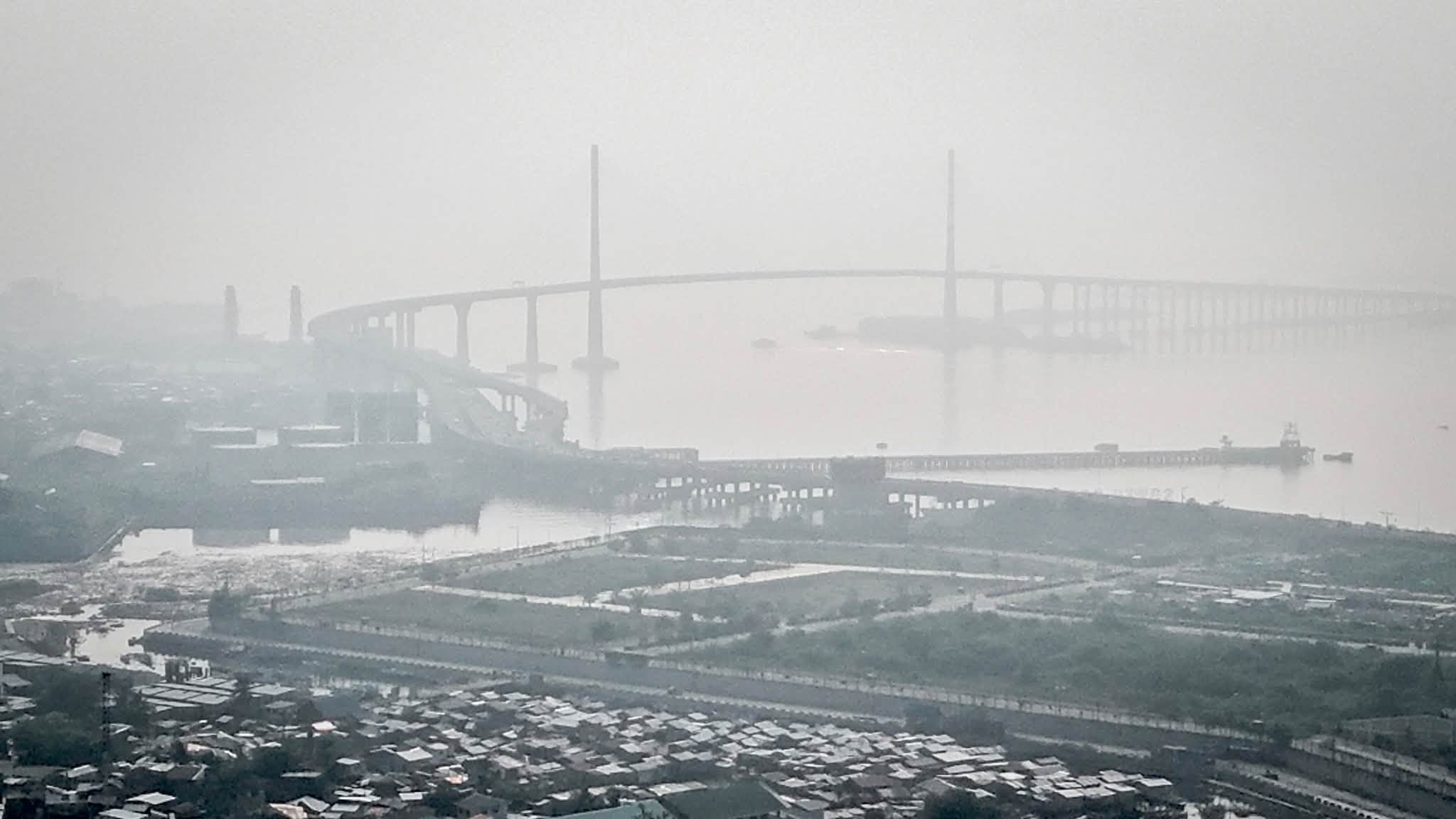
Cebu City has opened a health fast lane at the Cebu City Medical Center (CCMC) for residents experiencing difficulty breathing as Metro Cebu’s air quality reached the “very unhealthy” level Monday, Sept. 21.
Kenneth Siasar, chief of staff of Mayor Nestor Archival, said the city directed its City Health Department to prioritize residents with respiratory concerns, particularly those with existing conditions, amid the continuing haze.
“Gitagaan niya ug direktiba nga atong City Health Department nga tagaan ug fast lane in the event mag-experience ug lisod sa pagginhawa ang atong mga lumulupyo, especially kining atong mga comorbidity, katong mga masakitun na may concern sa respiratory problems,” Siasar said during a press conference Monday.
The fast lane will be available at CCMC as the city strengthens health monitoring and response to deteriorating air quality.
The Environmental Management Bureau in Central Visayas (EMB 7) recorded an Air Quality Index (AQI) of 189 at its Metro Cebu monitoring station as of 11 a.m. Monday, placing the area under the “very unhealthy” classification.
EMB 7 advised people with heart or respiratory diseases, including those with asthma, to stay indoors and rest as much as possible.
Residents were also urged to avoid heavy-traffic areas, postpone unnecessary trips and voluntarily reduce vehicle use.
A monitoring station in Barangay Cabitoonan, Toledo City, meanwhile, recorded an AQI of 101, classified as “unhealthy for sensitive groups.”
People with respiratory diseases were advised to limit outdoor exertion.
Siasar said CCMC had already received residents seeking consultation for respiratory concerns, although the city could not yet determine whether their conditions were directly caused by the haze.
“Naay nagpa-consulta nato, but again, daan na man gud silang naay problem sa respiratory. So, di pa ta makatumbok if it is directly related to the haze or other factors,” he said.
City health officials are continuing to assess the cases because respiratory illnesses may have multiple contributing factors.
The city also instructed health personnel, particularly those assigned to barangay health centers, to strengthen monitoring of residents who may be affected by the haze.
Siasar said some residents may mistake the haze for ordinary cloud cover and fail to recognize its potential health effects.
The worsening air quality also prompted the city to extend the suspension of face-to-face classes to the college level.
Siasar said the city initially left the decision on college classes to school owners and presidents but later included college students as air-quality readings increased.
The city has been using an AQI level of 150 as a basis for considering class suspensions when readings continue to rise.
Other restrictions, including limitations on outdoor activities, remain under consideration, with additional measures possible if air quality worsens.
Despite the “very unhealthy” reading, EMB 7 air quality specialist Engineer Arthur Niño Calupig said Metro Cebu’s conditions could improve within the next two to three days because of changing wind dynamics.
Monday’s readings showed some improvement compared with previous levels, although PM2.5 concentrations remained within the “very unhealthy” category.
Authorities continued to urge residents to exercise caution because of the potential health risks.
The latest conditions followed a peak in PM2.5 concentrations on Sept. 19, when levels reached the “acutely unhealthy” category.
Meanwhile, EMB 7 is working with the Philippine Atmospheric, Geophysical and Astronomical Services Administration (PAGASA) to develop an air-quality monitoring website for Central Visayas.
The platform is expected to launch soon and will provide residents with another source of information as authorities continue monitoring air quality across the region.















Comments