



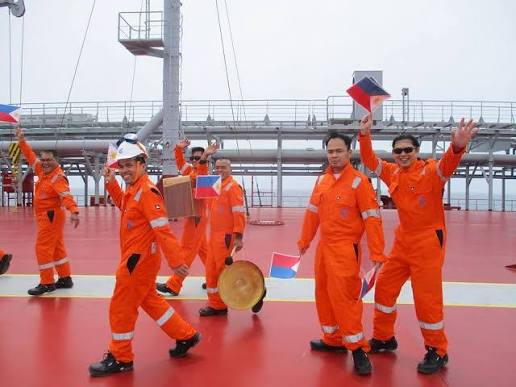
About 1,500 Filipino seafarers have exercised their right to refuse sailing over the past three years because of security risks at sea, the Department of Migrant Workers (DMW) said Tuesday.
DMW Secretary Hans Leo Cacdac said around 500 seafarers exercised the right this year alone as attacks and armed conflicts continue to threaten maritime routes, particularly in parts of the Middle East and the Black Sea.
“As it stands, in the last three years, around 1,500 Filipino seafarers have exercised their right to refuse sailing. Some of them, in fact, Filipino captains have stood firm for the protection of their seafarers,” Cacdac said in a media interview during the opening of the two-day Philippine Maritime Convention at The Manila Hotel.
Under government guidelines, seafarers who refuse to sail to high-risk areas are entitled to repatriation and two months’ compensation.
Cacdac said ships that return to areas considered high risk must also undergo security assessments and implement appropriate safety measures before sailing.
The government also ensures that seafarers who exercise their right to refuse sailing will not face discrimination when they seek to return to sea, he said.
The DMW has issued advisories urging Filipino seafarers to avoid the Strait of Hormuz amid the volatile security situation in the area.
The department is also investigating reports involving Filipino seafarers aboard vessels that may have entered restricted areas.
“We’re investigating the current round of attacks and will impose the necessary measures if we find that there are violations of the UN (United Nations) rules,” Cacdac said.
He said the government considers any attack on a vessel a threat to seafarers regardless of the nature or scale of the incident.
Cacdac also stressed the need to strengthen the country’s maritime system to provide better protection for Filipino seafarers as the global industry changes.
“Our aspiration is clear: To strengthen a Philippine maritime system where the seafarer is protected, competent, respected, and prepared for the future,” he said.
He said the effective implementation of the Magna Carta of Filipino Seafarers should be supported by strong maritime regulation, ethical recruitment, quality education and training, labor justice, responsive government services and international cooperation.
Cacdac also called for closer cooperation among government, labor, industry, academe and international partners to address changes and emerging risks in the global maritime sector.
“Let us ensure that whatever direction the maritime industry takes, the Filipino seafarer remains at the center of our journey,” he said.
The Philippine Maritime Convention 2026 is being organized by the DMW in partnership with the Maritime Industry Authority, Associated Marine Officers’ and Seamen’s Union of the Philippines, and Joint Manning Group.
The two-day convention seeks to translate discussions on maritime policies into concrete commitments and strengthen cooperation among government, industry and labor for the welfare of Filipino seafarers.















Comments