



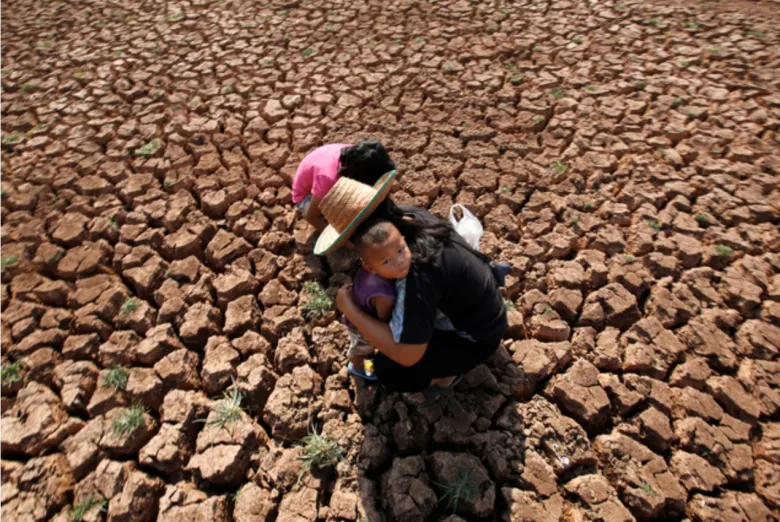
Central Visayas could face a worsening water shortage in the coming months as a strong El Niño is expected to intensify into a very strong episode by the end of 2026, with Cebu and Bohol potentially reaching drought conditions by March 2027.
The Philippine Atmospheric, Geophysical and Astronomical Services Administration (PAGASA) presented the outlook to regional disaster officials on Sept. 23 during the fourth Regional Task Force Meeting on El Niño.
PAGASA Visayas weather specialist Mark Gales said Central Visayas could experience below-normal rainfall toward the end of 2026 and into early 2027.
A dry spell could be declared by the end of December if rainfall in November and December falls below normal, Gales said. Continued below-normal rainfall could then lead to drought conditions by March 2027.
PAGASA’s climate outlook issued Sept. 23 identified Cebu and Bohol among the provinces that could experience drought by the end of March.
Under PAGASA’s criteria, a dry spell occurs after three consecutive months of below-normal rainfall or two consecutive months of way-below-normal rainfall.
Drought is declared when way-below-normal rainfall persists for three consecutive months or below-normal rainfall continues for five consecutive months.
“In November, magka-anam na ni kaubos ang atong gi-expect nga pag-ulan-ulan sa nahibiling BER months. Then sa December mas ubos pa jud ang rainfall amount. So in January and February we are expecting a very strong El Niño,” Gales said.
(In November, our expected rainfall for the remaining “-ber” months will gradually decrease, and then in December the rainfall amount will be even lower. So in January and February, we are expecting a very strong El Niño.)
PAGASA said temperatures in Central Visayas are expected to remain near average to slightly above average in the coming months.
Its El Niño Advisory No. 4, issued Sept. 7 and updated Sept. 23, said a strong El Niño is already present in the tropical Pacific.
Most climate models project the phenomenon to reach a very strong state by the end of 2026 and persist through the first half of 2027.
The fourth Regional Task Force Meeting was conducted in a hybrid format and attended by members of the Regional Disaster Risk Reduction and Management Council, along with disaster risk reduction and management offices from Central Visayas provinces and the highly urbanized cities of Cebu, Lapu-Lapu and Mandaue.
Regional agencies said they had reactivated their El Niño preparedness programs covering food, water, energy, health and public safety.
The Department of Agriculture, National Irrigation Administration, Department of Energy, Department of Health and Department of the Interior and Local Government presented their respective preparations on food security, water and irrigation, energy security, health and public safety.
The Department of Health said it had coordinated with local government units, provincial and city health offices, disaster risk reduction and management health focal persons, and hospitals across Central Visayas to monitor and report El Niño-related health data.
The agency is also tracking local governments, hospitals and other stakeholders that have yet to comply with reporting requirements.
The Department of Agriculture, meanwhile, said it was working with the Bureau of Soils and Water Management, provincial governments and NIA to procure cloud-seeding operations.
The DA is also preparing district-level food security and disaster preparedness assessment and planning sessions scheduled for Oct. 12 to 16 in Bohol and Oct. 19 to 23 in Cebu.
For October, PAGASA forecasts below-normal rainfall across most parts of Luzon, the Visayas and Caraga.
The bureau also expects the southwest monsoon or Habagat to end in October and transition to the northeast monsoon or Amihan by late October or November.
The transition period could bring a temporary lull in rainfall before Amihan becomes established.
PAGASA also forecasts three to five tropical cyclones to develop in or enter the Philippine Area of Responsibility from October 2026 to March 2027, with most expected during the last quarter of 2026.















Comments