



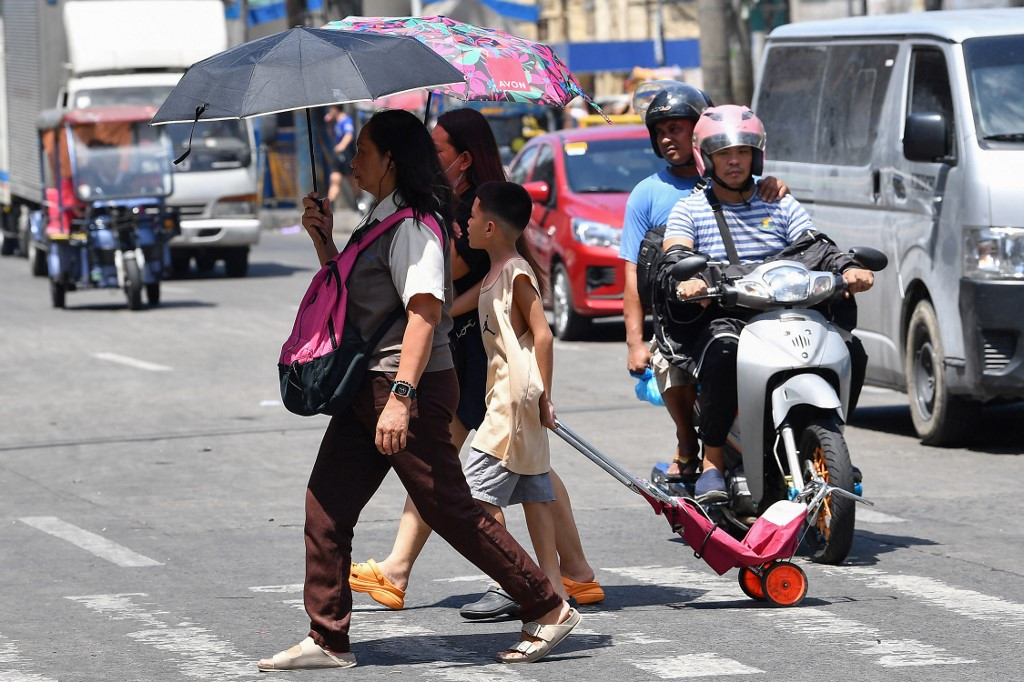
The Philippines could face severe rainfall reductions, hotter temperatures and mounting threats to agriculture and water supplies as a very strong El Niño develops, with a state weather expert likening the climate phenomenon to the “convulsion” stage of an illness to stress the need for urgent preparedness.
Ana Liza S. Solis, chief of the Climate Monitoring and Prediction Section of the DOST-PAGASA Climatology and Agrometeorology Division, used the analogy during a recent briefing to explain the intensity of the current El Niño episode.
“So sabi nga po natin, sinat, lagnat, trangkaso, kumbulsyon. Big moderate is strong, very strong. So ‘yun nararanasan nating init na temperatura natin is kumbulsyon, very strong El Niño [episode],” Solis said.
She explained that, just as a severe illness can lead to complications, a very strong El Niño raises the likelihood of significant climate impacts if conditions persist.
“So ibig sabihin po, mas mataas ang probability na ang magiging impact nito ay posible natin maranasan, lalong-lalong na po in terms of significant reduction ng rainfall, mas mainit na temperatura. Therefore, possible po na maapektuhan, including ‘yung mga agriculture natin kapag nagtagal. Yung ating water, ‘wag naman po ‘yung socio-economic natin,” she said.
Solis clarified that the comparison was meant to emphasize the possible severity of the climate event, not to describe an actual medical effect of El Niño.
She cited previous strong to very strong El Niño episodes in 1982 to 1983, 1997 to 1998 and 2015 to 2016, but cautioned that the current event may unfold differently.
“No two El Niños are alike and each event are unique,” Solis said.
The Philippine Atmospheric, Geophysical and Astronomical Services Administration (PAGASA) monitors sea surface and subsurface temperatures to assess the phenomenon. Solis said subsurface conditions are among the factors contributing to the unusual characteristics observed in the current episode.
If the conditions persist, prolonged dry weather and higher temperatures could affect agricultural production and water availability. Farmers may face greater difficulty securing enough water for crops, while households and communities could experience increased demand as temperatures rise.
Solis said the warning was intended to give government agencies, local governments, farmers, businesses and households time to prepare, rather than alarm the public.
She urged the public to follow official weather advisories and use water efficiently. Agricultural and water resource managers can also use climate forecasts to guide crop planning and water allocation.
PAGASA will continue monitoring the developing conditions, with the eventual impacts depending on the duration and evolution of El Niño and local weather patterns.















Comments