



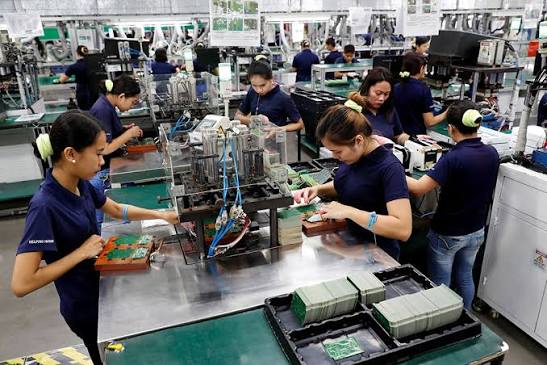
The Philippines is seeking to attract investments in chip design, engineering and research as electronics exports surge, with total merchandise exports reaching a record USD64 billion in the first eight months of 2026.
Executive Secretary Ralph Recto, who chairs the Semiconductor and Electronics Industry Advisory Council, said electronics exports totaled USD37.1 billion from January to August, a 26.2% increase from the same period last year.
The government aims to move the industry beyond manufacturing and assembly as global demand for semiconductors and artificial intelligence (AI) infrastructure expands.
“Nakikita na ng mga investors na isa tayong investment choice hindi lang para sa manufacturing at assembly kundi pati na rin sa (Investors are seeing the Philippines as an investment destination not only for manufacturing and assembly but also for) chip design, engineering, research and innovation,” Recto said in a news release Sunday.
The Philippine Statistics Authority reported that merchandise exports reached USD9.1 billion in August, the highest monthly level in 35 years and a 27.8% increase from a year earlier. Electronics accounted for USD6.2 billion, or 68% of the total.
Recto said growing demand for AI, semiconductors and data centers could open more opportunities for Filipino workers, engineers and businesses.
The Semiconductor and Electronics Industries in the Philippines Foundation Inc. has raised its forecast for electronics export growth in 2026 to 10%, equivalent to about USD54 billion, citing demand for AI and data-center infrastructure.
Among the planned investments is Toshiba’s multi-billion-peso expansion of its Philippine operations over the next three years to increase production of high-capacity hard disk drives used in data centers. The project is expected to create about 3,000 jobs.
To sustain the industry’s expansion, the advisory council has introduced a roadmap targeting USD110 billion in annual electronics exports by 2030.
The plan seeks to raise the Philippines’ share of global semiconductor assembly, testing and packaging from 4% to 7%, while capturing 4% of the global electronics manufacturing services market.
Developing an integrated circuit design industry could generate an additional USD2 billion to USD3 billion in annual export receipts, according to the roadmap.
The government is also promoting the Luzon Economic Corridor, which connects Subic, Clark, Metro Manila and Batangas, to draw investments in advanced manufacturing, logistics, energy, transport and digital infrastructure.
The corridor aims to generate up to one million jobs, including an estimated 130,000 positions from a planned 1,600-hectare technology and advanced manufacturing hub at New Clark City in Capas, Tarlac.
Meanwhile, the Board of Investments is advancing a Philippine Technology Corridor linking industry hubs across the country.
The proposed network includes chip design in Metro Manila, advanced manufacturing at New Clark City, critical minerals in Mindanao and AI infrastructure in Batangas.















Comments