



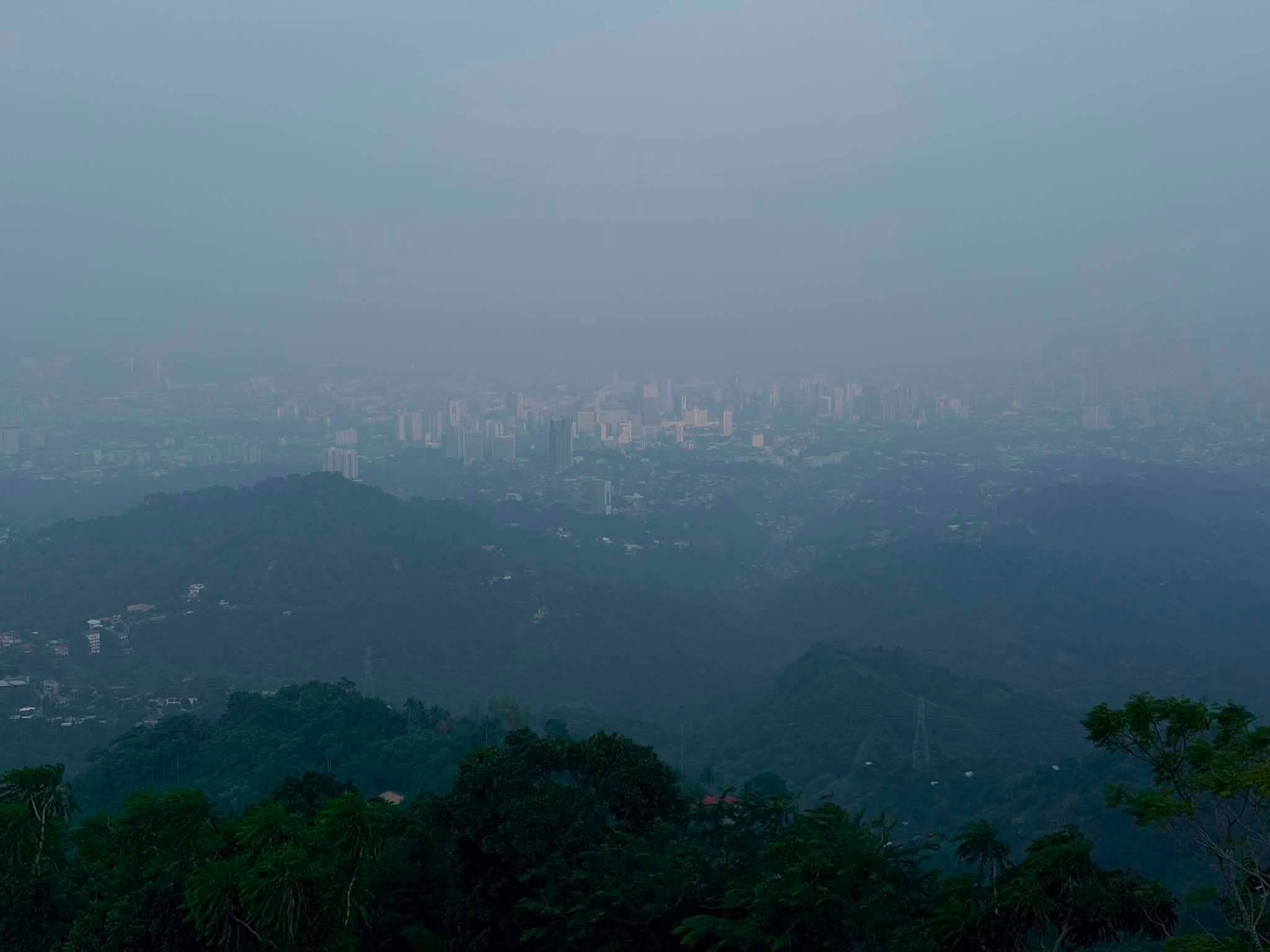
Cebu local governments may soon follow standardized deadlines and clearer air pollution benchmarks when deciding whether to suspend classes, under proposed provincial guidelines aimed at protecting students from poor air quality.
Gov. Pamela Baricuatro is expected to issue an executive order outlining the protocol following a coordination meeting with mayors and other stakeholders at the Capitol Social Hall on Monday, Oct. 26.
The meeting sought to turn recommendations from an open forum held the previous week into procedures that municipalities, schools and government agencies can follow when air pollution threatens students’ health.
Dr. Nikki Baricuatro Catalan-Vizcayno, the Capitol’s Piso Health consultant, said inputs from local officials, medical experts, parent-teacher associations and national agencies would help shape the proposed policy.
Under the proposed guidelines, local governments would issue an advisory by 8 p.m. if classes the following day could be affected, followed by a final decision by 4:30 a.m.
Earlier announcements may be considered in areas where students need to leave home before the designated deadline to travel to school.
For afternoon-only classes, announcements would be made by 11 a.m. The proposed procedures would also align with Executive Order 66, according to the provincial government.
The province also plans to ask the Department of Environment and Natural Resources’ Environmental Management Bureau (DENR-EMB) to provide air quality index (AQI) readings alongside concentrations of fine particulate matter known as PM2.5.
PM2.5 consists of tiny airborne particles that can penetrate deep into the respiratory system. Providing both the AQI and pollutant concentrations, with explanations of their health implications, is intended to help local officials and families better understand air pollution readings.
The provincial government also wants the EMB to clarify whether air monitoring equipment and readings independently obtained by municipalities can be validated, certified or accredited, and what standards local governments must meet.
Meanwhile, the Provincial Disaster Risk Reduction and Management Office (PDRRMO) will explore monitoring technologies that municipalities could deploy, particularly in areas with limited access to air quality information.
National agencies will also be asked to explore ways to expand monitoring coverage and detect localized changes in pollution levels more effectively.
The proposed protocol would set a cutoff for the air quality data used in suspension decisions and require available forecasts to reach decision-makers before announcement deadlines.
Each local government would designate a primary focal person and an alternate to coordinate the process, with official announcements issued through its disaster risk reduction and management office.
Under the proposed guidelines, classes could resume on the next school day when a valid EMB reading and health advice support the decision.
Catalan-Vizcayno said the framework would aim to protect children’s health while accounting for differences in local conditions and the capacities of individual local government units.
The guidelines would also seek to strengthen coordination among municipalities, schools and national agencies while respecting local government authority and existing national policies.
Among those who attended Monday’s meeting were Department of Education Cebu Province Division Superintendent Dr. Senen Paulin Aloguinsan, several municipal mayors and representatives, Cordova Vice Mayor Victor Tago III, Association of Barangay Councils President Bobby Tambis, and Provincial Board members Neneth Reluya and Paz Rozgoni.















Comments