



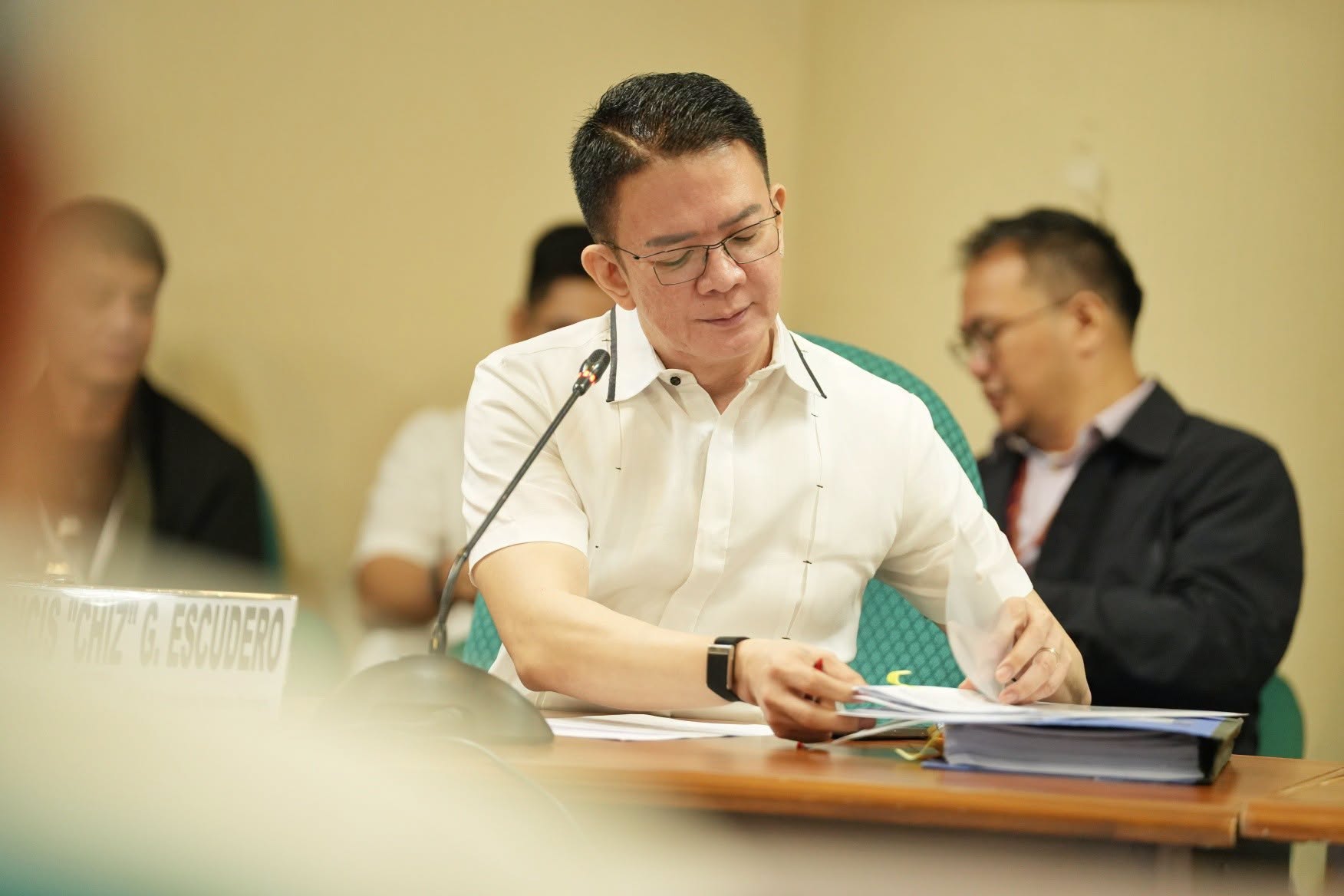
Sen. Francis “Chiz” Escudero is proposing to use thousands of unsold condominium units for the government’s affordable housing program, citing the need to match existing property inventory with the housing needs of millions of Filipinos.
Escudero raised the proposal during his Chiz Wiz! podcast over the weekend, where Department of Human Settlements and Urban Development (DHSUD) Undersecretary Marisol Anenias and Colliers Philippines Research Director Joey Roi Bondoc discussed the country’s housing situation.
Bondoc cited an estimated 80,000 unsold condominium units in the National Capital Region alone, many of which were initially intended for the Philippine offshore gaming operator market.
Escudero described the situation as a “housing paradox,” noting that thousands of units remain unoccupied even as the country faces a substantial housing backlog.
“Why build from scratch when there are already existing units that can be made available to our people?” he said, calling for public-private collaboration to make available units accessible to more families.
The Senate Committee on Urban Planning, Housing and Resettlement chairperson said the government and property developers should consider incorporating excess condominium inventory into the expanded Pambansang Pabahay para sa Pilipino (4PH) Program.
Anenias said the DHSUD already allows developers to enroll excess housing inventory in the 4PH Program, although participation may require them to accept lower profit margins or absorb losses.
Escudero said the challenge goes beyond the availability of housing units, stressing that government must also make monthly payments affordable for ordinary Filipino families.
“Housing is not simply a problem of supply. The bigger challenge is making homes affordable for ordinary Filipinos through financing terms they can realistically pay every month,” he said.
He urged policymakers to explore improved financing arrangements, subsidies and longer repayment periods to reduce monthly housing costs. He also called for more affordable rental housing for families not yet ready to purchase homes.
The proposal forms part of legislative efforts to expand access to housing and improve the country’s housing framework.
One measure is Senate Bill No. 1992, which seeks to strengthen the government’s capacity to acquire land for socialized housing. The bill has passed its third reading in the Senate.
Escudero also filed Senate Bill No. 2571, which seeks to expand developers’ compliance options and strengthen government mechanisms for delivering affordable housing under the Urban Development and Housing Act of 1992.
The proposed measure would allow developers to convert ready-for-occupancy units into accredited socialized housing, provided these meet DHSUD price ceilings and development standards. Once accredited, the units could count toward developers’ existing or future balanced housing obligations.
Escudero said the government should also work to lower the overall cost of homeownership, encourage the productive use of existing housing inventory and improve mass transportation.
He said better mass transit would allow more Filipinos to live outside major urban centers while remaining connected to employment opportunities.















Comments