



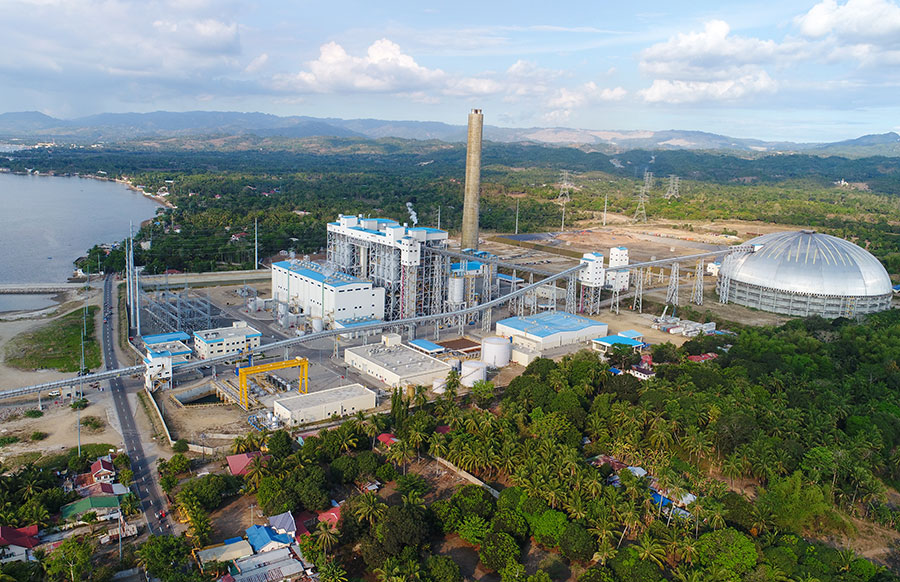
Recurring power supply alerts in the Visayas are putting Cebu’s electricity needs under scrutiny, as the province’s consumption continues to exceed its local generating capacity and businesses call for a more reliable and affordable supply.
The National Grid Corp. of the Philippines (NGCP) placed the Visayas grid under a yellow alert from 5 p.m. to 6 p.m. on Nov. 16, following outages and reduced generation at several power plants.
Toledo Power Corp.’s thermal plant and Cebu Private Power Corp.’s diesel plant were on forced outage, while Unit 1 of Therma Visayas Inc. (TVI) operated at reduced capacity.
The grid recorded about 2,774 megawatts (MW) of available capacity against peak demand of 2,636 MW earlier that day. Fourteen power plants were on forced outage, while 21 others were operating below their available capacities.
Two TVI generating units in Toledo City have since returned to service, restoring 338 MW to the grid and easing immediate supply pressures. Still, the Visayas grid has been placed under yellow and red alerts several times in recent months.
For Cebu, the concern extends beyond temporary power shortages. Electricity demand in the province is nearing 1,300 MW, compared with local generating capacity of about 900 MW, making it dependent on power transfers from other parts of the Visayas and imports from Luzon and Mindanao.
Transmission limitations further constrain the amount of electricity that can be brought into the province. Although the Luzon-Visayas interconnection has a nominal capacity of about 440 MW, actual transfers have at times reached only around 250 MW as grid operators maintain contingency reserves and voltage stability.
Cebu accounts for about 42 percent of the Visayas’ electricity demand. Its consumption is growing by approximately 14 percent annually, more than twice the national average of roughly 6 percent.
Department of Energy (DOE) Secretary Sharon Garin has warned that the region needs more baseload generation to reduce its vulnerability to power plant outages.
“Even with the absence of just a single power plant, we will go on alert and that is not good for business,” she told lawmakers during an Oct. 3 congressional hearing in Bacolod City.
Garin also pointed to Cebu’s rapid growth and the need to ensure that electricity constraints do not affect its economy.
“Cebu is the fastest growing. We don’t want Cebu’s economy to slow down because of electricity challenges,” she said.
The Cebu Chamber of Commerce and Industry (CCCI) has likewise identified power costs and supply reliability as concerns for the business sector, warning that unstable electricity could undermine investments, jobs and economic expansion.
CCCI president Regan King said reliable power is necessary for businesses to remain competitive as Cebu continues to attract investments.
“The business sector cannot build a more competitive Cebu economy on an unreliable power supply,” King said.
The chamber urged government agencies, energy companies and other stakeholders to coordinate efforts to improve grid reliability and stabilize electricity costs. It also stressed that micro, small and medium enterprises, workers and households should not shoulder the costs arising from power supply problems.
Several proposed projects are expected to increase the region’s capacity to deliver electricity to Cebu and strengthen its local supply.
The planned Cebu-Leyte Interconnection Lines 3 and 4 aim to provide an additional 1,200 MW in transfer capacity. Other measures, including battery storage, distributed solar power and demand-side management, could also help stabilize the grid.
The Energy Regulatory Commission has granted provisional authority for East Asia Utilities Corp. to develop a 44.72-MW battery energy storage system in Mactan. The facility is expected to provide up to 13 MW each of firm regulating and contingency reserves.
On the generation side, two planned coal-fired projects could add a combined 257 MW to Cebu’s capacity.
TVI is targeting commercial operations in 2028 for its 150-MW Toledo expansion, while Cebu Energy Development Corp. expects its 107-MW project to start operations in 2029.
Garin said projects that qualify under existing exemptions to the government’s coal moratorium may proceed, particularly expansions at established power plant sites.
Until these projects become operational, Cebu will continue to rely on existing power plants and electricity imports to meet its growing demand, while transmission constraints remain a challenge.
The province’s ability to sustain business expansion will depend in part on whether new generation and transmission investments can keep pace with its increasing electricity consumption.















Comments