



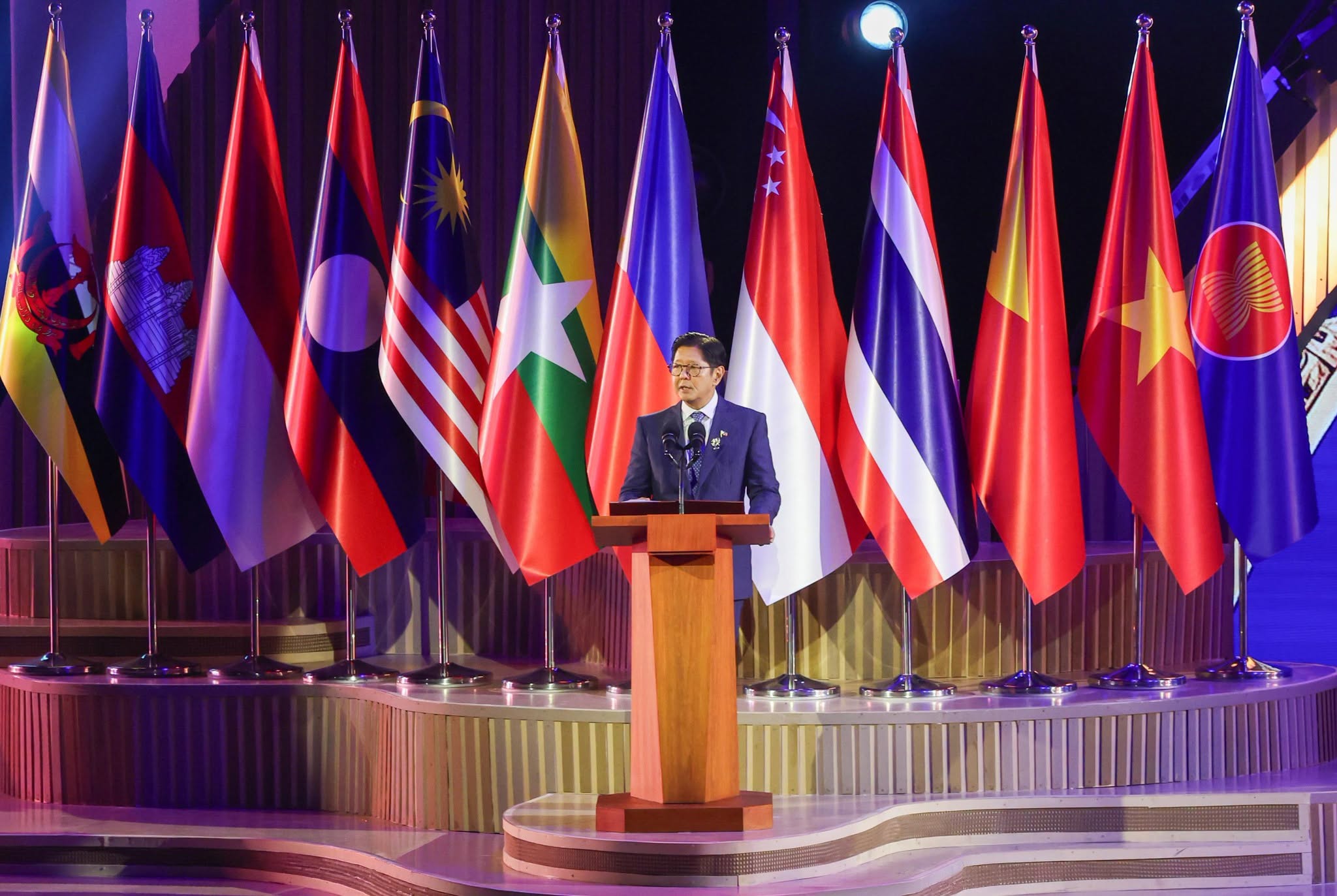
The Philippines secured more than 100 outcome documents during its 2026 chairship of the Association of Southeast Asian Nations (ASEAN), President Ferdinand R. Marcos Jr. said Tuesday, describing the country’s leadership of the regional bloc as successful and impactful.
Speaking to reporters at the International Media Center at the World Trade Center Metro Manila in Pasay City, Marcos said the 49th ASEAN Summit and Related Summits produced agreements and initiatives addressing regional concerns across the bloc’s three pillars.
“Over the past three days, we have been very productive, very candid, yet focused, resulting in impactful decisions that address the critical issues of the day. Across three pillars of ASEAN, the leaders acted on over 100 outcome documents,” he said.
“These are not merely documents. These are frameworks, guidelines, and perspectives in advancing practical cooperation on key regional priorities.”
Among the developments he highlighted were initiatives on maritime cooperation, digital economy integration, energy connectivity, disaster preparedness and child protection.
The Philippines’ chairship saw the adoption of the concept note and terms of reference for the ASEAN Maritime Center, which is envisioned as a regional knowledge hub providing advisory support for maritime initiatives and concerns.
Marcos said the center would help promote evidence-based policymaking and support the implementation of maritime priorities agreed upon by ASEAN member-states.
The leaders also adopted the ASEAN Leaders’ Declaration on Preventing Online Sexual Abuse and Child Sexual Abuse or Exploitation Materials in the Digital and Artificial Intelligence (AI)-Enabled Environment.
The declaration seeks to strengthen regional efforts to protect children’s rights and promote a safer digital environment as the use of technology and AI expands.
Marcos also cited the conclusion of negotiations on the ASEAN Digital Economy Framework Agreement (DEFA), which he described as a major achievement of the Philippine chairship.
He said the Philippines guided the negotiations toward their conclusion and turnover within the year, calling DEFA the first region-wide digital economy framework agreement in the world.
“We are very proud of the DEFA because this is the first region-wide digital economy framework agreement in the whole world,” Marcos said.
Once implemented, the agreement is expected to make cross-border electronic commerce easier, establish common rules for data and digital payments, and help small businesses reach markets outside their home countries.
Marcos also stressed that ASEAN should take part in shaping technological developments rather than remain only a consumer of emerging technologies.
“We do not accept that ASEAN should just be customers to the AI revolution, but that we should be part of guiding the directions in which that development will take place, and that I think is the difference,” he said.
On energy security, Marcos pointed to progress in operationalizing the enhanced memorandum of understanding on the ASEAN Power Grid, which establishes institutional planning and regulatory foundations for cross-border electricity connectivity.
Preparations are also underway for the first undersea power cable linking Sabah, Malaysia, and Mindanao in the Philippines, expanding regional energy-sharing efforts beyond existing land-based connections.
The summit also welcomed a regional framework for improving disaster preparedness and response, particularly as climate change intensifies extreme weather events across Southeast Asia.
Marcos said the initiative would strengthen coordination among member-states in forecasting, rescue operations, humanitarian assistance and disaster relief.
“This strengthens interoperability and this streamlines processes to improve our region’s effective response to disasters. This is a recognition that the climate change is well and truly here,” he said.
Other developments included the unveiling of an updated ASEAN flag and emblem during Sunday’s opening ceremony, reflecting Timor-Leste’s accession as the bloc’s 11th member.
The expansion of the Treaty of Amity and Cooperation in Southeast Asia also brought the number of high contracting parties to 65, Marcos said.
Reflecting on the country’s year-long leadership, he said the Philippines worked alongside ASEAN leaders and partners through a difficult period marked by regional and global crises.
“It has been an honor to steer ASEAN forward over the past year, alongside my fellow ASEAN leaders and partners, as we have navigated a very, very, very difficult year, and these are the crises that beset us,” Marcos said.
Marcos said the summit’s outcomes reflected the Philippines’ effort to make regional cooperation more responsive to the needs and shared challenges of ASEAN member-states.















Comments