



Cebu provincial officials are pushing for sustained investments in water infrastructure and stronger cooperation among local governments and other sectors as the province prepares for the threat of El Niño.
Beyond responding to a prolonged dry spell, the provincial government wants to address long-standing gaps in water distribution, resource management and infrastructure to secure supplies for communities in the years ahead.
These concerns were raised during the two-day Cebu Water Summit 2026, which opened on Nov. 17 at the Capitol Social Hall. The event gathered representatives from government agencies, water utilities, local governments, the private sector and the academe.
The Cebu Provincial Government organized the summit with the University of San Carlos Water Resources Center Foundation Inc. (USCWRCFI) and the Philippine Institute of Chemical Engineers to identify practical measures to improve water availability across the province.
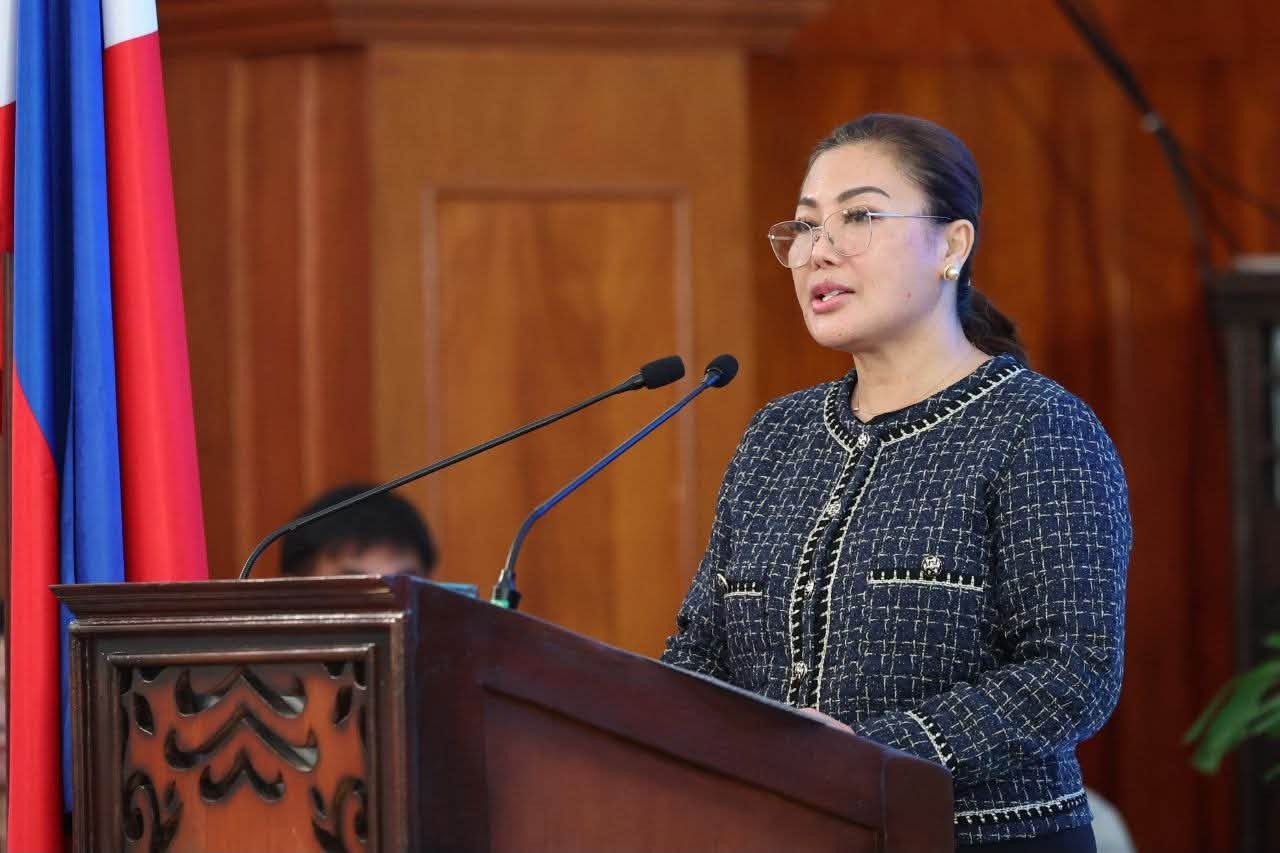
Governor Pamela Baricuatro said water security requires coordinated action because water resources and systems extend beyond political boundaries.
“As a Province, we recognize that water challenges cannot be addressed through isolated efforts. Water resources do not follow political boundaries. Our watersheds, rivers, and groundwater systems are inter-connected, and the concerns of one locality can affect neighboring communities,” Baricuatro said.
She proposed a common Cebu Provincial Water Security Agenda to set priorities for water projects, clarify responsibilities and encourage investments from government and private institutions.
Baricuatro said planning must be based on reliable information about available water resources, supply deficiencies and projected demand.
She also called for the involvement of national government agencies, local governments, businesses, academic institutions and communities, saying the provincial government cannot meet the province’s water requirements on its own.
“We need the technical expertise of our national government partners, the commitment of our local governments, the innovation and investments of the private sector, the research and knowledge of our academic institutions, and the active participation of our communities,” she said.
Engr. Maria Nenita Jumao-as, USCWRCFI executive director, said the summit should lead to concrete projects and investments instead of remaining focused on discussions.
“We need to talk, but a little bit deeper now because we need action, we need infrastructure, both the gray and the soft infrastructure. And we need people to invest in those infrastructure,” Jumao-as said.
She emphasized the need to develop both physical infrastructure and non-structural interventions, noting that water security requires more than identifying problems and discussing possible solutions.
Jumao-as also welcomed the provincial government’s efforts to engage the private sector, saying collaboration could create opportunities for water-related investments and other initiatives.
The summit features discussions with private companies and national government agencies, as well as presentations on existing private sector practices that could guide the development of Cebu’s water security programs.
Organizers said the discussions aim to establish a long-term framework for managing the province’s water resources, rather than focus solely on measures for the coming dry season.















Comments