



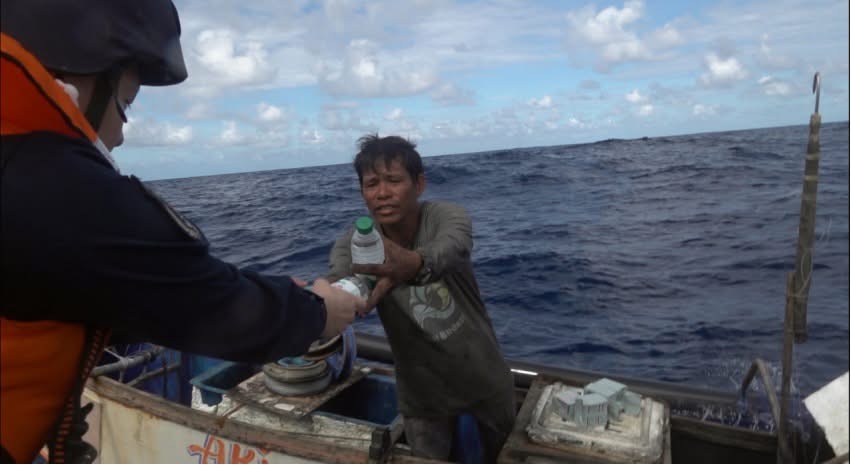
The Chinese Navy’s provision of “swift humanitarian assistance” to a distressed Philippine fishing vessel off the coast of Zambales on Christmas Day has produced sharply conflicting official accounts, highlighting the deep tensions in the disputed West Philippine Sea.
According to an official statement from the Chinese Embassy in Manila, the Chinese Navy ship “174” located and delivered essential supplies, including food and water, to a Filipino fisherman on December 25. The embassy stated the fisherman had been stranded for three days following an engine failure and that Chinese authorities “coordinated follow-up support with the Philippine Coast Guard (PCG).”
However, the Philippine Coast Guard has provided a significantly different account, directly contradicting major details of the Chinese narrative. In statements reported by major Philippine news outlets, the PCG clarified that the fisherman, identified as Larry Tumalis, had been stranded for less than 24 hours, not three days. He departed on a fishing trip on the afternoon of December 24 and was safely located and assisted by the PCG and his mother boat on the afternoon of December 25.
Crucially, the PCG emphasized that the Chinese Navy warship had “no legitimate reason” to be operating in the area, which lies approximately 71 nautical miles west of Zambales and within the Philippines’ Exclusive Economic Zone (EEZ). PCG spokesperson Commodore Jay Tarriela stated they hope the incident is “not exploited as propaganda by China” and should instead serve to emphasize the legitimate rights of Filipino fishermen to operate peacefully in these traditional waters.
This matter unfolds against the backdrop of persistent maritime disputes between Manila and Beijing in the West Philippine Sea. It highlights how even actions framed as humanitarian are inevitably viewed through the lens of sovereignty and strategic rivalry. While the Chinese side portrays the incident as a gesture of goodwill, Philippine authorities contextualize it as an unwarranted naval presence within the country’s jurisdictional waters.















Comments