



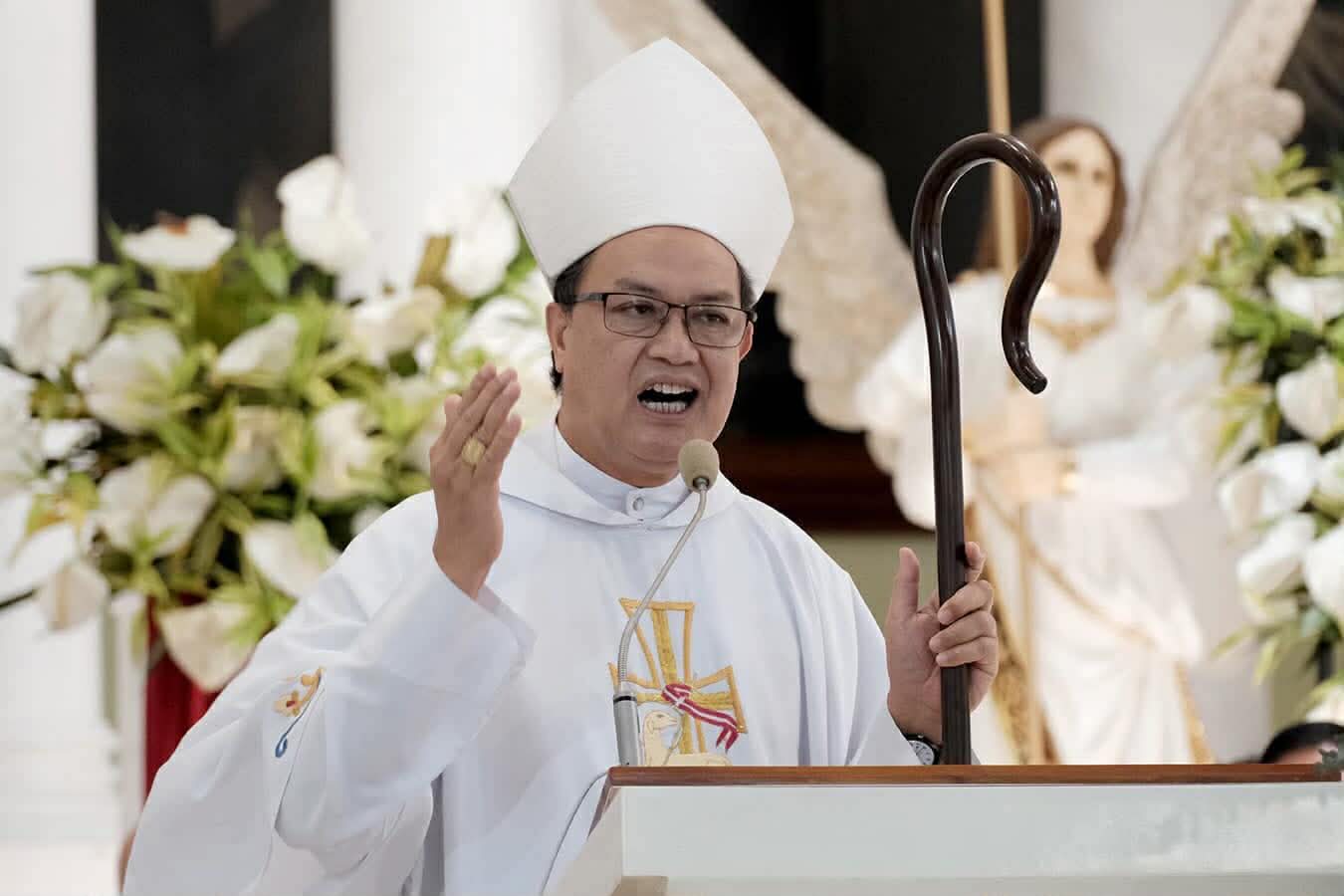
Catholic Bishops’ Conference of the Philippines (CBCP) President Cardinal Pablo Virgilio David has warned that political dynasties erode the moral and social foundations of the country by turning power into entitlement and public office into private property.
In his holiday message released Monday, December 29, David drew a sharp contrast between political families that monopolize power and ordinary Filipino households that quietly endure hardship while remaining grounded in faith, compassion, and solidarity.
“There are families that turn politics into business and pass it on as an inheritance, families that turn power into entitlement, and public office into private property,” David said.
He added that political dynasties protect their own interests and keep authority within their clans, often leading to internal breakdown once fear and insecurity set in.
“Political dynasties, too, are families. They protect their turf. They keep power within the clan,” David said.
‘Not life-giving’
While Filipinos are widely known to be family-oriented, David said the concept of family can take on opposing meanings—one that nurtures society, and another that ultimately destroys it.
“That kind of family is not life-giving. It is self-destructive,” he said. “And when it dominates a nation, it slowly destroys the nation as well.”
David likened dynastic families to Herod’s household in the Bible, describing them as prone to internal conflict—siblings against siblings, parents against children, spouses against spouses—once power becomes something to be defended at all costs.
In contrast, he pointed to what he described as the “quiet families” of the country.
“These are families that survive calamities, floods, fires, and earthquakes,” David said. “Families that endure economic hardship, migration, separation, war, and political uncertainty.”
“They pray, remain together, and open their homes to others, choosing compassion over resentment and forgiveness over revenge. They do not make headlines,” he added. “But they carry the future.”
Debate over anti-dynasty bills
David’s remarks were issued amid renewed debate in Congress over proposed anti-political dynasty measures, which critics say fall short of the Constitution’s intent.
Akbayan party-list Rep. Percival Cendaña said the versions of the anti-dynasty bill filed by House Speaker Faustino Dy III and Ilocos Norte Rep. Sandro Marcos do not dismantle dynastic rule but instead legitimize it by formally defining which relatives may hold office.
“In the case of the version now that’s filed by the House leadership, parang hindi ito hinihingi ng taong bayan,” Cendaña said in a December 28 One News interview. “Ang sabi ng taong bayan, ayaw namin ng dynasty.”
Cendaña said an authentic anti-dynasty law should decisively limit dynastic control of elected posts rather than preserve political families through compromise.
“Dapat ang batas na lalabas is isang batas that will curb dynasties in our political system,” he said.
Gaps in proposed measures
The bills filed on December 10 would bar spouses, siblings, and relatives up to the fourth degree of consanguinity or affinity from simultaneously holding elective office.
However, they do not prohibit family members from succeeding one another, running for positions at different levels of government, or rotating posts across election cycles—strategies commonly used by political clans to retain power.
Cendaña warned that such limitations risk reinforcing patronage politics, which he identified as a major cause of corruption.
“It’s a compromised situation for the Filipino people,” he said. “One of the reasons for our problem with corruption is patronage politics. We know the diagnosis of the problem.”
He called on lawmakers to demonstrate political will by acting against their own interests.
“This is not a time for compromise. This is a time for actual political will coming from our leaders,” Cendaña said. “Parang for once naman, tatlong dekada na silang bumoboto in favor of their family and personal interest.”
Constitutional mandate still unmet
The 1987 Constitution mandates the State to prohibit political dynasties under Article II, Section 26, but the provision is non-self-executing and requires an enabling law from Congress.
Nearly 40 years later, no comprehensive anti-dynasty law has been passed, largely because many legislators themselves belong to political families.
Reform advocates have long argued that unchecked dynasties weaken democratic competition, concentrate power, and perpetuate patronage politics across the country.
Palace backs reform push
President Ferdinand R. Marcos Jr. has instructed Congress to prioritize the anti-dynasty bill along with other governance reforms.
During a recent meeting of the Legislative-Executive Development Advisory Council, Marcos called for the swift passage of the anti-dynasty measure. (LLP)
Cardinal Pablo Virgilio David/ CBCP News















Comments