



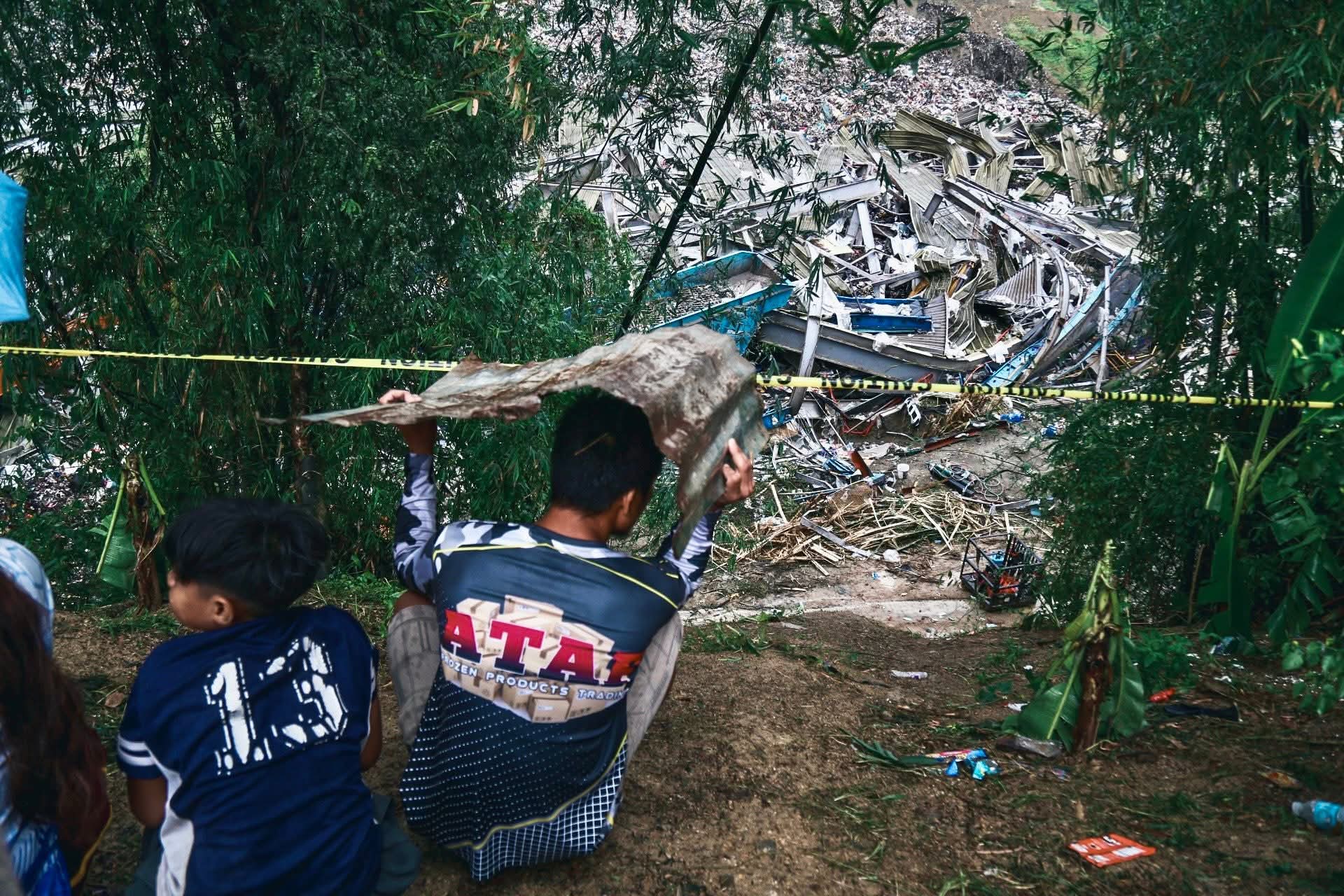
Lawmakers are taking action after the deadly collapse at the Binaliw Sanitary Landfill exposed gaps in the Philippines’ waste management system.
In a document sent to Cebu media on Monday, January 12, 2026 Senator Imee Marcos filed Resolution No. 244, directing the Senate committee responsible for environmental and public safety matters to investigate whether sanitary landfills comply with Republic Act No. 9003, the “Ecological Solid Waste Management Act of 2000,” and other applicable regulations.
The resolution also aims to determine if current laws are sufficient to manage the growing volume of waste nationwide.
The document cited the Binaliw disaster on January 9, as a stark example of the dangers posed by poorly managed landfill facilities.
Around 50 sanitation workers were buried when a massive mound of garbage collapsed at the site, operated by Prime Waste Solutions Cebu.
In the resolution, Marcos emphasized the urgency of reviewing existing laws, writing that “solid waste management remains beset by persistent challenges arising from the increasing volume of waste generation, inadequate waste management infrastructure, and varying levels of compliance with existing laws, rules, and regulatory standards.”
The Cebu City government deployed about 300 personnel to support rescue and recovery efforts. Officials also set up designated areas for families seeking updates on missing relatives and launched investigations into the cause of the collapse.
Early reports suggested a possible connection to the 6.9-magnitude earthquake that struck Cebu in September 2025.
The resolution referenced past tragedies as warnings, including the 2000 Payatas dumpsite collapse in Quezon City, which killed more than 200 people, and a 2011 landfill collapse in Baguio City that claimed five lives.
Despite establishing roughly 12,864 Materials Recovery Facilities nationwide under RA 9003, serving nearly half of all barangays, solid waste management continues to face serious challenges.
Rising waste generation, limited landfill capacity, enforcement gaps, and uneven compliance among local governments persist.
The resolution also highlighted international examples of successful waste-to-energy technologies, including controlled incineration systems in Singapore, Japan, and Germany.
These systems can reduce waste by 70 to 90 percent, conserve landfill space, and generate electricity.
Lawmakers have proposed lifting the ban on incineration to modernize the country’s solid waste management framework.
While the Senate moves to address legislative gaps, Marcos personally visited Cebu over the weekend to offer prayers for victims of the Binaliw collapse.
She went to the Basilica Minore del Sto. Niño de Cebu, lit candles, and prayed for the healing and recovery of affected families, sharing snapshots of her visit on social media.
Her visit drew criticism online after photos circulated showing her wearing a red sleeveless blouse inside the Basilica, a violation of the church’s dress code.
In a statement Fr. Jules Van Almerez, OSA, media liaison of the Basilica, reminded devotees that standards of reverence do not change based on the actions of others.
He said that even if some visitors fail to follow the dress code, it does not mean others should follow their example, urging everyone to remain humble and disciplined within the church.
The Binaliw tragedy has renewed scrutiny on the Philippines’ waste management system, the enforcement of environmental laws, and the protection of sanitation workers and nearby communities.
Photo Jacq Hernandez















Comments