
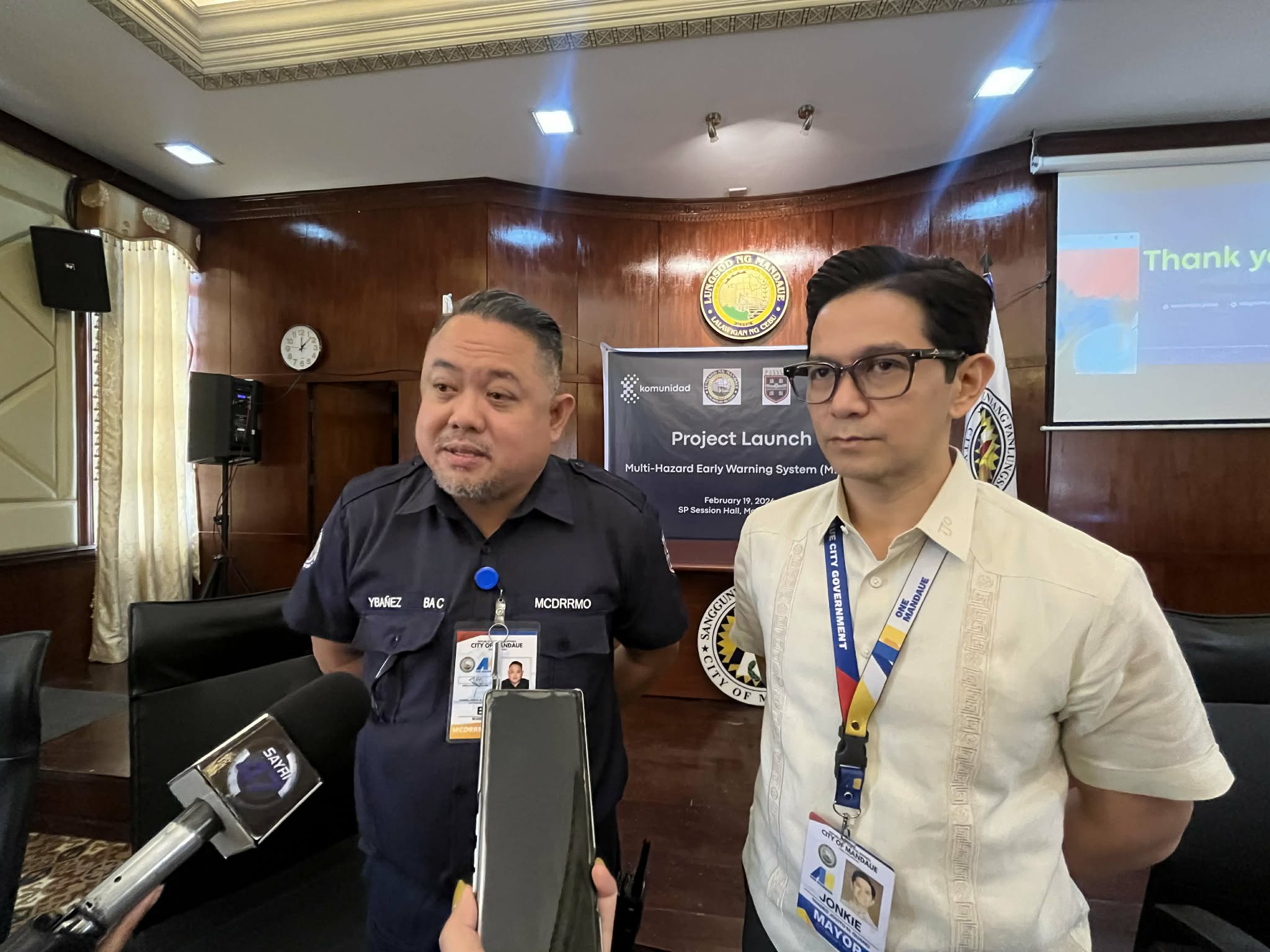
The Mandaue City Government officially launched a web-based Early Warning System (EWS) on Thursday, February 19, 2026, marking the first of its kind in Central Visayas.
The system, introduced through the City Disaster Risk Reduction and Management Office (CDRRMO), aims to strengthen the city’s capacity to prepare for and respond to disasters.
Developed by software provider Komunidad at no cost to the local government, the multi-hazard EWS is designed to complement existing early warning devices and systems in the city.
The platform aggregates data from satellite imagery and weather and climate institutions, providing real-time information that can enhance disaster preparedness and timely response.
Mayor Thadeo Jovito “Jonkie” Ouano, who attended the launch, said the system represents a significant step in safeguarding residents, particularly in communities prone to flooding.
“Ganahan kayko ani nga program, because of technology, makatabang sad gyud sa preparedness sa city,” Ouano said.
He added that Mandaue City welcomes innovative solutions that can improve readiness and reduce the risk to lives during calamities.
The mayor noted that the system collates data from the Philippine Atmospheric, Geophysical and Astronomical Services Administration (PAGASA) and other weather institutions.
It covers typhoons, heavy rainfall, and other disturbances, giving local authorities and residents a more comprehensive view of potential hazards.
As a downstream area prone to flooding, Mandaue City stands to benefit from early alerts, especially for residents in low-lying areas along the Butuanon River, including Barangays Umapad and Paknaan.
“Ma-evacuate nato og earlier the better. Our point here is to save and protect the lives of every Mandauehanon,” the mayor said, emphasizing that early warning is critical while the city continues to upgrade its drainage infrastructure.
CDRRMO head Buddy Ybañez explained that the web-based EWS will operate alongside the city’s hardware-based warning systems installed at the City Command Center and along the river.
The customized platform will include 75 end users assigned across all 27 barangays and city response clusters, including the City Health Office and City Social Welfare Services.
Information generated by the system will flow from the response clusters to barangays, allowing barangay DRRMOs to monitor conditions 24/7.
The platform will also assist barangay captains in deciding whether to issue preemptive evacuation orders.
Earlier this year, Mayor Ouano issued an executive order giving barangay captains discretion over preemptive evacuations. Ybañez said the new EWS will make evacuation decisions more specific, timely, and based on data rather than solely on observations or reports.
While not all barangays have their own command centers, all 27 barangays maintain Emergency Response Teams (ERTs).
Ybañez added that barangay focal persons and other end users will undergo training in April, conducted by the partner agency, again at no cost to the city government.
Currently, coordination between the CDRRMO and barangays relies heavily on social media group chats and radio communications. The new platform is expected to centralize this information, providing a real-time, unified view of risks and enabling faster advisories to residents during emergencies.
“With this system, Mandaue City is taking a major step forward in disaster preparedness,” Ybañez said, highlighting the city’s commitment to protecting its residents and improving resilience against natural hazards. (VCL)

Comments