



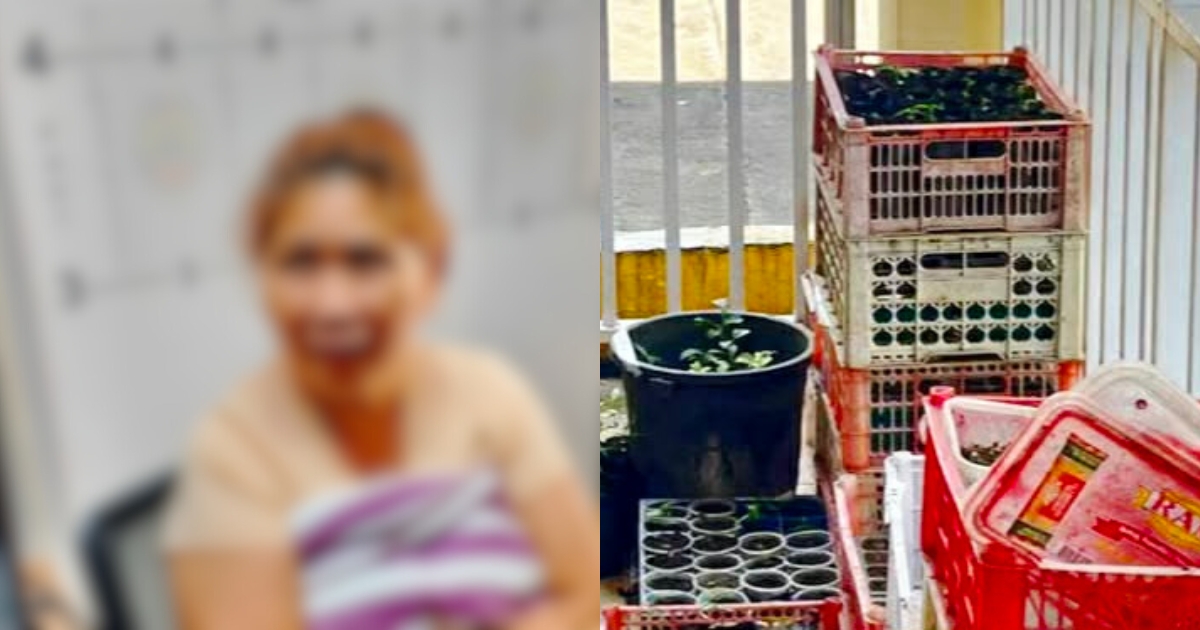
Authorities arrested a woman in Barangay Sangat, San Fernando, Cebu for allegedly cultivating and selling endangered agarwood, locally known as “lapnisan,” during an entrapment operation.
Operatives from the National Bureau of Investigation–Cebu District Office, in coordination with the Department of Environment and Natural Resources, apprehended the suspect, who identified herself as “Sharon,” on February 20 after she was allegedly caught conducting business without the required permits.
NBI-Cebdo head Arnel Pura said the operation stemmed from online monitoring of a social media post advertising agarwood seedlings.
Authorities conducted surveillance and a test-buy that led to the arrest.
Investigators said the suspect used her social media account to promote and sell the plants and maintained a backyard nursery where the seedlings were cultivated.
She reportedly began the business in 2019, sourcing seeds from Basilan through courier deliveries.
During the operation, authorities purchased about P12,000 worth of seedlings and seized 48 crates containing roughly a thousand seedlings with an estimated value of P300,000.
Agent-in-case Bienvenido Panican said the suspect allegedly sold large seedlings for P350 and smaller ones for P100, with buyers mostly local although some transactions were arranged online and shipped through delivery services.
“Yung resin ng isang grown-up agarwood costs about $100,000. That is about five million pesos per kilo,” Panican said, noting the plant’s high market value.
Agarwood resin is commonly used in the perfume industry, particularly in markets in the Middle East.
The species is classified as endangered, and strict regulations govern its cultivation and trade.
Under Republic Act No. 9147 or the Wildlife Resources Conservation and Protection Act, violations carry penalties of six to 12 years imprisonment and fines ranging from P100,000 to P1 million.
The suspect is currently detained at the NBI-Cebdo facility and will face inquest proceedings for alleged violations of the law.
Authorities said confiscated items will be turned over to the DENR for safekeeping.
The NBI also warned individuals engaged in similar activities to secure proper authorization.
“It may appear to be a simple act of selling or dispensing prohibited wildlife species, but it carries a stiff penalty,” Pura said.
“You have to secure a license or authority from the DENR to make your operation legal. Otherwise, the NBI and other law enforcement agencies will be after you,” he added. (VCL)















Comments