
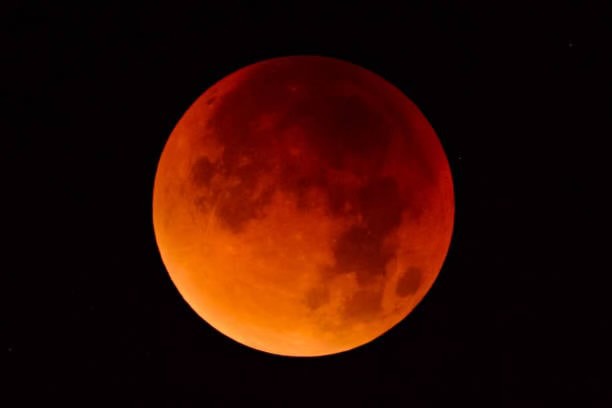
The Philippine Atmospheric, Geophysical and Astronomical Services Administration (Pagasa) will hold a free public viewing of the March 3 total lunar eclipse at its Mactan station, weather permitting.
Pagasa Visayas PRSD announced the skywatching activity in a March 2 advisory, inviting residents to observe the celestial event through telescopes that will be set up at the station.
Moonrise over Metro Cebu is expected at 5:48 p.m. Totality — when the Moon is fully immersed in Earth’s shadow and takes on a reddish glow — will occur from 7:04 p.m. to 8:03 p.m., with the peak at 7:34 p.m.
The Moon is projected to exit the umbra at 9:17 p.m. and fully leave the penumbra at 10:25 p.m., marking the end of the eclipse.
A total lunar eclipse occurs when Earth passes directly between the Sun and the Moon, casting a shadow that gradually darkens the lunar surface. At the height of totality, the Moon appears red or copper-colored, a phenomenon commonly referred to as a “blood moon.”
Global astronomical projections indicate that totality will last about 58 minutes, while the entire eclipse — from penumbral entry to final exit — will span more than five hours. During the early penumbral phase, shading on the Moon may appear subtle. As it moves deeper into Earth’s umbra, a darker shadow progressively covers the lunar disk until it becomes fully eclipsed, producing the characteristic red hue.
Pagasa encouraged the public to take advantage of the free viewing opportunity.
“Experience the Moon’s stunning red glow at the height of totality and observe this remarkable celestial event through our telescopes,” the advisory stated.
The activity is open to the public at no cost, subject to favorable weather conditions.
The March 3 eclipse will be visible across parts of East Asia and Australia, with viewing times in the Philippines occurring in the early evening, offering convenient conditions for skywatchers in Cebu and nearby areas.
Unlike solar eclipses, lunar eclipses are safe to observe with the naked eye. However, telescopes and binoculars can enhance the view, allowing observers to see surface details and the gradual movement of Earth’s shadow across the Moon.
If skies remain clear, residents in Cebu can expect to witness one of the year’s most striking astronomical events — a fully eclipsed Moon glowing red above the evening horizon. (LLP)
Photo from Lunar eclipse/iStock

Comments