



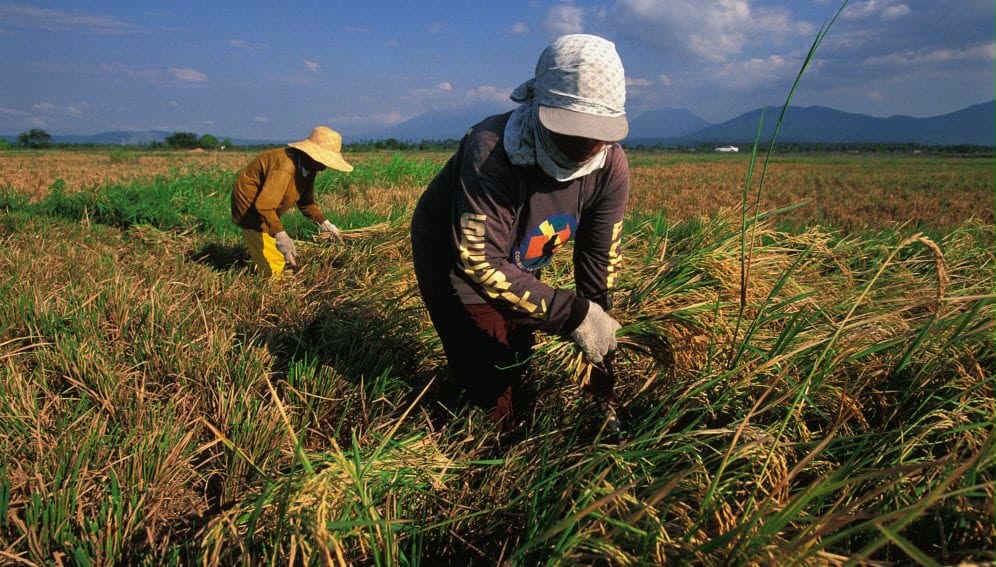
Cebu province continues to rely heavily on food supplies from outside the island, as local farms produce only about 30 percent of the province’s total requirement for staple crops such as rice and corn.
Data from the Philippine Statistics Authority, cited by the Provincial Agriculture Office, show that Cebu’s agricultural production falls far short of feeding its growing population of roughly 3.4 million residents.
Provincial Agriculturist Roldan Saragena said rice production in Cebu remains particularly limited, supplying only a small fraction of the island’s consumption needs.
“Rice sufficiency is only about 3.5 percent,” Saragena said.
The province currently has around 4,091.44 hectares devoted to rice farming.
This figure already accounts for double cropping, with the original planted area of approximately 2,000 hectares cultivated twice within the year.
Even with this setup, total rice production in Cebu last year reached only 12,716.16 metric tons—far below what is needed to feed its population, given that the average Filipino consumes roughly 105 kilograms of rice annually.
Based on this consumption level, the province’s rice harvest meets only a small portion of local demand, making Cebu largely dependent on rice brought in from neighboring provinces and regions.
Corn production shows slightly better numbers but still falls short of full self-sufficiency.
Approximately 59,000 hectares in the province are planted with corn, giving Cebu an estimated corn sufficiency level of about 27 percent.
Combined, rice and corn production can only meet roughly 30 percent of the province’s total staple food requirements.
The remaining 70 percent of supply is sourced from nearby provinces such as Bohol and Leyte, as well as Mindanao, including Davao.
In some instances, supplies may even come from outside the Philippines.
With Cebu heavily reliant on external sources, Saragena stressed the importance of national government support to strengthen the province’s food security.
“We really need the support of the national government regarding ani state of food,” he said.
Despite the shortfall in rice and corn, many Cebuano households remain adaptable, often turning to other staples such as corn, sweet potato (kamote), cassava (kamoteng kahoy), and bananas when rice supply is limited.
“Dako og advantage ang mga Sugbuanon kay ang mga Sugbuanon pwede e substitute sa rice ang corn or mga lagutmon (kamote),” he added. (SBA)
IMAGE/ Radio Philippines Network















Comments