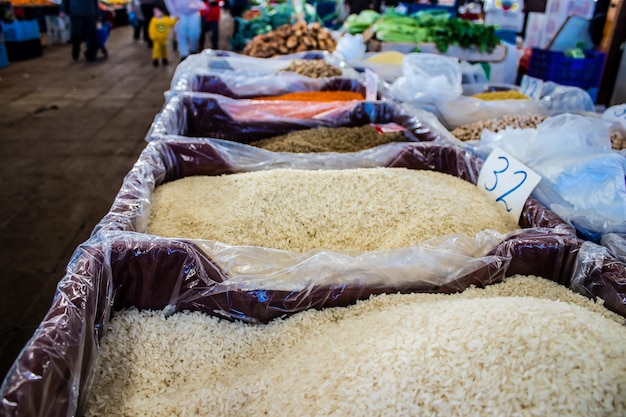
The Cebu Provincial Government has stepped up monitoring of basic commodities after rice prices in several northern towns were found to have risen to as high as P66 per kilo.
Assistant Provincial Administrator Aldwin Empaces said the price hike emerged during recent random inspections by the province’s price monitoring team.
The findings prompted calls within the Capitol for tighter coordination with local government units to keep staple goods affordable.
Areas where higher prices were recorded include Catmon and Borbon, where some retailers were selling rice at P66 per kilo—significantly higher than in Mandaue City and nearby localities, where rates remain lower.
“Sa Catmon, Borbon or in that area kay mao nay murag daghan niabot gyud og 66 ang kilo bugas, which is dili na mao ang na-identify na price sa Mandaue,” Empaces said.
In response, the provincial government is urging LGUs to establish their own price monitoring committees to closely track agricultural products and other basic goods within their areas.
These teams are expected to coordinate with the Department of Trade and Industry (DTI) and the provincial monitoring group to ensure regular reporting of price trends.
Empaces said the measure is part of broader efforts to strengthen oversight, especially after initial inspections suggested significant price variations across the province.
The Capitol is preparing an initial report of the monitoring results for submission to concerned national government agencies.
Beyond rice, the provincial government is also keeping an eye on fuel prices, which may increase by P10 to P12 per liter in the coming days, potentially straining the budgets of transport operators and ordinary households.
Governor Pamela Baricuatro has instructed concerned offices to prioritize contingency and crisis-response planning to protect the public from the effects of rising commodity and fuel costs.
“But another directive gud niya (Baricuatro) is to prioritize ang gitawag nato na mga contingency or crisis management solution program,” Empaces noted.
As part of the initial response, the Capitol is exploring accelerated rice distribution through existing government assistance programs, targeting vulnerable groups such as habal-habal and pedicab drivers who rely on daily earnings.
The provincial government is also planning consultations with the private sector and other stakeholders to better understand the economic impact of price increases and identify possible interventions should the trend continue. (SBA)
Photo from Freepik