



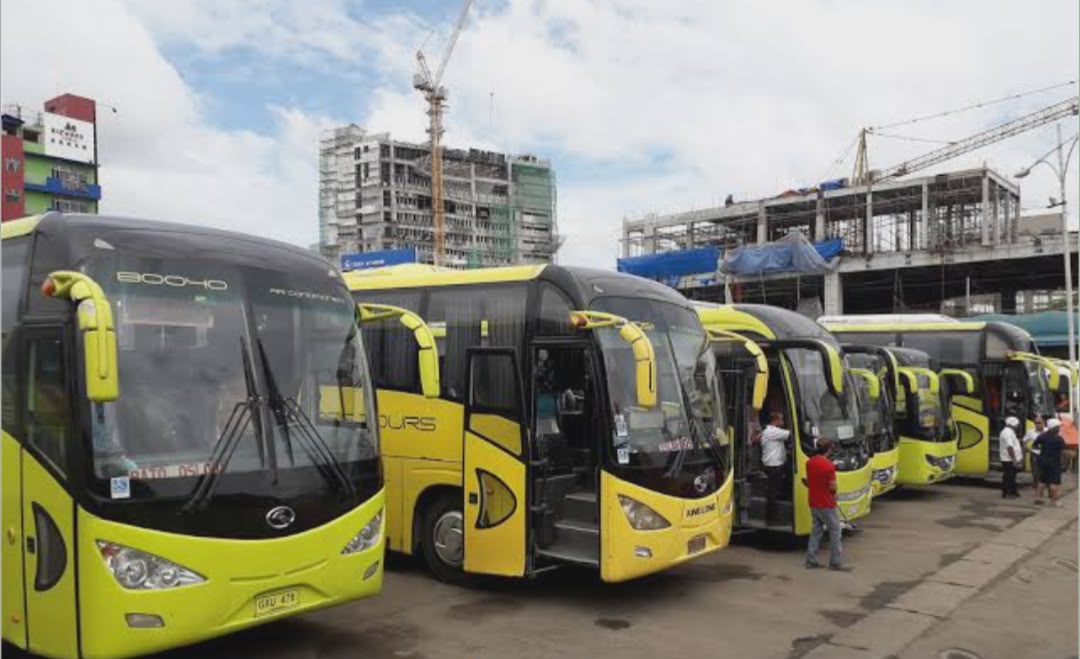
Commuters in Cebu may soon see more predictable public transportation as the Cebu Provincial Government prepares to launch the “Tabang Pambyahe Project,” a pilot bus system designed around fixed schedules rather than passenger volume.
Set for rollout as early as April, the initiative will use a service contracting model to ensure buses run on a regular timetable.
The project is supported by a P20-million subsidy from the Department of Transportation (DOTr), pending the finalization of a memorandum of agreement.
Unlike free ride programs, the project prioritizes reliability over cost. Buses will run on fixed intervals—even during periods of low passenger demand—aiming to reduce long waits and ease congestion along high-traffic routes.
“The problem with public transportation is not because it’s costly, it’s because it’s uncertain,” said Elizar Sabinay, Executive Assistant V assigned to the Provincial Planning and Development Office. “The goal is not really to provide free service… it’s to make sure there is certainty of service.”
Under the proposed schedule, buses are expected to arrive every 15 minutes at designated stops. Onboard rules, such as a no-standing policy, will improve safety and make commutes more comfortable.
Operators will receive subsidies to offset fuel and operational costs, which currently range from P3,500 to P4,000 per day.
Payments will be performance-based, calculated at an estimated P54 per kilometer traveled, ensuring buses can operate even with fewer passengers.
The system will also replace the traditional boundary quota model with performance standards, requiring drivers and operators to maintain consistent departure intervals and efficient loading.
Failure to meet these standards could result in removal from the program.
The initial rollout will cover two major routes: from Sibonga to the Cebu South Bus Terminal in the south, and from Danao City to Cebu IT Park in the north.
These routes were chosen to serve high-demand areas where commuters, including workers and students, rely on daily travel to and from Cebu City.
Officials said the program will complement the upcoming Bus Rapid Transit (BRT) system, aiming to provide a more connected commuting network across Metro Cebu.
To address gaps in late-night service, operations may extend until midnight, responding to survey data from November 2025 that showed limited transport options after 9 p.m., particularly for graveyard shift workers.
Monitoring and enforcement will use technology, including GPS tracking and onboard cameras, allowing authorities to ensure buses adhere to schedules and safety standards in real time.
Provincial officials are also exploring expansion of the program to more remote areas and island municipalities where transport options remain limited. (SBA)















Comments