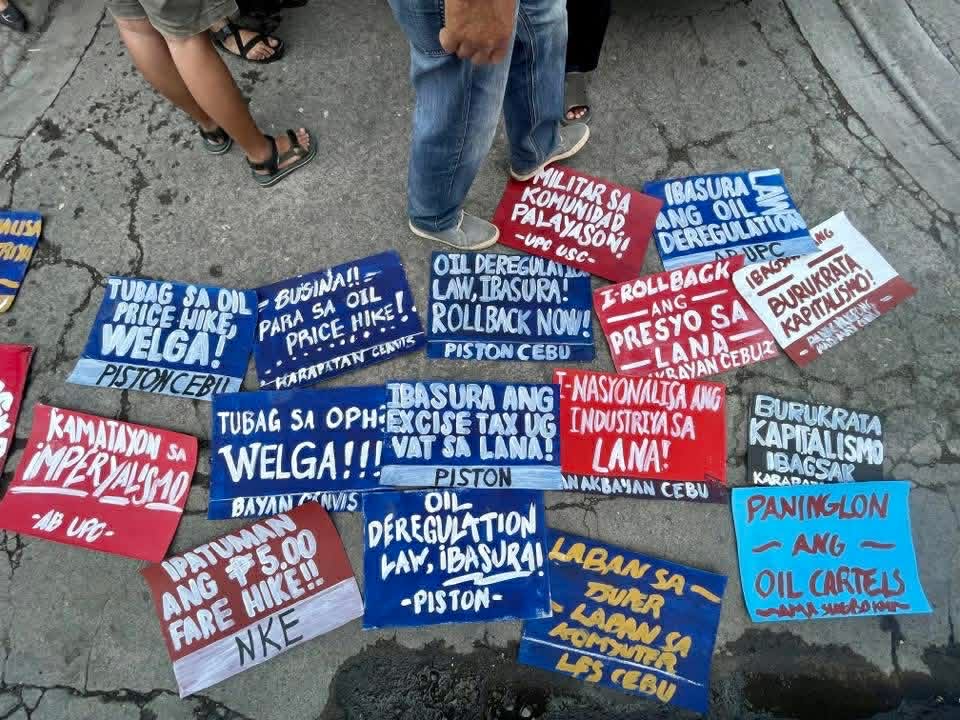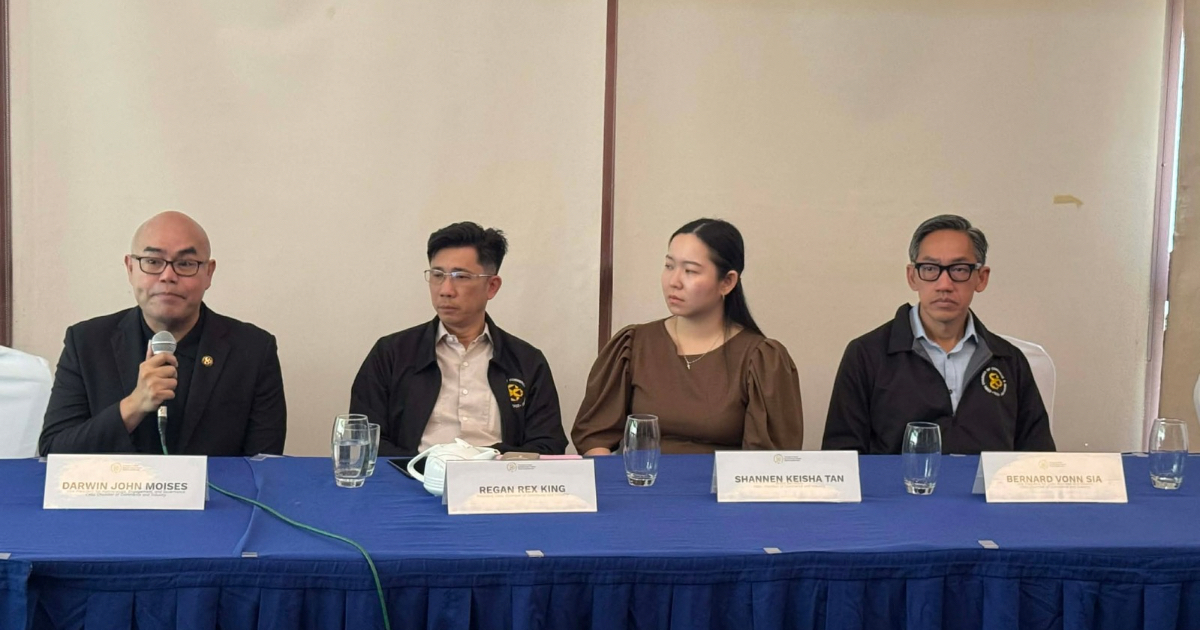
While a local progressive group expressed dismay over the declaration of a National State of Energy Emergency, saying it fails to ease the burden on commuters and transport workers, a group of business leaders welcomed it as a necessary step to stabilize energy supply and prices amid global disruptions.
After declaring the emergency, President Ferdinand Marcos signed Executive Order 110, launching the Unified Package for Livelihoods, Industry, Food, and Transport.
In a statement on Thursday night, March 26, the Cebu Chamber of Commerce and Industry (CCCI) expressed support for the government’s declaration and offered solutions and several calls in response to the emergency.
They urged the government to ensure consistent price regulation and closely monitor energy supply.
They also called for careful coordination of local measures, including taxation, regulations, or fees, to ensure fairness, effectiveness, and compliance with existing legal frameworks.
They called on businesses to reject hoarding, price gouging, and other exploitative practices.
At the same time, they encouraged Cebu’s business community to optimize operations, manage resources prudently, strengthen local capacity, adopt innovative measures, reduce reliance on imports, and rethink business models to remain competitive.
“Fairness, transparency, and accountability must guide every action to maintain public trust, market stability, and global competitiveness,” CCCI said.
“These steps will ensure that Cebu businesses remain competitive, adaptive, and strategically positioned with enhanced global competitiveness,” they added.
CCCI noted that micro, small, and medium enterprises, or MSMEs, which make up more than 90 percent of Cebu’s economy, are particularly vulnerable to rising costs and supply instability.
The chamber also highlighted the country’s reliance on imported energy, food, technology, and advanced manufacturing, which increases exposure to global disruptions.
Cebuano people, the statement said, have faced crises before, including Typhoon Odette, major earthquakes, and the pandemic, and have consistently shown resilience and adaptability.
“Through cooperation, discipline, and a shared vision for a forward-looking, sustainable, and globally relevant future, we can overcome this challenge — and emerge stronger than ever,” the chamber said.
Despite these steps, Bayan Central Visayas criticized the declaration, saying it does not address the root causes of high fuel costs.
“It fails to address the real problem faced by drivers and commuters who are forced to endure daily high fuel prices,” said chairperson Jaime Paglinawan.
The group called on the government to roll back oil prices to P55 per liter, remove VAT and excise taxes, implement a P1,200 national minimum wage, and nationalize the oil industry to secure stable and affordable fuel.
Signed on March 24 by the president, the measure directs the Department of Energy, the Philippine National Oil Company, and Philippine National Oil Company Exploration Corporation to stabilize domestic fuel supply and procure fuel as needed.
The Department of Transportation will provide fuel and fare subsidies, expand public transport under the Libreng Sakay Program, and review temporary reductions in tolls, aviation charges, and landing fees.
Other agencies, including Social Welfare, Agriculture, Trade and Industry, and Migrant Workers, will support transport workers, farmers, fisherfolk, displaced workers, and repatriated OFWs.
Meanwhile, Marcos said on Friday the Philippines has sufficient crude oil supply until June 30, 2026, while the government continues to seek additional sources.
“Importing crude oil for local refining is cheaper than bringing in finished products like diesel,” he said during the opening of the NAIA Expressway Phase II.
Fuel prices remain high locally, with diesel reaching P136.50 per liter and gasoline at P106.60 per liter as of Thursday.
Photo by: Kaiser Jan Fuentes