



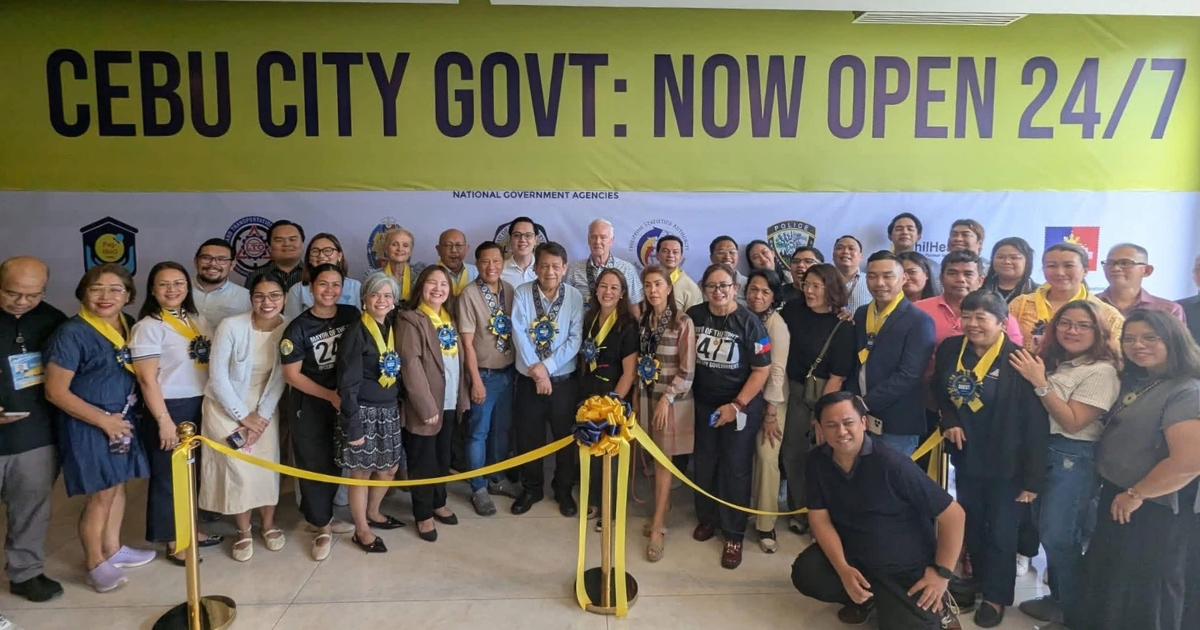
The Cebu City Government on Saturday broke ground for a 24/7 government service hub aimed at making public services accessible beyond regular office hours, particularly for night-shift workers.
The facility, to be located on the second floor of Cebu Exchange Tower along Salinas Drive, will serve as a centralized hub where residents can process government transactions at any time of the day.
Mayor Nestor Archival and Vice Mayor Tomas Osmeña led the groundbreaking and blessing ceremony on March 28, marking what city officials described as a shift toward more responsive and inclusive governance.
“This is more than just a facility. It is a commitment that the Cebu City Government is always ready to serve, anytime, for every Cebuano,” Archival said.
The initiative aims to address long-standing accessibility issues faced by workers who cannot transact with government offices during standard hours, particularly those employed in the business process outsourcing (BPO) sector.
Osmeña, who earlier described the project as a “high-risk” but necessary reform, said the hub is intended to bridge the gap between government services and the evolving needs of the workforce.
“You don’t have to be absent and lose sleep. It’s for everybody,” he said in an earlier statement.
The groundbreaking coincided with the city’s observance of BPO Day, underscoring Cebu’s position as a major hub for IT-BPM industries in the country.
Representatives from the Cebu IT-BPM sector, including officials from the Cebu IT-BPM Organization (CIBO), attended the ceremony and expressed support for the initiative.
Once operational, the hub is expected to house key local offices such as the City Treasurer’s Office, Business Permit and Licensing Office, Civil Registrar, and City Health Department.
The city government is also encouraging national agencies to participate to expand available services.
The Cebu City Council previously approved a P5.1-million budget for the lease of the 307-square-meter space, with the contract running until mid-2028.
Officials said the hub is expected to streamline transactions, reduce waiting times, and decongest daytime operations in City Hall.
The project forms part of the city government’s push to modernize service delivery and adapt to a growing 24-hour economy.
A soft launch is planned to gradually roll out services and address operational challenges once the facility opens. (LLP)















Comments