



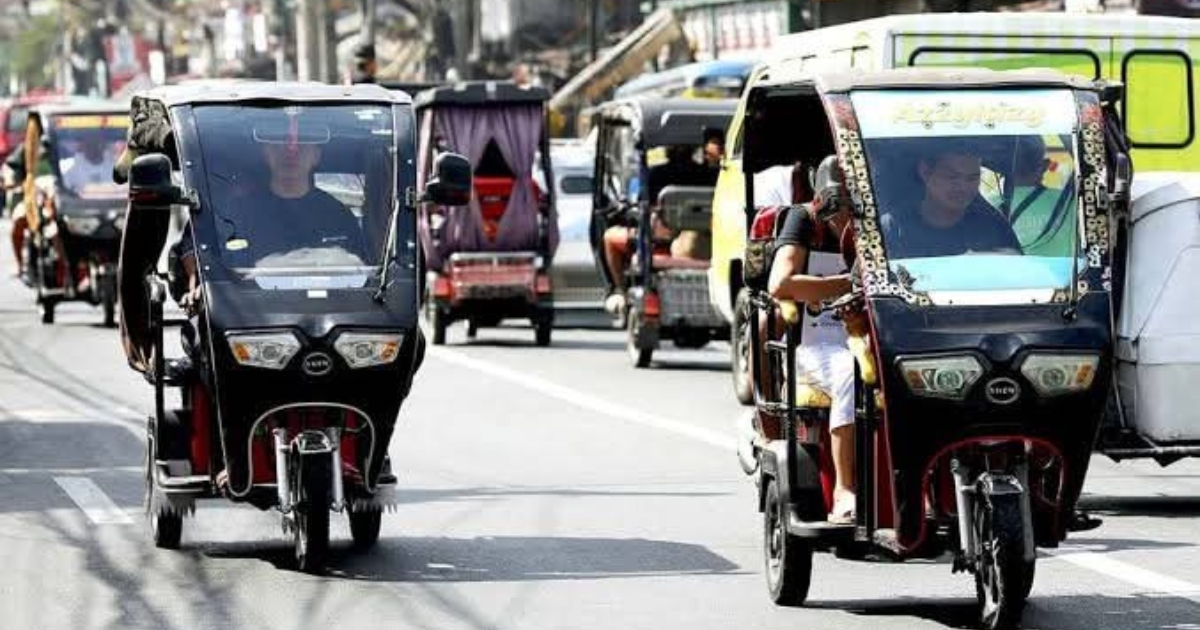
The Mandaue City Council has approved a resolution asking the Traffic Enforcement Agency of Mandaue (TEAM) and the Tricycle Franchising Board to study the possibility of allowing electric tricycles as an alternative to fuel-powered units amid rising fuel prices.
City Councilor Carlo Fortuna filed the resolution on April 6, 2026, during the regular session.
He clarified that the proposal refers to sturdier electric tricycles designed for public transport, such as the “bao-bao,” not the smaller e-bikes that are typically apprehended by TEAM.
“Kana gyung design for public transport nga e-trike,” Fortuna said.
Fortuna said the resolution is a response to continuous increases in fuel costs, which have significantly affected fares and operating expenses for public transport.
He said the move aims to provide operators with an alternative mode of transport.
“Atong hatagan og alternative ang atong mga operators, kining mga nag drive og tricycle,” he said.
Currently, only fuel-fed tricycles are allowed to operate under city law.
Fortuna cited Boracay in Aklan, which has shifted fully to electric tricycles, as an example for Mandaue City to study.
He added that if TEAM and the Tricycle Franchising Board complete their study and operators choose to switch to electric, the city will already have regulations in place to govern these vehicles.
Fortuna stressed that electric tricycles must have a design suitable for public transport to ensure passenger safety.
“Naay specific design to ensure the safety of the passenger,” he said.
The councilor also emphasized that existing traffic rules, including restrictions on highways and major roads, will still apply regardless of whether tricycles are fuel-powered or electric.
“Kung di ka pwede mulabang og highway, di gihapon pwede,” Fortuna said.
TEAM head Hyll Retuya earlier reiterated that electric bicycles remain prohibited on major roads due to safety risks and lack of proper registration.
Some local drivers, however, remain skeptical. Ronald Tanalgo of Barangay Guizo, a fuel-fed tricycle operator, said he prefers measures to lower fuel prices or adjust fares before considering a shift to electric tricycles.
“Dili man mi kabuot nga kami-kami ra ang mupasaka, kami man sad ang delikado ana,” Tanalgo said.
He added that fuel remains more reliable, as charging electric units could create additional problems and unexpected travel limitations.
For now, Tanalgo continues to operate his fuel-fed tricycle at a fare of P15, noting that his daily earnings have dropped from around P700 to roughly P500 due to rising fuel costs. (VCL)
Image: Philippine News Agency















Comments