
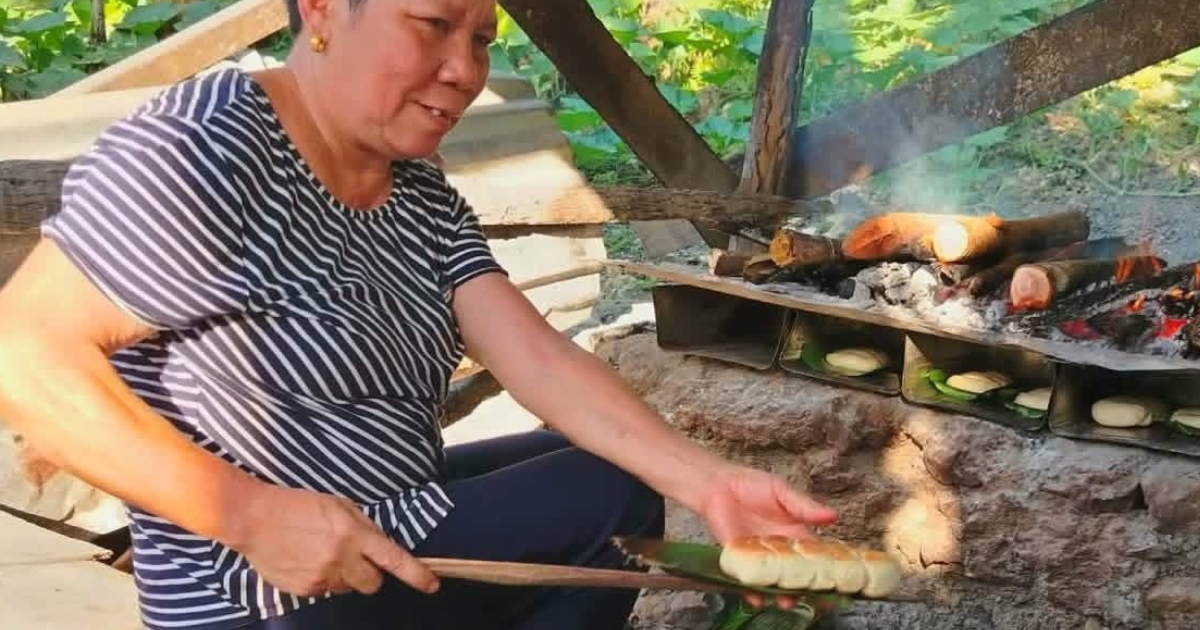
In a small hillside community in Barangay Lutopan, now known as Don Andres Soriano, a quiet culinary tradition is on the brink of disappearing.
Elsa Echavez is the last remaining baker of pan bisayá in her town. Her neighborhood was once filled with skilled bakers who specialized in this rustic bread. Even the name Lutopan is believed to come from “luto” (cook) and “pan” (bread), hinting at its deep-rooted history.
Pan bisayá, or “Visayan bread,” is a simple yet flavorful roll made from wheat flour, brown sugar, salt, and oil. It comes in two versions: plain or filled with bukayo, a sweetened coconut filling.
The dough is shaped into small cane-like rolls called bastón, grouped in fives and then baked in a makeshift pugón. This clever oven is built from used cooking oil canisters and heated with burning wood under a sheet of galvanized iron.
In earlier times, bakers used fresh tubá, or fermented coconut sap, to make a richer version. The sap naturally sweetened the dough and helped it rise, much like the method used for traditional Visayan bingka.
Louella Alix of The Histolinarya Collective suggests that pan bisayá may have roots in the pre-colonial tinapay described by Antonio Pigafetta. That early tinapay was not bread but a rice cake fermented with tubá, and it was even used as the Eucharistic bread during the first Holy Mass in the Philippines.
Elsa explains that tubá has become a lost ingredient. The problem, she says, is the lack of skilled climbers who can safely scale coconut trees and gather sap from the inflorescence.
Though pan bisayá can still be found in other towns of southern Cebu, Elsa is the sole baker left in Lutopan. Her daily labor is more than just baking bread, but an act of preserving a taste of history.
𝙎𝙤𝙪𝙧𝙘𝙚: 𝙏𝙝𝙚 𝙃𝙞𝙨𝙩𝙤𝙡𝙞𝙣𝙖𝙧𝙮𝙖 𝘾𝙤𝙡𝙡𝙚𝙘𝙩𝙞𝙫𝙚, 𝘼.𝘿.

Comments