
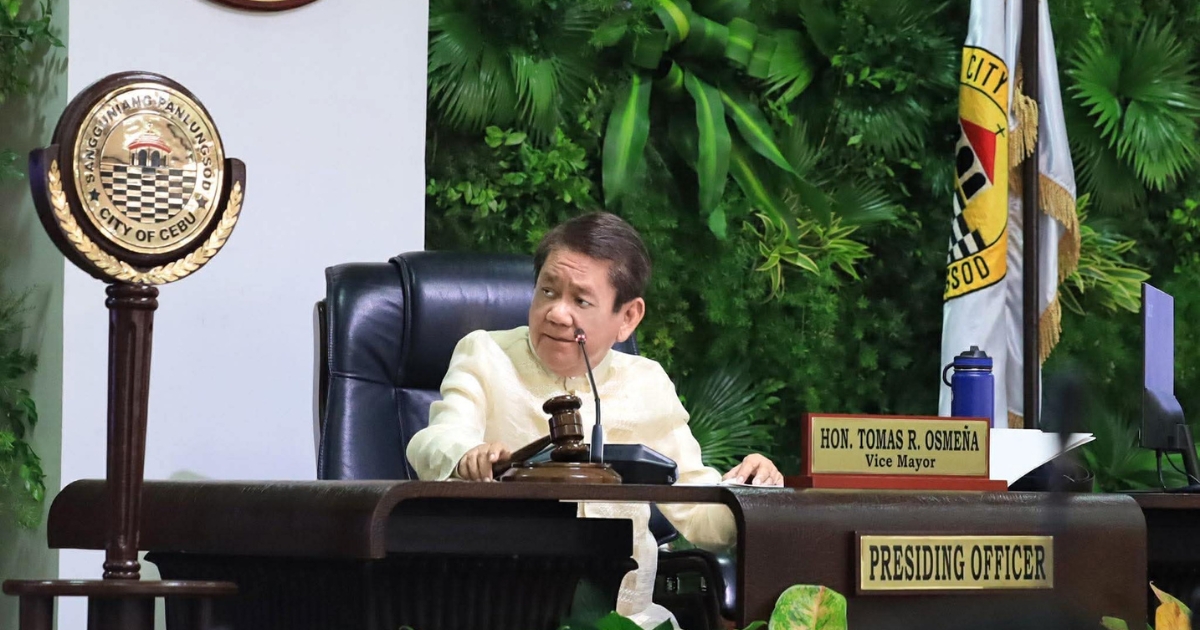
A pushback against complacency in governance took center stage as Cebu City Vice Mayor Tomas Osmeña warned that continued mountain development without stronger safeguards could worsen flooding risks and expose officials and developers to accountability.
Osmeña on Thursday rejected what he described as a culture of “status quo” leadership, warning that unchecked upland development could trigger flooding and potential criminal liability.
Speaking at a press conference on April 16, Osmeña said governance must move beyond routine programs and focus on long-term structural reforms.
“One reason why some people think I’m a good mayor is because I’m always angry because I do not accept the status quo. We have to move up,” he said.
He criticized what he described as an overreliance on short-term aid and symbolic government activities instead of sustained planning and development reforms.
“People want ayuda, ayuda, ayuda… I don’t believe in that. That’s not nation-building to me,” he said.
Osmeña said governance should prioritize large-scale infrastructure and transformative projects similar to the Cebu Bus Rapid Transit (BRT) and South Road Properties (SRP).
His remarks come amid continued debate over upland development in Cebu City, including the controversial Monterrazas project, which some sectors have linked to flooding during Typhoon Tino in November 2025.
Developers have maintained that their stormwater detention systems were sufficient and that extreme rainfall triggered the flooding, but Osmeña rejected claims that the event was unprecedented.
“It was heavy rainfall, but to say it was unprecedented? That’s not accurate,” he said.
He said other low-lying areas did not experience similar levels of landslides during the same weather event.
Osmeña warned that continued mountain cutting could overwhelm existing drainage and detention systems.
“The detention plants were simply not big enough. And if they continue cutting the mountains and it rains again, it will overflow again,” he said.
He also raised the possibility of legal consequences if flooding incidents are repeatedly linked to ongoing upland excavation.
“If they continue cutting the mountains and it overflows again, that will amount to negligence, that’s criminal. People should be held accountable because lives are at risk,” he said.
The vice mayor also pointed to what he described as inequality in development outcomes, saying vulnerable communities often bear the impact of large projects.
“The people who get flooded are poor, and the people who benefit are rich. That’s what I cannot stand,” he said.
Osmeña said he is not opposed to development, but stressed that environmental limits must be respected.
“I’m not against development. But do we want to keep cutting the mountains? The answer should be no,” he said.
As he reflected on his remaining time in public service, Osmeña said he aims to push a governance approach centered on accountability, long-term planning, and sustainability.
“I may not have many years left, but what matters is what we leave behind,” he said. (LLP)
Image courtesy of Sangguniang Panglungsod / FB

Comments