



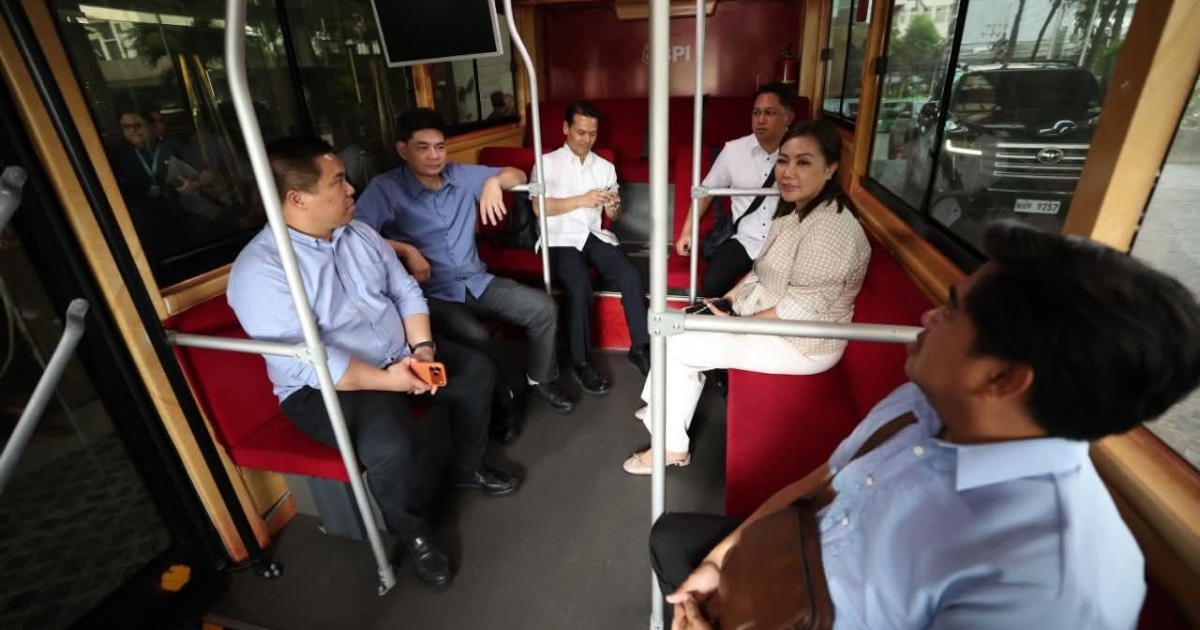
Rising fuel prices are pushing the Cebu Provincial Government toward an electric bus system that aims to reduce transport costs while easing daily commuting pressures across key routes.
The province is preparing to deploy around 50 electric buses as part of an initial rollout that targets major corridors linking northern and southern Cebu. Officials say the move is designed to address both high operating expenses for transport operators and unreliable commuter services.
Governor Pamela Baricuatro has approved the initiative, giving the provincial government the green light to pursue electric mobility as part of a broader transport modernization push.
Provincial Administrator Atty. Ace Durano said traditional diesel operations have become financially unsustainable for many transport groups due to rising fuel costs.
He cited current operating expenses for conventional units at about P50 per kilometer, which he said leaves transport cooperatives with minimal to no profit and increased dependence on subsidies.
Electric buses significantly reduce that burden, with operating costs estimated at around P5 per kilometer.
Durano said the shift is being pushed under a national program involving the Department of Transportation (DOTr) and the Department of Trade and Industry (DTI), alongside electric vehicle manufacturers.
Under the financing setup, transport cooperatives will not need to pay upfront for the units.
Each electric bus costs about P4.5 million, but manufacturers will shoulder half of the cost while the remaining balance will be financed through loans facilitated by the DTI’s Small Business Corporation.
Durano said cooperatives will instead pay based on actual operations, reducing financial pressure on operators already affected by high fuel prices.
Manufacturers will also handle maintenance and provide charging infrastructure, with revenue-sharing arrangements built into the program.
The provincial government will focus on route planning and deployment rather than procurement, identifying high-demand corridors based on commuter data.
Initial routes include Naga City to the South Bus Terminal and Danao City to the North Bus Terminal, areas known for heavy daily passenger traffic.
Durano said the goal is predictable service intervals rather than expansion in fleet size.
He said buses are expected to arrive every 20 minutes, allowing commuters to plan travel more efficiently instead of waiting without clear schedules.
At least 50 transport cooperatives are expected to participate, though involvement remains voluntary.
So far, 12 cooperatives have undergone orientation and have expressed interest in joining.
The rollout will replace existing diesel units rather than add new vehicles, a move the province says will prevent further congestion on major roads.
Charging stations are currently being prepared ahead of the planned initial deployment in July.
Officials also said the system may eventually include digital features such as mobile applications for tracking arrivals and paying fares.
While fare levels are still under review, the province said lower operating costs could allow more affordable pricing for commuters once operations stabilize. (SBA)
Image courtesy of Cebu Province















Comments