



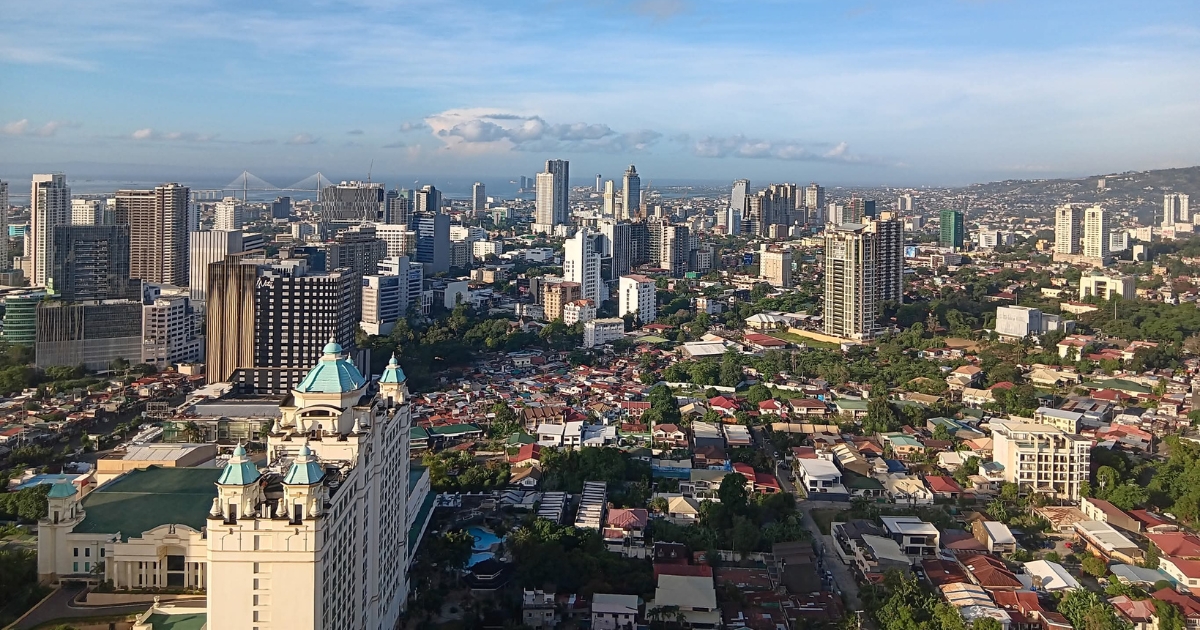
Skies over Metro Cebu cleared after days of haze as air quality levels improved, easing earlier health concerns that had prompted warnings across the region.
The Department of Environment and Natural Resources–Environmental Management Bureau in Central Visayas (DENR-EMB 7) reported on April 22 that the Air Quality Index (AQI) at the Talisay City monitoring station dropped to 98, placing conditions under the “fair” or moderate category.
The latest reading marks a sharp improvement from April 19, when the same station recorded an AQI of 199, classified as “very unhealthy” and prompting health advisories in affected areas.
Environmental officials attributed the improvement to sustained wind movement and natural atmospheric ventilation that helped disperse accumulated fine particulate matter, or PM2.5, which had built up during several days of stagnant conditions.
“The persistent haze that affected the region over the past week has largely dissipated,” DENR-EMB 7 said in its bulletin.
Despite the improvement, authorities noted that an AQI of 98 remains near the upper threshold of the “fair” category and may still pose mild risks to sensitive groups.
Children, senior citizens, and individuals with asthma or cardiovascular conditions were advised to limit prolonged or strenuous outdoor activity, as minor respiratory irritation may still occur.
For the general public, the agency said normal outdoor activities may resume, although residents were advised to remain alert for symptoms such as coughing or throat discomfort.
With conditions improving, the earlier recommendation for widespread use of N95 or KN95 masks has been lifted, though sensitive individuals are still encouraged to keep protective masks available in high-traffic areas.
The improvement follows a rapid deterioration in air quality over several days last week.
On April 17, Metro Cebu first recorded an AQI of 101, classified as “unhealthy for sensitive groups,” before rising to 112 on April 18 amid worsening haze conditions.
By April 19, levels peaked at 199, which environmental authorities linked to stagnant weather patterns, high pressure systems, and limited air circulation.
Officials earlier said the lack of wind and rainfall allowed pollutants from vehicles and industrial sources to accumulate over urban areas, resulting in the visible haze across parts of Cebu City and neighboring localities.
Localized fires, including grass fires in the South Road Properties and urban structural fires, also contributed to the spike in particulate pollution.
At the height of the haze, Cebu City Mayor Nestor Archival urged residents to take precautionary measures, including staying indoors when possible and using protective masks when going outside.
As air conditions stabilize, DENR-EMB 7 reminded the public to help maintain cleaner air by avoiding open burning, ensuring proper vehicle maintenance, and limiting unnecessary engine idling.
The agency said it will continue round-the-clock monitoring of PM2.5 levels and weather conditions and issue updates as necessary. (LLP)
Image courtesy of Wikipedia















Comments