



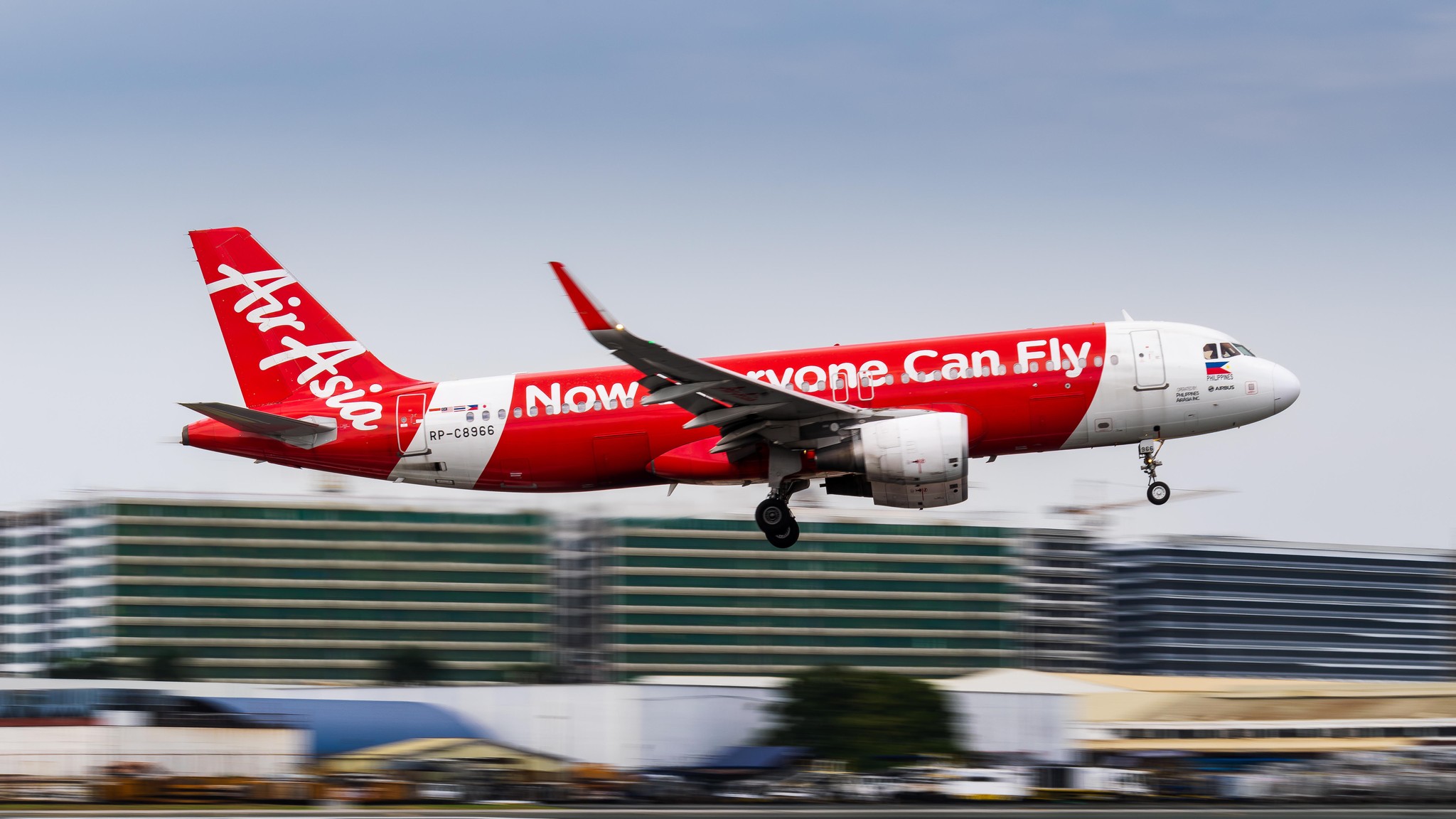
AirAsia Philippines has rolled out updated guidelines on portable electronic devices (PEDs), reinforcing stricter rules on power banks and battery-powered items as part of its ongoing safety measures across all flights.
The airline said the policy aims to reduce onboard safety risks linked to lithium battery incidents, with clearer limits now imposed on capacity, storage, and approval requirements.
Under the revised rules, passengers are allowed to bring a maximum of two power banks, each not exceeding 100Wh.
The airline also stressed that power banks will now be treated separately from spare batteries under its safety classification.
AirAsia said power banks must be properly stored in the seat pocket or placed under the seat during flights.
The airline explicitly prohibits storing these items in overhead compartments or placing them in checked baggage.
Damaged or defective units may be confiscated by airport authorities if found to pose safety risks.
The updated guidelines also reaffirm that common portable electronics such as mobile phones, laptops, cameras, watches, calculators, and camcorders remain allowed onboard.
Devices powered by lithium or lithium-ion batteries above 100Wh but not exceeding 160Wh may still be carried, subject to airline approval and for personal use only.
AirAsia also reiterated that spare or loose batteries must be transported only in cabin baggage and must be individually protected to prevent short-circuiting.
The airline maintained its prohibition on e-cigarettes and self-balancing battery-powered devices in checked baggage, citing safety concerns.
Passengers were advised to check official AirAsia channels for full details on carriage rules for electronic devices and batteries before travel.
AirAsia Philippines, part of the AirAsia Group operating across multiple ASEAN countries, continues to expand its safety protocols alongside its regional operations, which serve over 130 destinations globally.















Comments