



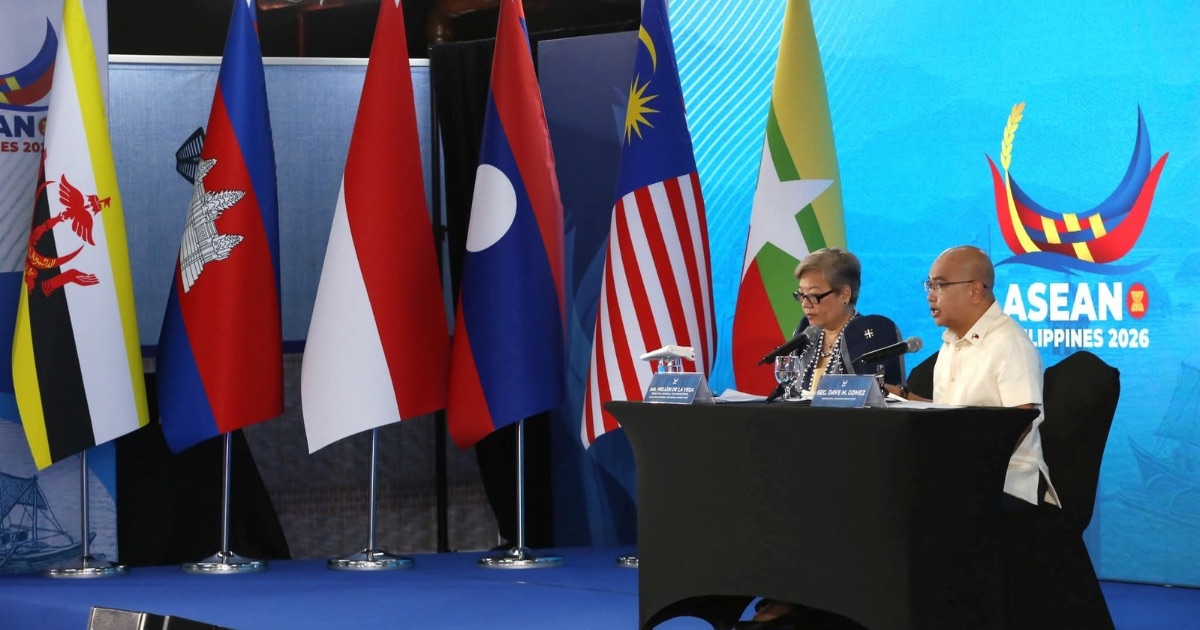
Regional leaders will anchor the 2026 ASEAN Summit in Cebu on stronger disaster preparedness and energy security as member states respond to worsening climate threats and global fuel pressures.
Acting Presidential Communications Secretary Dave Gomez said ASEAN countries have agreed to deepen cooperation on disaster resilience, including early warning systems, faster humanitarian response, and coordinated support for affected communities.
He made the statement during the opening of the 2026 ASEAN International Media Center at the Mactan World Museum in Lapu-Lapu City.
Gomez said the direction aims to prevent disasters such as volcanic unrest from further endangering vulnerable populations and instead push “people-centered resilience strategies” across the region.
The Philippines earlier pushed the Manila-ASEAN Strategic Protocol for Emergency and Comprehensive Transformation (Manila-ASPECT), a proposal designed to strengthen regional disaster response systems.
The framework seeks to improve interoperability, data sharing, logistics coordination, and cross-border response mechanisms among ASEAN member states.
Under the proposal, disaster response systems will be standardized to allow faster and more coordinated action during emergencies across Southeast Asia.
The Department of Social Welfare and Development said the initiative supports a more unified and rights-based approach to disaster response in the region.
On the domestic front, President Ferdinand R. Marcos Jr. directed government agencies to conduct immediate response measures, including medical assistance and clearing operations in Albay following ash emissions from Mayon Volcano.
Energy security is also expected to take a prominent role in the summit agenda as rising fuel prices continue to affect Asia amid tensions in the Middle East.
Gomez said ASEAN leaders, under the initiative of Marcos, have agreed to elevate discussions on coordinated energy strategies to cushion member states from global price shocks.
He said the summit will seek common approaches to stabilize energy supply and reduce the impact of external geopolitical tensions on households and industries across the region.
Photo by Jacq Hernandez















Comments