



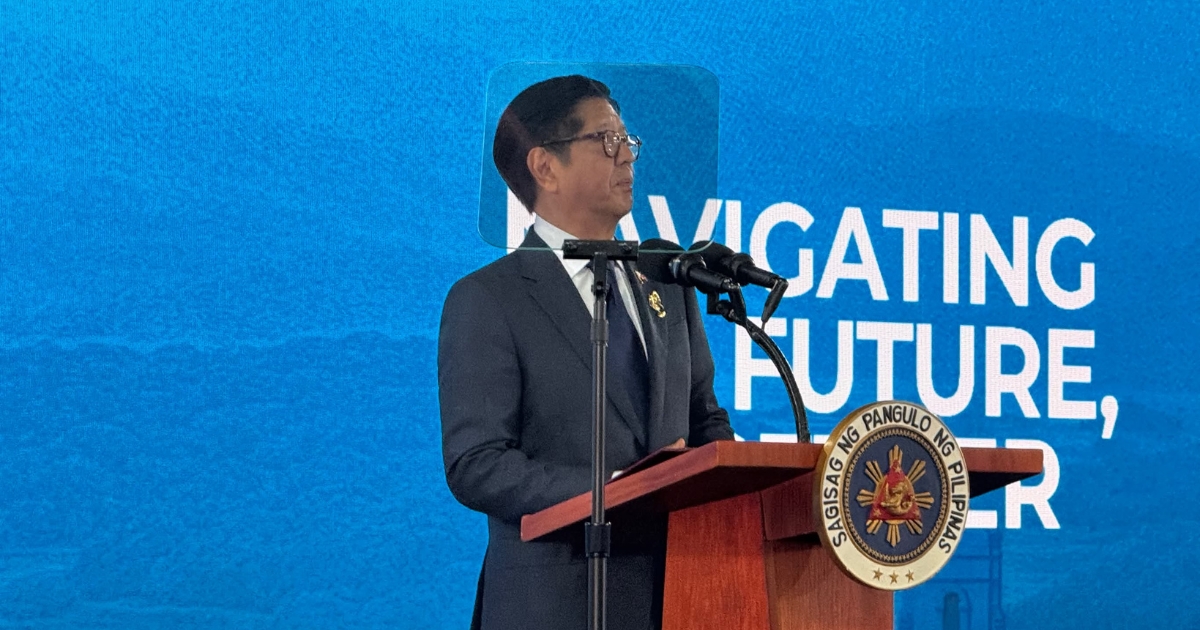
ASEAN leaders wrapped up the 48th ASEAN Summit in Cebu on Friday with a focus on energy stability, maritime security, and regional coordination amid rising global tensions, President Ferdinand Marcos Jr. said.
Marcos, speaking at the International Media Center in Lapu-Lapu City, said discussions centered on fuel supply risks, food security, and coordinated crisis response as geopolitical pressures continued to affect Southeast Asia.
He said ASEAN leaders addressed the impact of rising oil prices linked to the Middle East conflict and its ripple effects on economies and workers across the region.
In response, he said member states agreed to advance work on the ASEAN Framework Agreement on Petroleum Security, aimed at strengthening cooperation during fuel supply disruptions.
Leaders also discussed accelerating the ASEAN Power Grid, which seeks to link electricity systems across the region to improve energy stability and support renewable integration.
Marcos said ASEAN also explored the idea of establishing a regional fuel reserve, similar to the bloc’s emergency rice stock system, as part of broader efforts to cushion supply shocks.
On maritime security, ASEAN leaders adopted a declaration on maritime cooperation that includes a proposal to establish an ASEAN Maritime Center in the Philippines.
Marcos said the center would help coordinate efforts on maritime safety, illegal fishing, smuggling, and human trafficking.
He said the initiative is intended to strengthen cooperation rather than confrontation among member states.
The President also raised concerns over Myanmar, where ASEAN leaders noted limited progress in implementing the Five-Point Consensus aimed at restoring stability.
He said discussions explored new approaches while reaffirming ASEAN principles on humanitarian concerns and the rule of law.
The summit also produced the Cebu Protocol amending the ASEAN Charter, the first revision since 2007, along with declarations on disaster resilience, youth climate action, and emergency response coordination.
Marcos said the outcomes reflected ASEAN’s shift toward stronger coordination in addressing shared regional challenges.
“Our discussions made clear that ASEAN should not just react to crises,” he said. “We must anticipate, prepare, coordinate, and act together.”
Photo by Kaiser Jan Fuentes















Comments