



A proposed ordinance seeks to institutionalize the Cebu City Justice Zone as part of efforts to expand legal aid services and improve access to justice for indigent and vulnerable sectors.
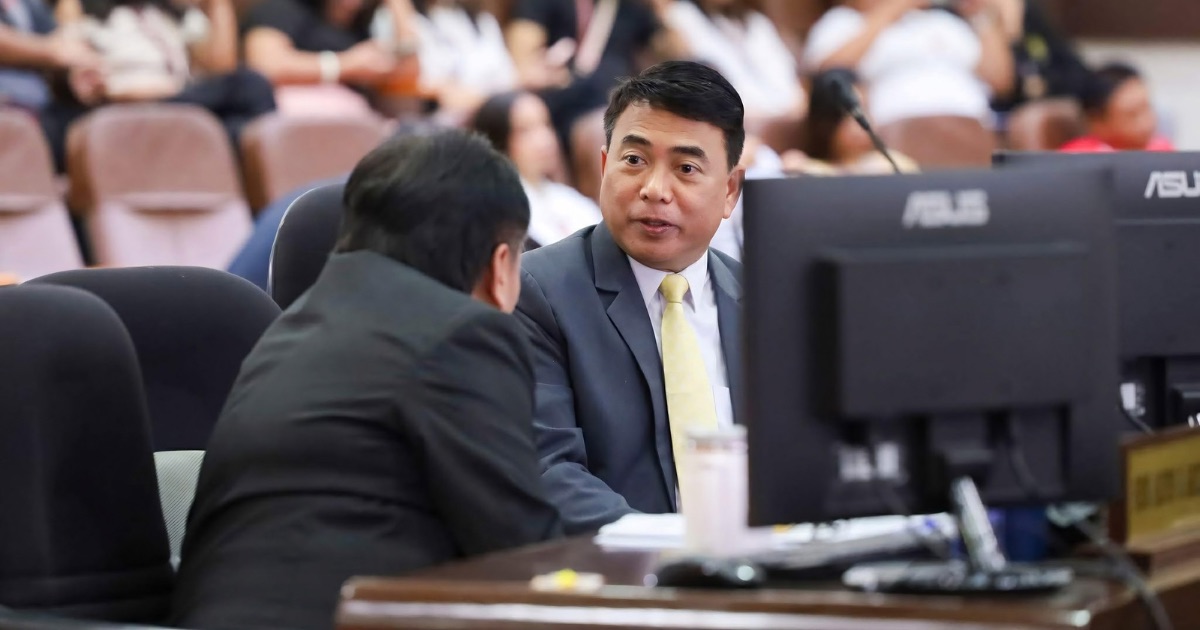
Councilor Paul Labra said the initiative aims to create a coordinated framework among justice-sector institutions to address delays in case resolution, jail congestion, and barriers faced by marginalized communities in accessing legal services.
The measure, titled the “Cebu City Justice Zone Institutionalization Ordinance,” proposes the integration of justice reforms into local planning, budgeting, and service delivery systems, with a focus on equality and inclusivity.
Labra said the proposal responds to long-standing gaps in the justice system that affect vulnerable groups.
“Vulnerable sectors often find the legal system intimidating or inaccessible,” Labra said. “This ordinance aims to create a coordinated system where justice services become more responsive, inclusive, and accessible.”
Under the proposal, legal aid mechanisms will be strengthened through the Clinical Legal Education Program (CLEP), allowing supervised law students to assist indigent clients, alongside public defenders and pro bono legal services.
Academic institutions implementing CLEP and community extension programs will be integrated into the Justice Zone alongside courts, prosecutors, law enforcement agencies, the Public Attorney’s Office, the Integrated Bar of the Philippines, civil society groups, and city offices.
The ordinance also expands coverage for marginalized sectors, including women, children, indigenous peoples, persons with disabilities, persons in distress, and members of the SOGIE community.
It designates the Cebu City Justice Zone as a coordination platform for the five pillars of the criminal justice system: law enforcement, prosecution, courts, corrections, and the community.
Under the proposal, the Executive Judge of the Cebu City Regional Trial Court will serve as convenor, with representatives from the Department of Justice and the Department of the Interior and Local Government acting as vice-convenors.
Member agencies include the Cebu City Police Office, Bureau of Jail Management and Penology, Public Attorney’s Office, parole and probation offices, human rights agencies, health and labor departments, civil society organizations, and academic institutions.
The ordinance also institutionalizes coordination mechanisms such as regular inter-agency meetings, data-sharing systems, referral pathways for rehabilitation services, and monitoring systems for case flow management and jail decongestion.
Priority programs outlined in the measure include alternative sentencing, faster case resolution, improved pre-trial detention procedures, restorative justice approaches, and rehabilitation and reintegration programs.
It also promotes non-custodial penalties such as community service and probation for qualified offenders to help ease congestion in detention facilities.
The proposal aligns with reforms under the Justice Sector Coordinating Council and national development and judicial reform frameworks aimed at improving efficiency, transparency, and access to justice.
If approved, the Justice Zone will be integrated into Cebu City’s development and investment planning, with funding allocated for legal aid services, rehabilitation programs, digital justice systems, and inter-agency coordination.
The measure is set to undergo committee deliberations before being elevated to the Cebu City Council plenary for further action. (LLP)
Photo courtesy of Sangguniang Panglungsod- Cebu City/FB















Comments