



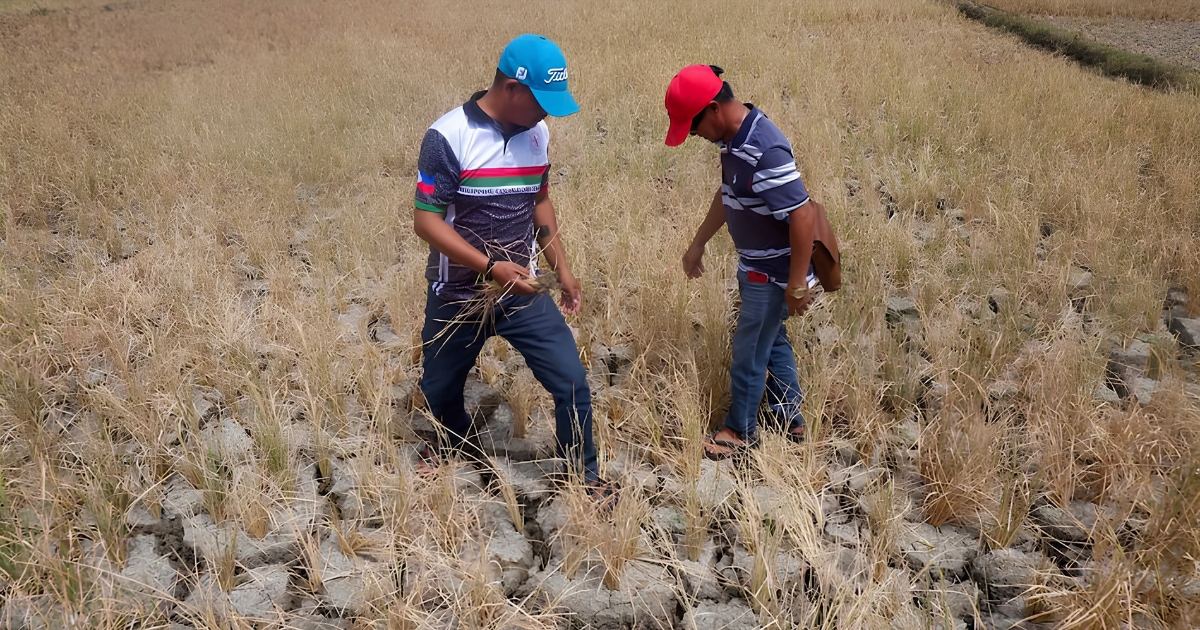
The Philippine Atmospheric, Geophysical and Astronomical Services Administration (PAGASA) is warning that El Niño could begin developing as early as June, after raising its status from El Niño Watch to El Niño Alert on April 22.
The upgrade reflects a higher probability of the climate phenomenon forming during the June–July–August period, even as ENSO-neutral conditions still prevailed at the time of the latest advisory.
According to PAGASA Visayas Regional Services Division weather specialist Jhomer Eclarino, the likelihood of El Niño development rose to 79 percent, prompting the shift in alert level from the earlier 55 percent probability recorded when the Watch status was first issued in March.
“Sa latest na percentage, 79 percent ma-develop ang El Niño diri sa June, July, August. So i-clarify lang, this month—March, April, and May—neutral pa ta,” Eclarino said in April.
He clarified that no El Niño conditions were present during the March to May period, despite increasing forecasts pointing to a possible onset in mid-year.
Based on PAGASA’s latest climate outlook, the developing event may reach “strong” intensity, although officials noted that higher classifications circulating on social media, including “very strong,” remain unconfirmed.
“Posibleng aabot ng strong, but not yet ruled out itong ‘very strong’ na kumakalat sa social media,” Eclarino said.
PAGASA has urged the public to rely on official advisories and avoid unverified information online.
While ENSO-neutral conditions remain in place, Central Visayas already recorded heat index levels reaching 41 degrees Celsius in April, approaching the “danger” category under PAGASA’s classification.
Heat index levels are categorized as follows: Caution (27°C–32°C), Extreme Caution (33°C–41°C), Danger (42°C–51°C), and Extreme Danger (52°C and above).
Eclarino said the hot season is expected to intensify further in the coming weeks.
“Going peak pa ang tag-init diri sa Pilipinas up to mid-May. So ang April dili pa ang peak sa kainit. Mo-peak pa kini in May,” he said.
El Niño is associated with below-normal rainfall, while its counterpart La Niña brings above-normal rainfall. The phenomenon may also reduce tropical cyclone activity within the Philippine Area of Responsibility and affect agriculture, water supply, and public health.
PAGASA said the difference between an El Niño Watch and El Niño Alert is critical for preparedness. A Watch signals readiness, while an Alert calls for early action from local government units and disaster risk managers.
Eclarino also warned that the dry conditions could persist into early 2027.
“Possibly, molanat pa kini in the early months of next year in 2027,” he said.
PAGASA has recommended water conservation and rainwater harvesting as early mitigation measures, noting that rainfall may still occur through localized thunderstorms even during an El Niño episode.
“Not necessarily kapag El Niño wala totally ulan. Naay mga thunderstorms na nagbibigay tubig ulan, so practice nato ang rainwater harvesting,” he said.
The Department of Health has also reminded the public to properly store collected water to prevent mosquito breeding and reduce the risk of dengue, which remains endemic in the country.
PAGASA has begun issuing a two-day heat index forecast to help communities prepare for extreme heat conditions as the country approaches the peak of the dry season.
Photo courtesy of ABS-CBN















Comments