



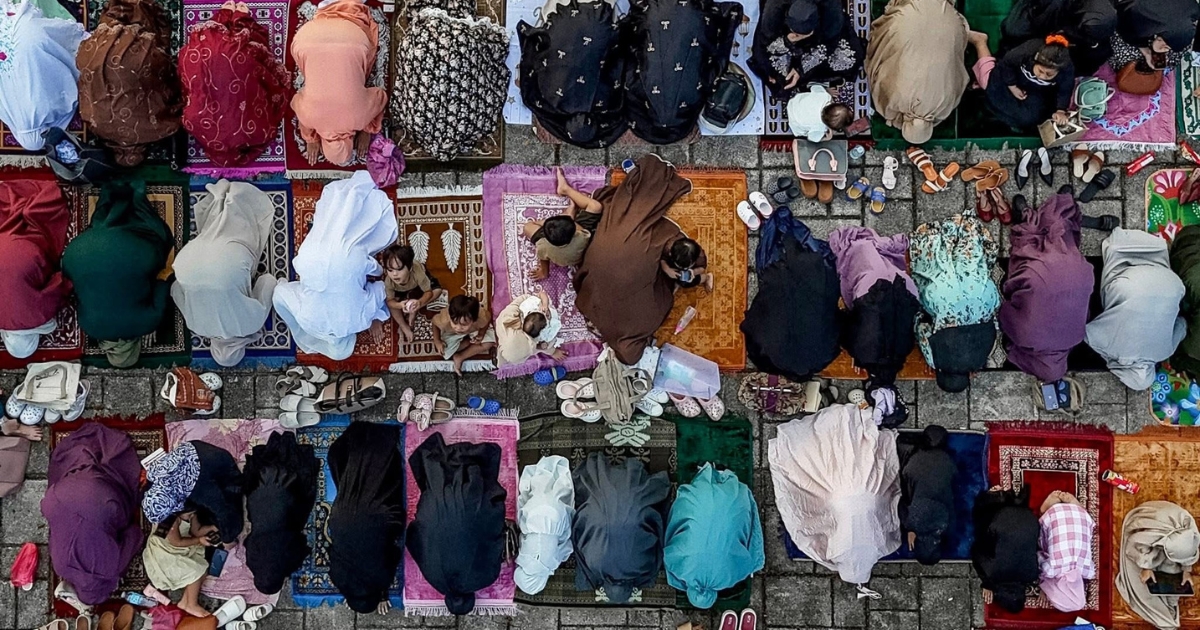
President Ferdinand R. Marcos Jr. has declared May 27, 2026 as a regular holiday nationwide in observance of Eid’l Adha—but what exactly is Eid’l Adha, and why is it considered one of the most important dates in the Islamic calendar?
Eid’l Adha, also known as the Feast of Sacrifice, is one of the two major Islamic celebrations.
It honors the faith and obedience of Prophet Abraham, who was willing to sacrifice his son in obedience to God’s command, a story that symbolizes devotion, submission, and trust in divine will.
The declaration was made through Proclamation No. 1264 signed by Marcos, allowing Muslim Filipinos across the country to observe the occasion in accordance with Islamic tradition.
The Bangsamoro Darul-Ifta earlier announced that Eid’l Adha will fall on Wednesday, May 27, based on the 1447 Hijrah Islamic lunar calendar.
The recommendation was also endorsed by the National Commission on Muslim Filipinos, which prompted the issuance of the holiday proclamation.
Under Republic Act No. 9849, Eid’l Adha is recognized as a regular holiday in the Philippines in recognition of its religious importance to the Muslim community.
The celebration is closely tied to the annual Hajj pilgrimage in Mecca, one of the Five Pillars of Islam, which marks a period of spiritual reflection and worship for millions of Muslims worldwide.
Eid’l Adha is observed at the end of Hajj and is regarded as the holier of the two major Islamic feasts, the other being Eid’l Fitr.
Muslim Filipinos make up around six percent of the country’s population, and the nationwide holiday ensures they are able to observe the occasion with appropriate recognition and time for religious practices and family gatherings.
Photo by Jacq Hernandez















Comments