
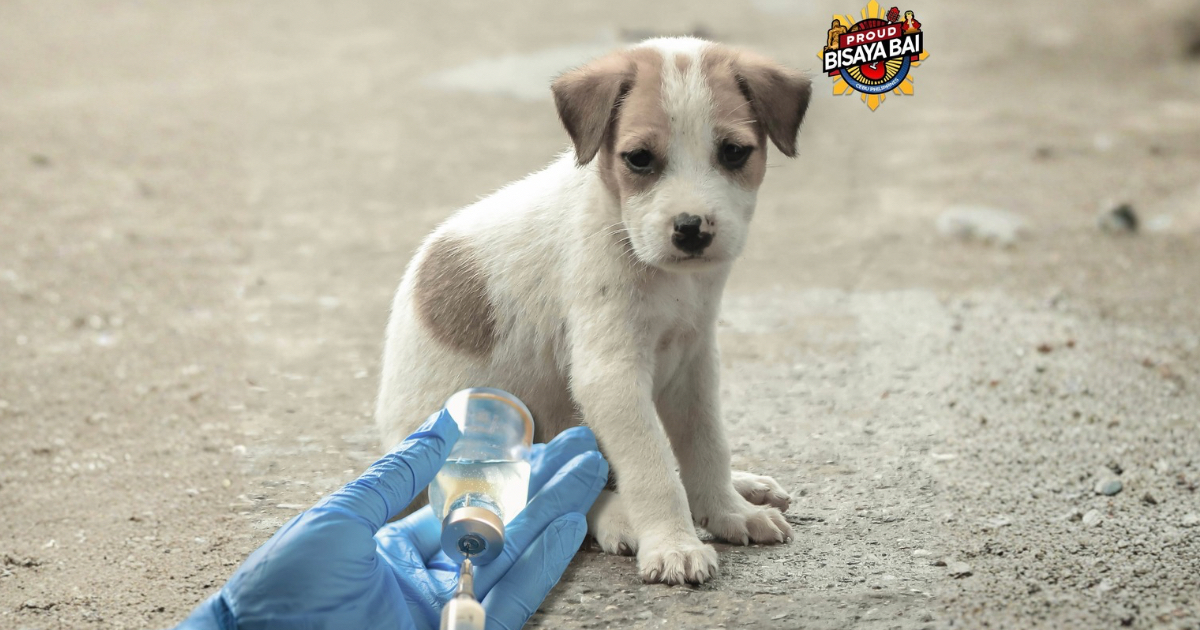
Cebu Province has increased its anti-rabies vaccination budget to P12 million this year as it steps up efforts to protect communities amid a growing dog population across the province.
The Provincial Veterinary Office (PVO) said the increased allocation will allow the Capitol to procure more than 30,000 vaccine vials, which will be distributed to component cities and municipalities, especially lower-income areas with limited vaccination resources.
Dr. Louie Maestrado, chief of the Animal and Public Health Division of the PVO, said the province is now in a stronger position to sustain its vaccination program compared to previous years.
“Actually sa rabies nato, naa gani siyay pag increase. For the year 2026 implementation, we have an allocation of P12 million,” Maestrado said.
He noted that the budget nearly doubled from about P5 million previously, allowing broader support for fourth- and fifth-class municipalities while encouraging higher-income local government units to fund their own programs.
“So that the rest of our budget intended for vaccines especially ma-prioritize nato katung mga lower-class municipalities,” he said.
PVO data show that Cebu Province has more than 300,000 registered dogs based on vaccination and LGU records, although the figure does not include stray animals.
Despite the rising population, Maestrado said the province continues to meet the national target of vaccinating at least 70 percent of dogs to prevent rabies transmission.
“So far ma-consider gyud nato nga in ana nga level tungod sa atong pagtinabangay. Majority ma-hit man gyud nato ang target,” he said.
However, he acknowledged that manpower remains a major challenge, particularly in municipalities that cannot afford to hire licensed veterinarians.
“Naa may mandatory man gyud na naay city vet, pero sa municipalities maihap ra nimo ang maka-afford mag-hire ug licensed vet,” he said.
To address this, local governments often rely on volunteers and barangay workers during mass vaccination drives, while others provide honoraria for support personnel.
The province is also facing difficulties in data consolidation after a national online monitoring system for animal vaccination and disease reporting stopped functioning years ago.
Maestrado said the previous system allowed faster access to vaccination records and better mapping of areas needing intervention.
“Nindot gyud to ma’am kay dali ra nimo makuha ang data. Naka-map pa gyud siya,” he said.
At present, vaccination data is collected manually and consolidated through coordination between municipalities and the provincial veterinary office.
The PVO continues year-round rabies prevention efforts through mass vaccination campaigns and community-based services, while also integrating spaying and neutering programs to help manage the growing dog population.

Comments