
Mao na mo ingon gyud inyong mama ug papa, or even ate ug kuya nga, “Sos, wala gyud mo nakasuway sa kalisod nga among naagian kaniadto.”
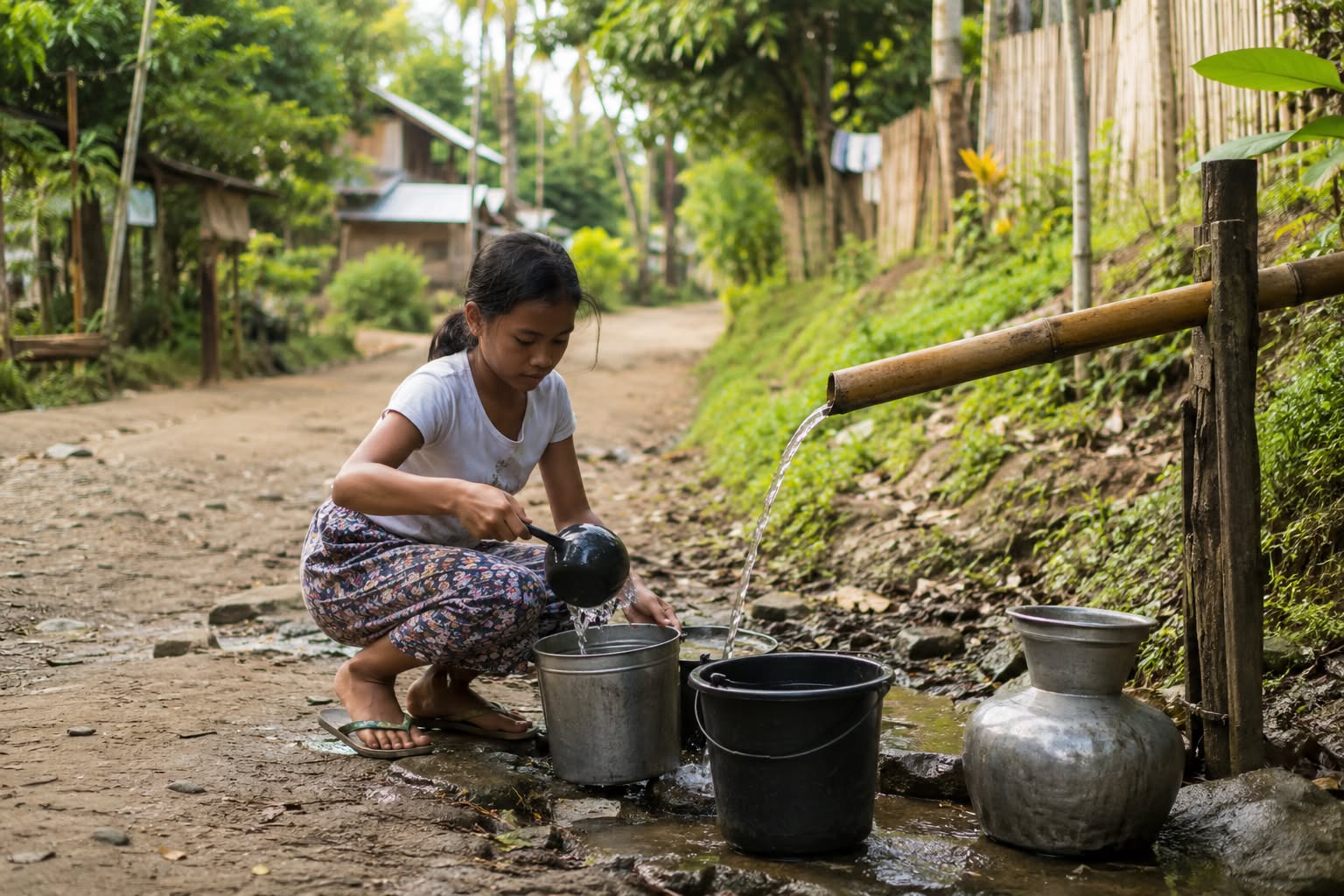
Before the widespread availability of household faucets and modern plumbing systems, fetching water was an essential part of daily life for many Filipino families, particularly in rural communities. Prior to the expansion of water infrastructure into provincial areas, people depended on natural springs, wells, rivers, and communal water sources to meet their everyday needs and accomplish household tasks.
Using a “puso” or “tabay,” families carefully transported water back to their homes for “sag-ob” or pag-iigib ng tubig. Children and students often rose early in the morning to assist in fetching water before attending school. For many households, this responsibility was not merely a routine chore but a fundamental necessity. Some individuals were required to walk considerable distances, climb steep terrain, or wait in long lines at communal pumps in order to secure sufficient water for cooking, bathing, laundering clothes, and maintaining household cleanliness.
Students during that period frequently carried responsibilities that extended beyond their academic obligations. Before attending classes, many had already completed demanding household duties such as handwashing clothes, gathering firewood, and transporting multiple containers of water for family use. These experiences cultivated discipline, resilience, diligence, and a strong sense of cooperation within the household.
In contrast to the present day, when clean water is readily accessible through household faucets with minimal effort, earlier generations possessed a profound appreciation for the value of water because of the labor required to obtain it. As a result, water was carefully conserved and never treated wastefully.
These accounts serve as meaningful reminders of the significant progress communities have achieved through development and improved infrastructure. Nevertheless, despite modernization, memories of carrying “tabay” and waking before sunrise to fetch water continue to endure in the lives of many Filipinos who experienced those simpler yet demanding times.
For older generations, these memories represent perseverance, humility, and endurance. For younger generations, they provide valuable lessons in gratitude, resilience, and appreciation for the conveniences and comforts available today.

Comments