



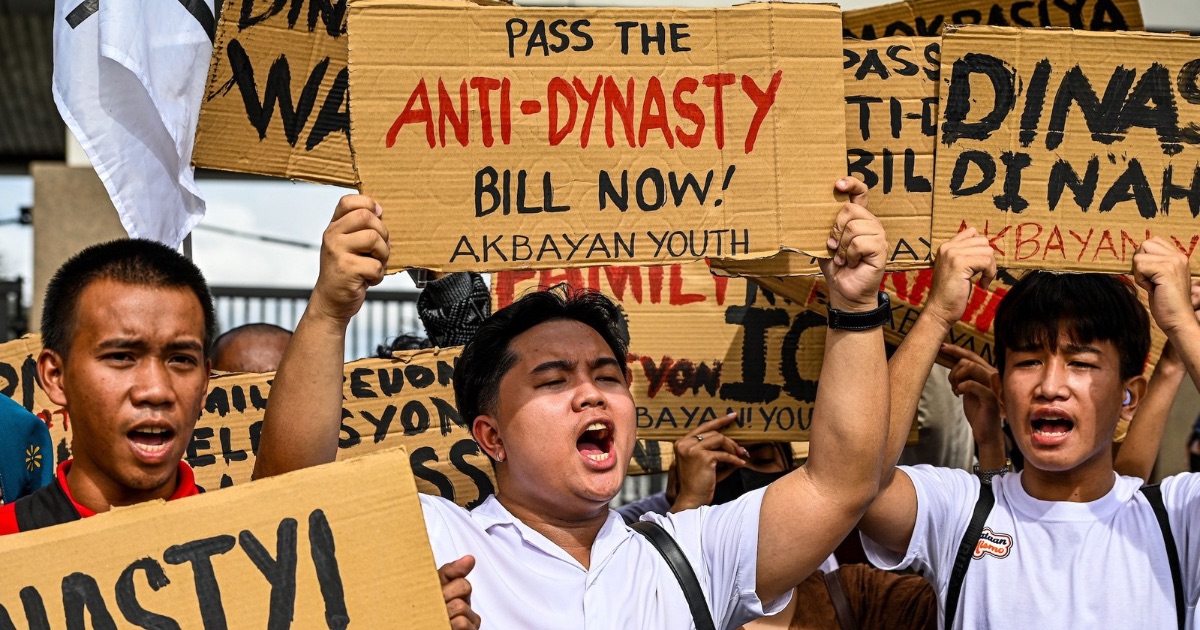
The House of Representatives has approved House Bill No. 8389, or the proposed Anti-Political Dynasty Act, on third and final reading, marking a significant step toward implementing a provision of the 1987 Philippine Constitution that seeks to prohibit political dynasties in the country.
Approved on June 3, 2026, the proposed measure aims to prevent close relatives from simultaneously running for or holding public office within the same political jurisdiction.
Under the bill, the restriction applies to relatives up to the second degree of consanguinity or affinity. This means a candidate cannot run alongside or hold office in the same area with immediate family members such as a spouse, parents, children, grandparents, grandchildren, siblings, aunts, uncles, nieces, nephews, including relatives by marriage within the same degree.
To ensure compliance, candidates will be required to submit sworn affidavits to the Commission on Elections (COMELEC), certifying that they have no relatives whose candidacy would violate the proposed law.
The bill also outlines rules in cases where related candidates still end up winning elections despite the restrictions. If family members win the same position, the candidate with the highest number of votes will be allowed to assume office. If they win different positions within the same jurisdiction, the candidate elected to the higher position will be given priority.
Individuals found guilty of hiding family relationships, submitting false information, or manipulating the process to bypass the law may face penalties.
Despite its approval in the House, the proposal has drawn criticism from several lawmakers and observers who described it as “watered down.” Critics argue that while the bill limits relatives from occupying positions in the same area, it still leaves room for political families to maintain influence across different levels of government.
Opponents pointed to what they describe as a “one seat per unit” loophole. Under this setup, a single political family could still potentially hold multiple positions at different levels of government simultaneously — such as having one family member serve as senator, another as congressman, governor, mayor, or barangay official.
The proposed measure now moves to the Senate, where a separate version remains under deliberation on second reading. Before becoming law, both chambers must reconcile their versions of the bill and secure the President’s approval.
The debate over the measure continues as lawmakers and the public weigh whether the bill is a meaningful step toward political reform or a diluted version of what an anti-dynasty law was originally intended to achieve.
Photo courtesy of ABS-CBN















Comments