
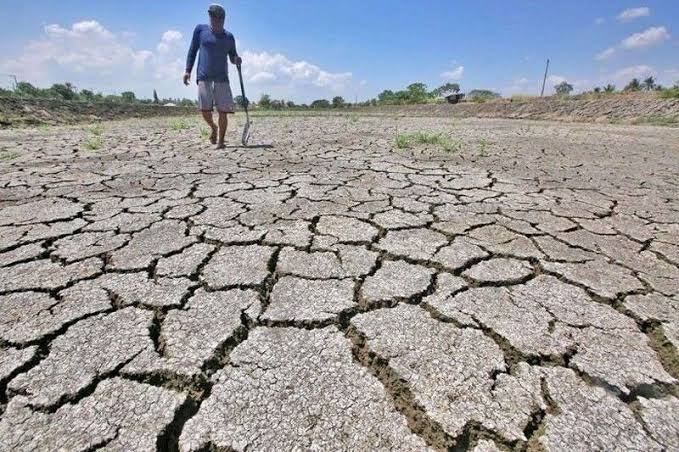
THE Metropolitan Cebu Water District (MCWD) is intensifying contingency measures ahead of a possible El Niño episode as Metro Cebu continues to face a daily water supply shortfall exceeding 16,000 cubic meters.
The water utility said on Wednesday, June 17, that it remains on heightened preparedness even as production continues to lag behind demand.
MCWD data showed average daily production at 263,941 cubic meters, below the estimated demand of 280,000 cubic meters, leaving a deficit of about 16,000 cubic meters or roughly 16 million liters per day.
MCWD General Manager John Dx Lapid said the agency has activated mitigation measures to safeguard water sources, reduce system losses, and maintain service continuity amid worsening dry conditions.
“We are preparing and implementing interventions early so that we can continue serving our consumers despite the challenges posed by a possible El Niño,” Lapid said.
Among the priority measures are rehabilitation of production wells, intensified reduction of non-revenue water (NRW), and stricter regulation of fire hydrant usage.
Lapid said unauthorized hydrant use contributes to system losses and may pose contamination risks.
He said MCWD has designated metered hydrants for emergency use and is coordinating with the Bureau of Fire Protection to ensure proper utilization.
The utility is also extending support to upland barangays already experiencing water scarcity, including the distribution of water containers to residents in Guba and Agsungot.
MCWD is also studying the deployment of mobile water tankers to other upland areas such as Cambinocot, Bonbon, and Paril.
In coordination with the Cebu City Government, MCWD has allowed city tankers to draw water from designated hydrants for distribution to affected communities.
Mayor Nestor Archival said the city has strengthened coordination with MCWD to maintain water access in upland barangays.
He said a designated hydrant in Barangay Guba is now being used as a controlled water source, while a city tanker has been delivering free water daily to residents.
Archival also supported tighter hydrant regulation, saying the measure helps prevent water losses and low-pressure incidents in vulnerable areas.
He added that the city is evaluating additional interventions, including the distribution of water storage containers and the possible declaration of a state of calamity if conditions worsen.
MCWD Operations Manager Edgar Ortega said the utility is closely monitoring the Jaclupan Water Facility, a key source supplying southern Cebu City barangays.
To conserve groundwater reserves, output from the facility has been reduced from 30,000 cubic meters per day to 20,000 cubic meters per day.
“If we continue operating at previous production levels, the source could be depleted within three months,” Ortega said.
MCWD estimates that about 30,000 households, or roughly 150,000 individuals, could be affected if the Jaclupan source becomes depleted.
The utility is also exploring the procurement of additional bulk water supply, particularly from providers in the Mambaling area, to cushion potential shortages.
Ortega clarified that any supplemental water procurement would not automatically translate to higher consumer water rates.
Beyond immediate response measures, MCWD is pursuing groundwater development projects in public schools and testing a pilot leak-detection system in Cordova to curb non-revenue water losses.
General Manager Lapid urged consumers to practice water conservation, repair leaks, and reuse water when possible.
“Water security is a shared responsibility,” Lapid said.
“It is not the responsibility of MCWD alone. Local government units, communities and consumers all have a role to play in ensuring that there will be enough water for everyone.”
Photo courtesy of Philippine Star

Comments