



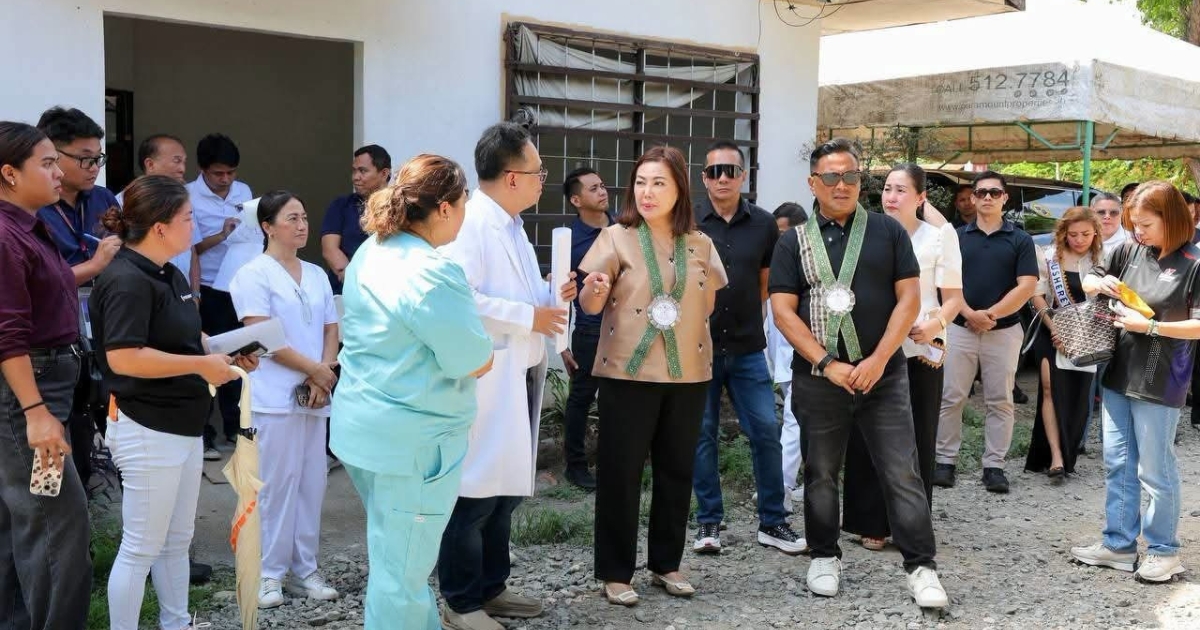
Strengthening Cebu’s provincial hospitals is the next critical step in fully implementing the Universal Health Care (UHC) Act, according to Senator Joseph Victor “JV” Ejercito, who pledged to support funding for healthcare projects in the province during an inspection of several government hospitals on Friday.
Accompanied by Governor Pamela Baricuatro, Ejercito visited provincial hospitals in Danao City, Minglanilla, and Carcar to assess their condition ahead of Congress’ deliberations on the proposed 2027 national budget.
The senator said the next phase of UHC implementation should focus on upgrading primary and secondary healthcare facilities to improve access to medical services and reduce the burden on tertiary hospitals such as the Vicente Sotto Memorial Medical Center (VSMMC).
“Those are now specialty centers. They can perform kidney transplant, open heart surgery and the rest. So now we’re going on the second and third phase—that is improvement of the primary and secondary healthcare facilities,” Ejercito said.
He explained that enhancing provincial hospitals would allow more patients to receive treatment closer to home while enabling referral hospitals to concentrate on specialized and complicated cases.
“My idea is to improve the service delivery, improve the facilities, equipment if necessary, so that it will be a good support to the apex hospitals,” he said.
Ejercito said the hospital visits were intended to give him a firsthand assessment of Cebu’s healthcare facilities before lawmakers begin budget deliberations.
“So that I can see for myself the status and the state of the provincial hospitals. That’s why I’m here to start the job early,” he said.
During the inspection of the Danao provincial hospital, the senator noted that healthcare services had improved under the current provincial administration but said more infrastructure projects still need government funding.
“Luckily, I was expecting worse, but it has improved. Ever since Governor Pam took over, they prioritized already the healthcare system. There are CT scans, there are new machines. But there’s still a lot of things to be done,” he said.
One of the projects he identified was an unfinished hospital building that, once completed, could significantly expand bed capacity and accommodate additional operating rooms and intensive care units.
“So this will be easier because it’s an unfinished project. It will be easier to justify and fund,” Ejercito said, adding that hospitals serving northern and southern Cebu should be prioritized because of the province’s growing population.
While he stopped short of committing a specific amount, Ejercito said he would review the proposed National Expenditure Program after it is submitted to Congress following the President’s State of the Nation Address.
“If I see with my own eyes that it’s really needed to be supported, then I can make an amendment on the floor to add budget,” he said.
Governor Baricuatro welcomed the senator’s visit and thanked him for personally inspecting the province’s healthcare facilities after earlier discussing Cebu’s needs with him.
“We’re truly grateful. Thank you for taking the time to visit us. You kept your promise. We really need help, and at least Senator JV saw what’s needed, especially in the Danao hospital,” the governor said.
Provincial Health Officer Dr. Nikki Catalan said strengthening secondary-level hospitals would help decongest tertiary medical centers and improve healthcare delivery throughout Cebu.
“Actually, we lack support here in the province for the secondary levels of care. Strengthening that will decongest APEX, and helping LGUs and city health will also help us. It really trickles down,” Catalan said.
Catalan said Danao, Minglanilla, and Carcar hospitals were selected for the inspection because they serve large populations and surrounding communities, making them key facilities in the province’s healthcare referral network.
Photo courtesy of Cebu Capitol PIO















Comments