
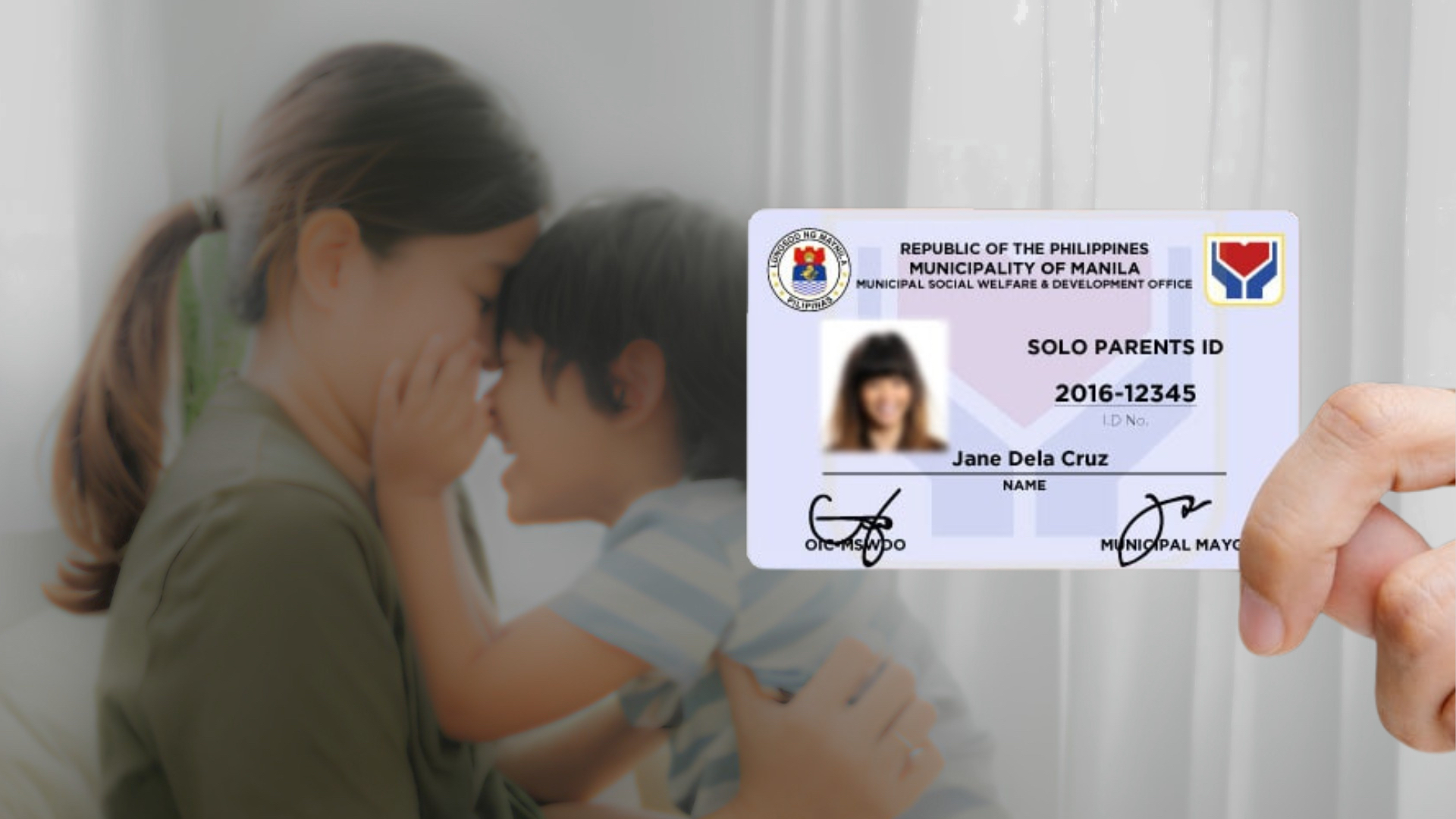
The Department of Social Welfare and Development (DSWD) and Local Government Units (LGU) continue to issue the Solo Parent Identification Card (SPIC), the official document that offers solo parents raising children alone access to government assistance under the Expanded Solo Parents Welfare Act (RA 11861) of 2022.
The SPIC served as proof that its holder qualified for support under Republic Act 8972 and its expanded version. Aside from being a requirement for availing of benefits, the ID also functions as a valid identification document for public and private transactions. As of writing, there are over 260,000 registered solo parents nationwide, with nine out of 10 being women.
Who Qualifies
The law covers a broad range of circumstances regardless of the parent’s gender. It includes parents whose spouse has died, is detained for more than three months, is physically or mentally incapacitated, has abandoned the family for at least six months, or was legally separated from them. It also covers unmarried mothers and fathers, legal guardians, and relatives who took over the responsibility of raising a child without support from a parent. However, the solo parent must exclusively exercise sole parental care and support to the child without any cohabitation or co-parenting arrangements.
Relatives within the fourth degree of consanguinity, such as grandparents, siblings, aunts/uncles, and cousins who assume parental responsibility, as well as individuals with a low-income overseas Filipino worker (OFW) spouse, may also qualify as solo parents.
Requirements for ID
Applicants have to submit documents proving their identity, residency, income status, and specific solo parent circumstance. These commonly included a PSA birth certificate of the child, a barangay certificate of residency, proof of income or a certificate of indigency, and a valid ID. Depending on the applicant’s situation, additional documents such as a death certificate, medical records, or a court decree were required. A social worker shall review all submissions before approval.
Application Process
The barangay’s role is limited to issuing a supporting certificate of solo parent status and does not issue the ID itself. Applications can be filed at your local City or Municipal Social Welfare and Development Office (C/MSWDO). After submission, applicants undergo an assessment and document verification by a social worker. Once approved, the DSWD’s implementing rules directed offices to release the SPIC and its accompanying booklet within seven working days of receiving complete requirements. Application, issuance, and renewal all remain free of charge, aside from incidental costs for notarized affidavits or certified documents from third parties.
Benefits Under the Law
Holding a Solo Parent ID unlocked several forms of assistance. Employed solo parents who had rendered at least six months to one year of continuous service, depending on the employer’s policy, were entitled to seven working days of paid parental leave annually, separate from their regular leave credits. The law also provided protection against workplace discrimination, priority access to livelihood, housing, and educational programs, and scholarship opportunities for the children of solo parents through the Department of Education (DepEd), Commission on Higher Education (CHED), and the Technical Education and Skills Development Authority (TESDA).
Low-income solo parents whose earnings fall below the regional minimum wage are also entitled to a 10 percent discount and VAT exemption on medicines, infant milk, food supplements, and other essential goods for their children until they turn 6 years old. Some qualified holders also received a monthly cash subsidy of 1,000 pesos, though this benefit depends on every LGU’s subsidy program. As of the DSWD’s latest count, 291 LGUs nationwide provide the subsidy to registered beneficiaries.
Renewal and Further Eligibility
The SPIC remains valid for one year and has to be renewed annually at the same welfare office it was issued to keep benefits active. Renewal requires updated proof of residency and income along with the previous ID. A DSWD social welfare officer explained that a change in a solo parent’s status, such as remarrying or entering a cohabiting relationship, could disqualify a holder from the program, which was why the ID needs yearly renewal and local verification.

Comments