
Small businesses must move beyond recovery efforts and invest in preparedness as disasters continue to threaten operations, income, and jobs, the Department of Trade and Industry (DTI) said.
DTI Assistant Secretary for the Regional Operations Group Leonila “Leny” Baluyut made the call during the 10th National Forum on Strengthening MSME Disaster Resilience 2026 held Thursday in Mandaue City, where stakeholders discussed ways to help micro, small, and medium enterprises (MSMEs) withstand disruptions.
Baluyut said resilience should begin before a disaster occurs through proper risk assessment, business continuity planning, digitalization, market diversification, stronger supply chains, and improved access to financing.
“The greatest risk to our MSMEs is no longer the disaster itself. It is facing the next one unprepared,” Baluyut said.
She cited the World Risk Index 2025, which identified the Philippines as the country with the highest disaster risk among 193 nations, due to its geographic location and exposure to natural hazards.
She said disasters can lead to damaged establishments, interrupted operations, supply chain problems, lost income, and reduced livelihood opportunities, particularly among smaller enterprises with limited resources.
DTI Central Visayas Acting Regional Director Esperanza Melgar said businesses in the region have experienced the challenges brought by major disasters, including Super Typhoon Odette in 2021, which affected livelihoods, infrastructure, power supply, and communication systems.
Melgar said enterprises must develop the ability to adjust to changing conditions as they face not only disasters but also economic uncertainties, higher operating costs, and market pressures.
“True resilience means building adaptive enterprises. It means ensuring business continuity, securing supply chains, and safeguarding livelihoods amidst evolving global and local economic pressures,” Melgar said.
She added that disaster resilience should become part of long-term business strategies rather than an activity implemented only after a calamity.
The focus on MSME preparedness comes as the sector remains a major contributor to the Philippine economy.
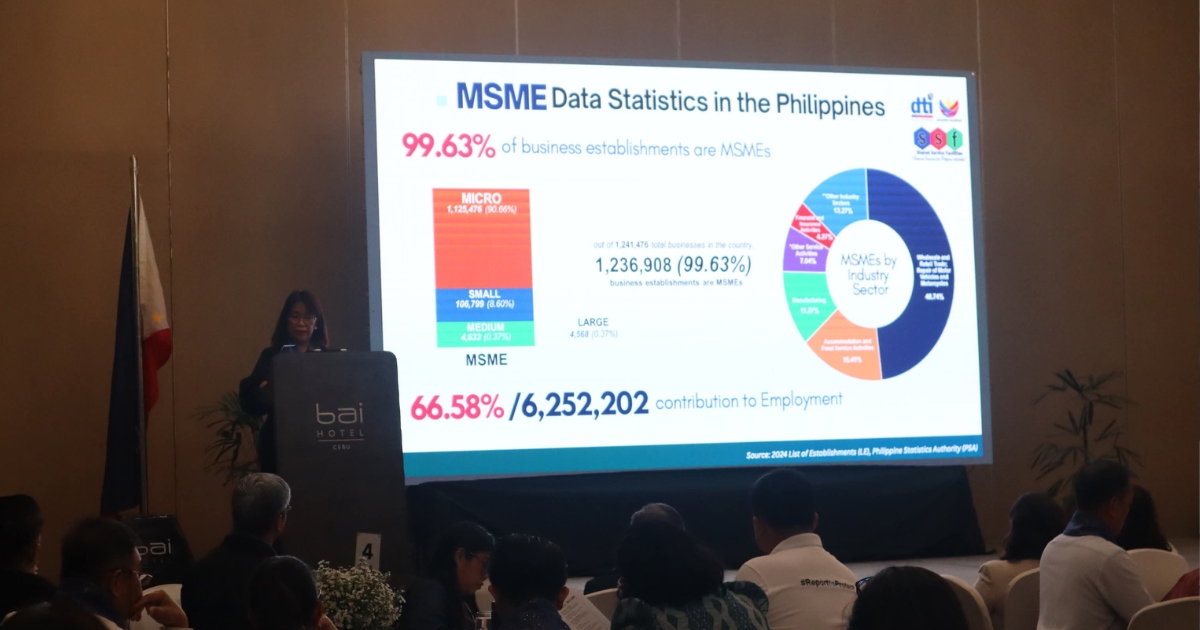
Data from the 2024 List of Establishments of the Philippine Statistics Authority showed that MSMEs make up 99.63 percent of registered businesses and provide 66.58 percent of employment, or 6,252,202 jobs.
Baluyut also highlighted the MSME Resilience Core Group, a public-private partnership co-chaired by DTI and the Philippine Chamber of Commerce and Industry, which promotes collaboration among government agencies, business groups, development partners, and communities.
The forum also featured the first “Negosyong Matatag: MSME Disaster Resilience Awards,” recognizing enterprises that adopted measures to improve preparedness and maintain operations during disruptions.
Baluyut said the initiative aims to encourage more MSMEs to strengthen their disaster risk reduction practices and develop strategies that allow them to continue serving their communities despite future challenges.

Comments