



Recurring yellow and red alerts in the Visayas grid have highlighted a deeper challenge facing the region: ensuring that electricity supply can keep pace with its continued economic growth.
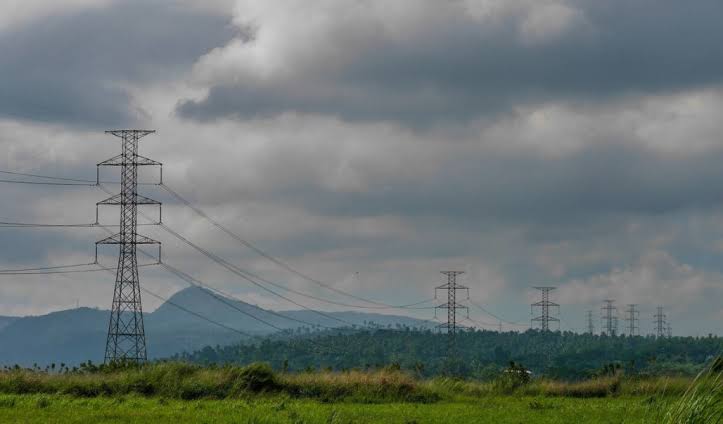
Energy officials and industry stakeholders said addressing power reliability requires more than responding to short term supply shortages, stressing the need for a long term strategy that expands dependable generation, strengthens transmission infrastructure, and supports a balanced energy mix.
During a May 26 hearing of the House of Representatives committees on energy and legislative franchises, National Grid Corporation of the Philippines (NGCP) President and Chief Executive Officer Anthony Almeda called for a comprehensive industry wide development plan to improve the country’s power security.
Almeda said the plan should focus on three priorities: securing sufficient non intermittent baseload supply, developing geographically distributed power plants using different technologies, and adopting resource adequacy based planning.
For the Visayas, he said the region’s reliance on electricity transfers from Luzon and Mindanao must also be addressed, noting that inter island sharing should only serve as a backup measure.
“The Visayas dependency on power imported from Luzon and Mindanao must also be addressed as inter island resource sharing must only be a supplemental measure,” Almeda said.
He warned that without enough baseload supply, power alerts could continue to become a regular occurrence.
During recent periods of supply concerns, the Visayas reportedly had only 183 megawatts of available reserves, leaving limited room for unexpected disruptions such as plant outages, reduced generation capacity, transmission issues, or sudden increases in demand.
The situation highlighted the importance of having dependable power sources within the region, especially as Cebu and other parts of the Visayas continue to attract investments and experience economic expansion.
Baseload power remains a key component of energy security because it provides continuous electricity supply regardless of weather conditions or short term demand fluctuations.
The need for stronger energy security became more evident in May when transmission disruptions and tight supply conditions in Luzon affected electricity transfers to the Visayas, adding pressure to an already constrained system.
Industry experts said dependable capacity helps ensure that essential services, businesses, and households remain supplied during peak demand periods and unexpected disruptions.
At the same time, stakeholders emphasized that a reliable energy system should not rely on a single technology.
The Department of Energy’s May 2026 project summary listed more than 3,880 megawatts of committed renewable energy projects in the Visayas, compared with around 312 megawatts of committed non renewable energy projects and about 420 megawatts of committed energy storage projects.
These projects are expected to help diversify the region’s electricity supply, while energy storage can help manage the variability of renewable sources.
However, stakeholders noted that approved projects do not immediately translate into available power capacity, as developments still face challenges involving permits, financing, land use, transmission access, and grid integration.
The push for a coordinated energy roadmap has also gained support from local governments.
At the PowerForward Visayas forum in April, Cebu Gov. Pamela Baricuatro announced that the province would create a Provincial Energy Master Plan aimed at aligning national energy policies with local priorities and private sector initiatives.
“Under my administration, we are not waiting—we are acting. The Province of Cebu will develop a Provincial Energy Master Plan that integrates national direction, local priorities and private sector initiatives,” she added.
Business groups also called for stronger cooperation between government and industry to address the region’s growing electricity needs.
Talisay Chamber of Commerce and Industry President Carl Cabusas said stakeholders must focus on accelerating power projects and improving infrastructure to support future demand.
“At this point, the focus should be on solutions. We already know the challenge before us: demand is growing faster than available power supply,” he said.
“Government and industry stakeholders should work together to accelerate power generation projects, strengthen transmission infrastructure, and ensure adequate capacity for the future,” Cabusas added.
For Cebu, where industries such as manufacturing, tourism, logistics, business process outsourcing, and real estate continue to expand, reliable electricity supply has become a key factor in maintaining investment confidence and economic growth.
Stakeholders said long term energy security will require coordination among national agencies, regulators, local governments, power generators, distribution utilities, investors, businesses, and consumers.
They added that addressing the region’s power needs will depend not only on building more capacity but also on ensuring that generation, transmission, storage, and demand planning move together to prevent recurring supply constraints.
Photo courtesy of BIMP-EAGA















Comments