



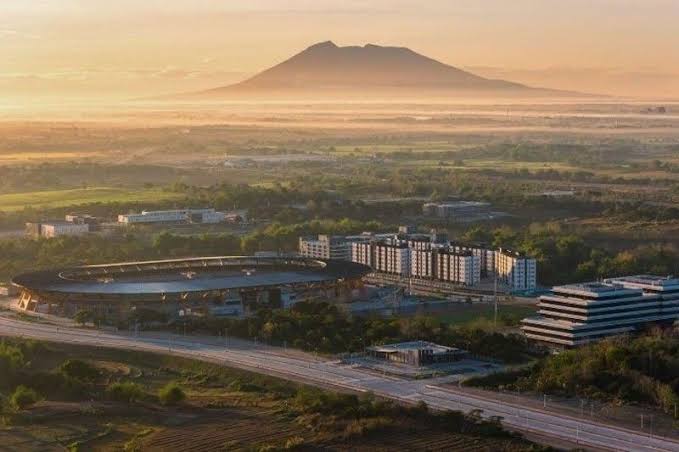
The planned US-led Pax Silica artificial intelligence (AI) hub in Central Luzon could begin site development within three to five years, with an initial phase covering about 500 hectares of the 1,620-hectare site.
Bases Conversion and Development Authority (BCDA) President and Chief Executive Officer Joshua Bingcang said Friday that the project is being planned as a long-term investment, with full development expected to take about 30 years.
“We see this as a long-term (investment). The first phase will be around 500 hectares. We see that in three to five years,” Bingcang said during a briefing at New Clark City in Tarlac.
The project is expected to strengthen the Philippines’ position in the AI and semiconductor industries and could help increase the country’s exports to about $200 billion once fully operational.
The Philippines recorded a record $84.48 billion in merchandise exports in 2025, with semiconductors accounting for a significant share.
Bingcang said Pax Silica is expected to attract more semiconductor companies and firms supporting AI-related industries to the country.
He also clarified reports describing the planned hub as an energy-intensive project because of potential data center operations.
Bingcang said any data centers established within the site would primarily support semiconductor companies operating there, rather than serve as hyperscale facilities catering to global clients.
“We will not put up data centers here. It will be for something which the New Clark City is really built for – predominantly, it will be for industrial use,” he said.
He said New Clark City’s master plan provides space for various industries, while major data centers, if developed, would be located outside the area covered by the Pax Silica initiative.
Trade and Industry Undersecretary and Board of Investments managing head Ceferino Rodolfo said the Philippines joined the Pax Silica coalition, which now has about 23 member countries, to increase the value generated from the country’s mineral resources and semiconductor industry.
Photo courtesy of Philippine Star
Rodolfo said the growing demand for AI has created opportunities for countries to strengthen their respective positions in the supply chains supporting the technology.
“For the Philippines’ case, we are here because we would like to add value to the activities that we currently have in the Philippines. For example, for the minerals that we are able to export, we would like to add more value to the minerals that we are exporting largely in unprocessed form. For our semiconductor industry, we would like to move up the value chain,” he said.
He said the Philippines’ objectives may differ from those of other coalition members but still align with the broader goals of the initiative.
Rodolfo also emphasized that the pact is non-binding, allowing participating countries to end their commitments if they choose to do so.
However, he said leaving the coalition could mean losing access to innovations and opportunities developed through the partnership.
“That’s why there is a need for a coordinated effort for investments. It’s non-binding but we share the same principles and you are branded as a trusted partner,” Rodolfo said.
The government expects the initiative to complement the country’s existing semiconductor and minerals sectors while creating opportunities to move into higher-value activities related to AI and advanced technology.















Comments