



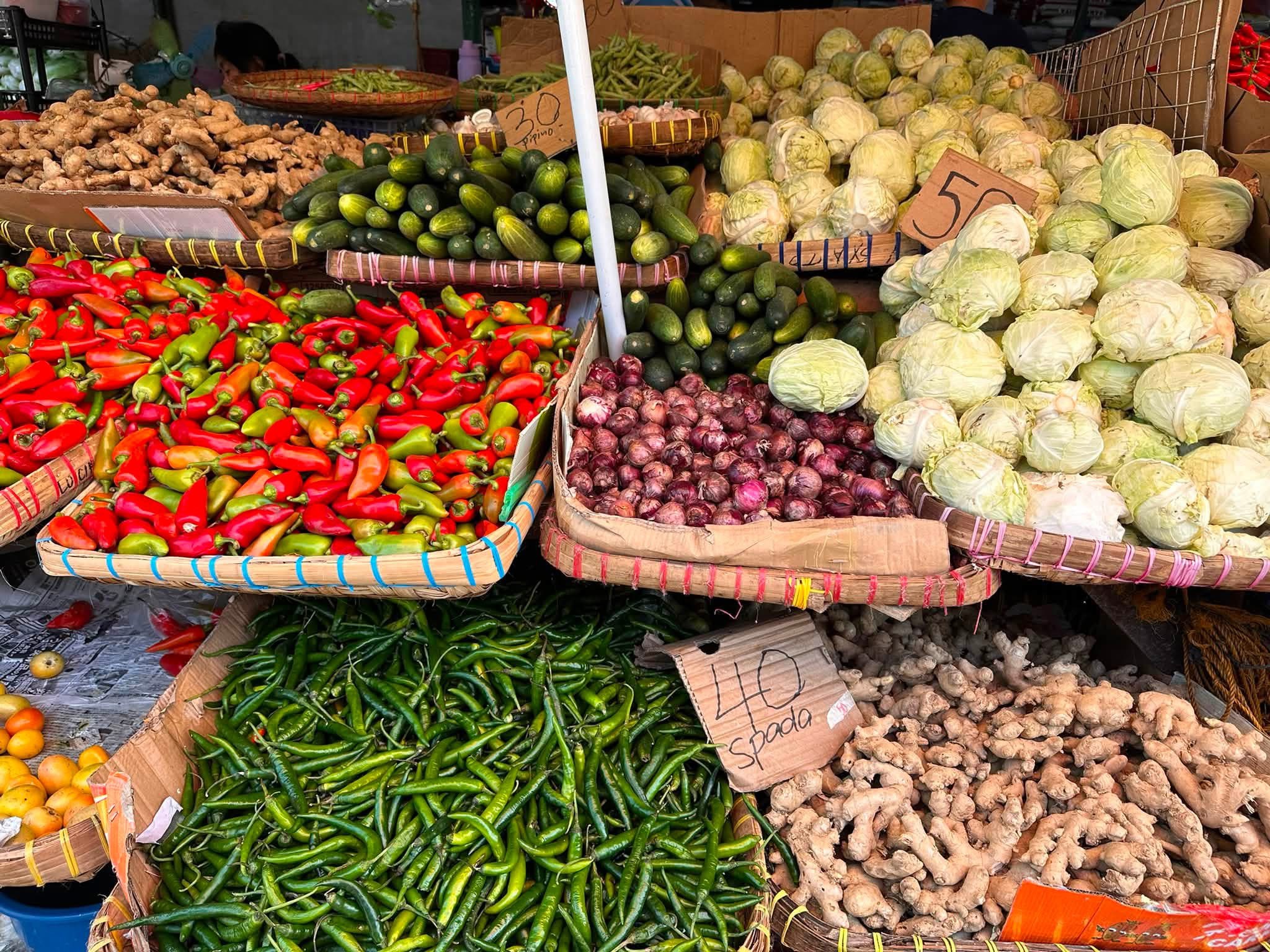
Central Visayas continued to face the country’s steepest price increases in July despite a notable slowdown in regional inflation, with food, utilities and transportation remaining the biggest sources of pressure on consumers.
The region’s headline inflation eased to 8.7 percent in July from 10.1 percent in June, but remained the highest among the 18 regions. Caraga followed at 8.6 percent and the Davao Region at 8.4 percent.
The Philippine Statistics Authority (PSA) 7 said Thursday, Aug. 13, that the slowdown was largely driven by lower inflation in food and non-alcoholic beverages and transport.
Engr. Leopoldo P. Alfanta Jr., chief statistical specialist of the PSA 7 Statistical Operations and Coordination Division, said food and non-alcoholic beverages recorded 10.7 percent inflation in July, down from 14.1 percent in June.
The group accounted for 82.8 percent of the slowdown in Central Visayas’ overall inflation.
Fish and other seafood inflation fell to 16 percent from 22.8 percent, while cereals and cereal products eased to 12.9 percent from 15.8 percent. Vegetables, tubers, plantains, cooking bananas and pulses posted the sharpest decline, falling to 33 percent from 47.6 percent.
Transport inflation also slowed to 14.7 percent from 16.8 percent, while gasoline inflation dropped to 29.5 percent from 37.8 percent.
Despite the slowdown, food and non-alcoholic beverages remained the biggest contributor to the region’s 8.7 percent inflation, adding 4.24 percentage points.
Cereals contributed 1.6 percentage points, fish and other seafood 1.1 percentage points, and vegetables and related products 0.89 percentage point.
Housing, water, electricity, gas and other fuels moved against the trend, with inflation rising to 6.6 percent from 5.6 percent and contributing 1.44 percentage points.
Electricity recorded 22.8 percent inflation, water supply 25 percent, and liquefied hydrocarbons 16.2 percent.
Transport was the third-largest contributor at 1.27 percentage points. Gasoline added 0.55 percentage point, passenger transport by sea and inland waterways 0.43 percentage point, and diesel 0.13 percentage point.
Only two of the 13 major commodity groups posted faster inflation in July: alcoholic beverages and tobacco, at 5.2 percent from 5.1 percent, and housing, water, electricity, gas and other fuels.
Food inflation eased to 11.3 percent from 14.9 percent. Of the 11 food groups, only oils and fats accelerated, rising to 7.7 percent from 7.5 percent.
Rice inflation fell to 11.9 percent from 13.3 percent, corn to 23.4 percent from 35 percent, milk, dairy products and eggs to 3.5 percent from 5.3 percent, and fruits and nuts to 20 percent from 26.6 percent.
For the bottom 30 percent income households, inflation fell to 11.6 percent from 13.9 percent in June. Food and non-alcoholic beverages accounted for 78.6 percent of the slowdown, with inflation at 13.8 percent.
Housing, water, electricity, gas and other fuels was the second-largest source of the slowdown, accounting for 15.2 percent, as its inflation eased to 8.5 percent from 10.7 percent.
Photo by Jacq Hernandez, PBB Photojournalist















Comments