



Traffic planning in Cebu City should be guided by transportation science, technical data and economic analysis rather than public opinion alone, former city administrator and urban planner Nigel Paul Villarete said amid the ongoing review of Oplan BanTal.
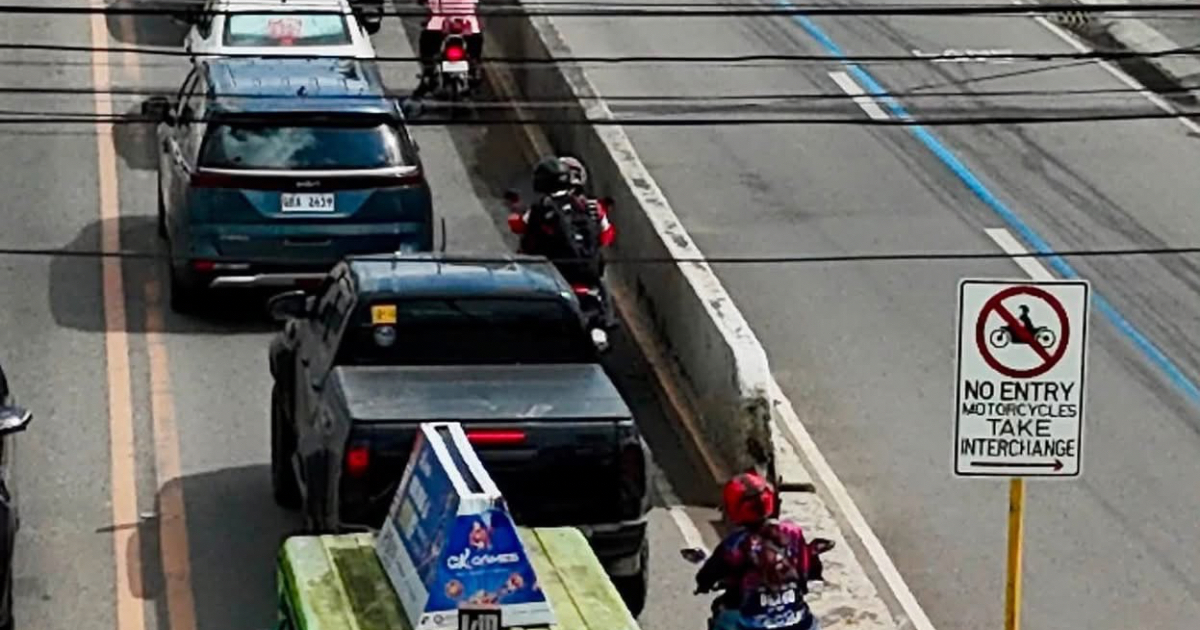
Villarete made the statement after Cebu City Councilor Jun Alcover called for an executive session to examine the planning, consultation and implementation of the traffic scheme, particularly the Aug. 5 dry run that temporarily barred motorcycles from using the Banilad Flyover.
“Transportation is a science and should NOT be based on one’s opinion, not even of the most popularly agreed opinion,” Villarete said in a public post.
He said consultation remains important because it allows authorities to hear from motorists, commuters, businesses and other groups affected by traffic policies.
However, he stressed that consultation should complement, rather than replace, technical evaluation.
“Consultation may elicit people’s views and opinions for consideration, but PUBLIC DECISIONS should be based on THE official, technically- and scientifically-derived Economic Internal Rate of Return (EIRR) of NEDA,” he said.
Alcover earlier questioned whether sufficient consultation was conducted before authorities implemented the motorcycle restriction on the Banilad Flyover.
The move caused congestion and drew complaints from motorists and motorcycle riders, prompting authorities to restore the previous traffic arrangement the following day.
During his privileged speech on Aug. 11, Alcover said the incident should be used to determine what went wrong and how similar disruptions could be avoided.
“This is not about blaming anyone. It is about understanding what happened and determining how we can prevent similar difficulties in the future,” he said.
He also pointed to the value of conducting actual dry runs before permanently adopting traffic changes.
“Sometimes, a dry run tells us something that planning alone cannot. It tells us how a traffic scheme actually behaves on the ground,” Alcover said.
Alcover has asked the council to convene an executive session involving Cebu City Transportation Office (CCTO) head Raquel Arce, the Traffic Management Council, transport groups, motorcycle and habal-habal drivers, transport network vehicle service operators, affected communities and businesses.
The session is expected to examine the basis of Oplan BanTal, the consultations conducted before its implementation, its intended objectives and the results of the Aug. 5 traffic test.
Oplan BanTal covers the Banilad-Talamban corridor and includes measures on loading and unloading, pedestrian movement, motorcycle lanes and traffic enforcement.
The motorcycle restriction on the Banilad Flyover was among the measures tested on Aug. 5.
Authorities reverted to the previous setup on Aug. 6 after congestion worsened and road users raised complaints.
Alcover said his office received concerns from motorcycle riders, including habal-habal drivers and transport network vehicle service operators.
He also called for more comprehensive traffic data, ground assessments and a mechanism that would allow authorities to receive and respond to feedback from affected sectors during future dry runs.
Meanwhile, Arce defended the validity of traffic citation tickets issued during the Aug. 5 rollout.
She said motorists could still be apprehended for violating traffic signs and road markings regardless of changes to the flyover arrangement.
“In the first place, we have traffic signages, and those traffic signages were the basis of the apprehensions,” Arce said.
She said motorists who entered areas marked “No Entry,” improperly used designated motorcycle lanes or crossed solid lane markings could be cited under existing traffic rules.
Arce also said the CCTO could not simply cancel the tickets, as requests for cancellation must undergo the appropriate administrative process involving the Traffic Management Coordination Board, the Office of the City Mayor, the City Council and the Commission on Audit.
The CCTO also clarified that the outermost motorcycle lane is not exclusively for motorcycles.
Four-wheeled vehicles may temporarily use the lane when turning right, accessing establishments or maneuvering around stalled or illegally parked vehicles, provided they comply with traffic rules.
Traffic authorities have likewise continued monitoring public utility vehicles that load and unload passengers along the roadway instead of using designated lay-bys.
While Alcover and Villarete emphasized different aspects of traffic planning, their positions point to the same challenge: Cebu City needs a more reliable basis for evaluating traffic interventions before rolling them out.
Alcover has pushed for stronger consultation and ground-level feedback, while Villarete argued that public sentiment should not substitute for technical and economic analysis.
Photo courtesy of Jacq Hernandez















Comments