



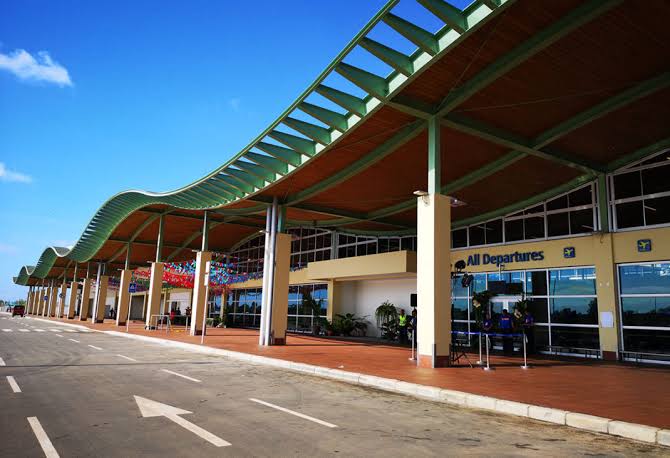
The Bohol-Panglao International Airport (BPIA) is moving ahead with a P4.53-billion modernization program as Bohol prepares for rising travel demand and expanded air connectivity.
Aboitiz InfraCapital Bohol Airport Corp. (ABAC), which operates and maintains the airport under a public-private partnership, has committed the capital investment as part of its 30-year concession.
ABAC presented the airport’s ongoing improvements and long-term development plans during a management briefing and site visit with officials of the Department of Economy, Planning, and Development (DEPDev).
BPIA General Manager Aldwin Uy said the investment covers modernization and development efforts, while current work focuses on restoring critical systems, improving operational reliability and upgrading passenger services.
The airport has restored its elevators, repaired baggage carousel systems and conducted preventive maintenance on passenger boarding bridges. It has also assessed its uninterruptible power supply systems and maintained passenger weighing scales.
ABAC has also strengthened airport safety and operational readiness through inspections of critical facilities, assessments of fire protection systems, runway rubber removal and friction testing.
Passenger services have likewise been upgraded through customer service training for frontline personnel, additional terminal seating, improved wayfinding signs and a dedicated feedback management system.
The airport has also expanded coordination with stakeholders and introduced initiatives supporting the integration of terminal fees.
Operational improvements have enabled BPIA to accommodate Airbus A330 aircraft, which could support future route development and improve Bohol’s connectivity.
In May, the airport conducted BEACON 2026, or Bohol Emergency Airport Coordination Operations Network, a full-scale emergency simulation involving airport personnel, airline partners, local government units, medical institutions and emergency responders.
The exercise tested the airport’s emergency response, coordination and recovery procedures in the event of a major incident.
Since ABAC took over airport operations, BPIA has served more than 2.16 million passengers.
The airport operator has also worked with tourism and business stakeholders to promote Bohol and support efforts to establish additional flight connections.
Uy said the public-private partnership allows ABAC to combine long-term development planning with improvements to the airport’s daily operations.
“Beyond fulfilling our commitments under the concession, we continue to invest in improvements that strengthen safety, enhance the passenger experience, and prepare Bohol-Panglao International Airport to support the province’s continued growth,” Uy said.
DEPDev Undersecretary Joseph J. Capuno said infrastructure partnerships can create opportunities beyond the facilities themselves by improving connectivity and supporting tourism.
“Well-planned infrastructure creates opportunities that extend far beyond the facility itself,” Capuno said.
“The continued improvements at Bohol-Panglao International Airport show how public-private partnerships can strengthen connectivity, support tourism, and improve the overall travel experience while contributing to the long-term development goals of both the province and the country,” he added.
ABAC said it will continue coordinating with government and industry partners as BPIA responds to growing passenger demand and supports Bohol’s tourism and economic activity.
Photo courtesy of Around Bohol / Website















Comments