



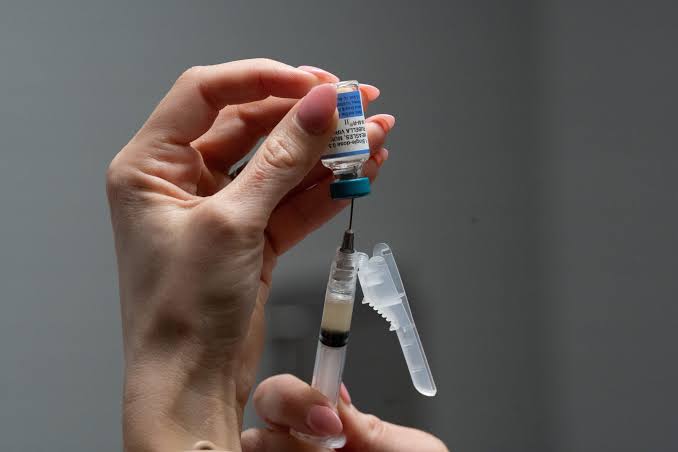
An experimental personalized cancer vaccine developed by Merck and Moderna has shown positive results in its first phase 3 clinical trial, bringing the treatment closer to possible regulatory approval.
The mRNA-based vaccine, given with Merck’s Keytruda, met the main goals of a trial involving more than 1,100 patients with high-risk or advanced melanoma whose tumors had been surgically removed.
The combination significantly extended the period patients remained free of melanoma compared with Keytruda alone and reduced the risk of the cancer spreading to other parts of the body, according to CNBC.
Merck and Moderna plan to present the full findings at an upcoming medical meeting. The trial will continue to assess overall survival, while the companies have not yet announced when they will seek regulatory approval in the United States.
The results could establish the treatment as a new option for melanoma, a form of skin cancer that accounts for about 1 percent of skin cancer cases but causes the majority of skin cancer deaths. Most melanoma recurrences occur within two to three years after the initial treatment.
Dr. Jane Healy, Merck’s head of oncology early development, said patients face uncertainty after receiving a melanoma diagnosis and undergoing surgery because of the possibility that the cancer could return.
She described the trial results as “very exciting,” citing a “clinically meaningful improvement” over Keytruda, a standard treatment for melanoma.
Patients also tolerated the combination well, with side effects similar to those associated with routine vaccines, Healy said.
Unlike conventional vaccines designed to protect against infectious diseases, the experimental treatment is personalized for each patient. It targets mutations unique to an individual’s tumor rather than using a single formulation for all patients.
The vaccine is designed to train the immune system to recognize and attack those cancer-specific markers, while Keytruda helps strengthen the immune response against cancer cells.
Healy said the findings could have implications beyond melanoma and demonstrate the potential of personalized cancer vaccines as a new class of treatment.
Photo courtesy of WPR















Comments