



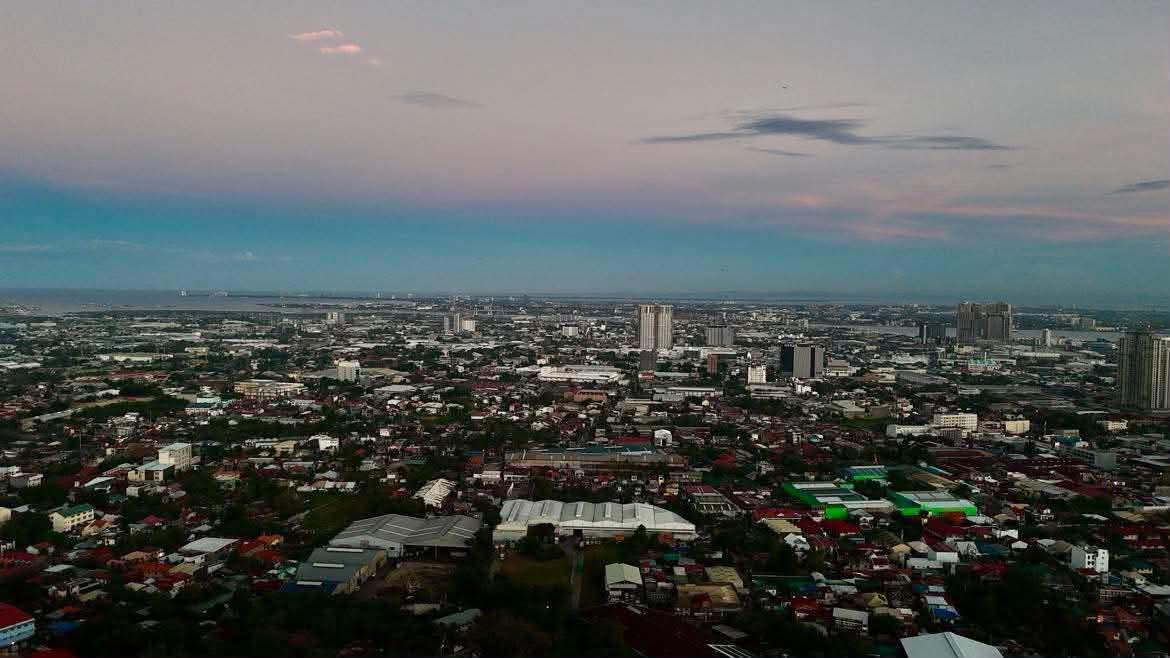
Air quality in parts of Cebu deteriorated to the “Very Unhealthy” level Tuesday, Sept. 1, as smoke and fine particulate matter from forest fires in Kalimantan, Indonesia, reached the Philippines through southwest monsoon or Habagat winds.
The Department of Environment and Natural Resources-Environmental Management Bureau Region 7 (DENR-EMB 7) recorded an Air Quality Index (AQI) of 173 at its Talisay City monitoring station as of 3 p.m., after registering 152 at 6 a.m. Both readings fall within the “Very Unhealthy” category.
The readings were based on PM2.5, or fine particulate matter that can penetrate deep into the respiratory system. Under the Philippine air quality index system, readings from 151 to 200 are classified as “Very Unhealthy.”
DENR-EMB 7 said the deterioration was linked to transboundary pollution from ongoing forest fires in Kalimantan, with the smoke being carried toward the Philippines by the Habagat.
The Philippine Atmospheric, Geophysical and Astronomical Services Administration (PAGASA) reported southwest winds affecting western sections of the Visayas, while its Sept. 1 weather outlook showed southwest winds prevailing over Metro Cebu.
The elevated reading at the Talisay station does not necessarily mean the pollution is confined to the city.
DENR-EMB 7 air quality monitoring specialist Arthur Niño Calupig earlier explained that pollutants could affect other parts of Metro Cebu depending on wind speed and direction. The haze could also extend toward the Camotes Islands and Eastern Visayas.
The ASEAN Specialised Meteorological Centre also reported moderate to dense smoke plumes over parts of Kalimantan extending toward the Philippines amid continued fire activity in southern Southeast Asia.
DENR-EMB 7 said the haze could persist for several days, depending on the movement of the smoke and prevailing weather conditions. Continued fires and a lack of sufficient rainfall along portions of the smoke’s path could allow fine particles to remain suspended in the atmosphere longer.
At “Very Unhealthy” levels, PM2.5 concentrations can pose health risks to the general population, with children, older adults, pregnant women and people with existing heart or respiratory conditions among those who may be more susceptible to air pollution.
DENR-EMB’s PM2.5 guidelines advise people with heart or respiratory conditions, including asthma, to stay indoors and rest as much as possible under such conditions.
The Department of Health also urged the public to limit prolonged outdoor activities and exercise caution while the haze persists. Those who need to go outdoors, particularly in areas with heavy haze, were advised to wear N95 masks to reduce exposure to fine particles.
DENR-EMB 7 and the Office of Civil Defense 7 continue to monitor air quality through monitoring stations in Cebu as authorities track PM2.5 concentrations and the movement of the haze.
Meanwhile, Talisay City Mayor Samsam Gullas said the city contacted DENR-EMB 7 to clarify the guidelines and thresholds that should determine whether activities should be suspended because of poor air quality.
Gullas said his concern involved not only the public pronouncements on elevated AQI readings but also the lack of clear corresponding guidelines on what local governments should do after such readings are recorded.
He also pointed out that while the monitoring station is physically located in Talisay, its reading is intended to represent air quality across Metro Cebu.
Because of this, Gullas said any recommendation to suspend activities based on the reading should logically apply across Metro Cebu rather than to Talisay alone.
Authorities continue to monitor the haze as weather conditions and the movement of smoke from Kalimantan develop.
PBB File Photo















Comments